DeWitt Haskin drove a wooden stake into the Jersey City mudflat in 1874, looked out across the half-mile of gray water separating New Jersey from Manhattan, and announced he would bore a tunnel beneath it using compressed air alone. His own engineers had a name for the plan. They called it Haskin’s folly.
The Gap That Refused to Close
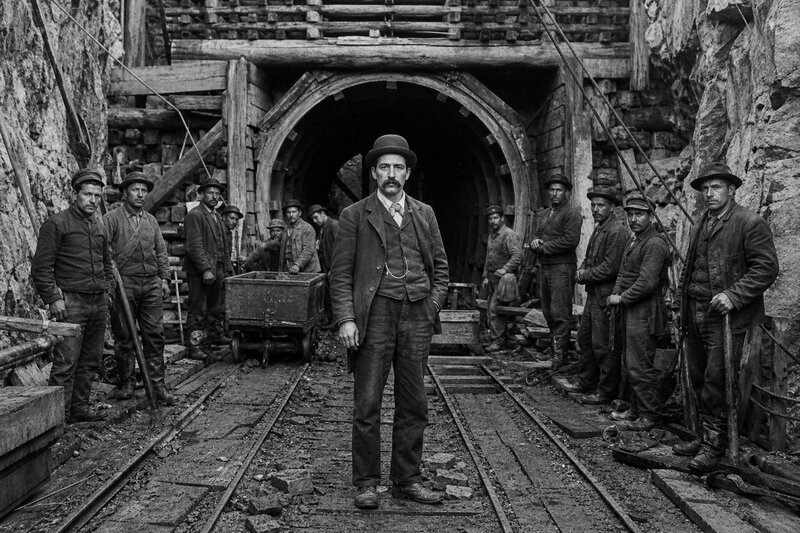
To understand why a Civil War veteran with no formal engineering training would stake his reputation—and eventually his fortune—on one of the most dangerous construction projects of the nineteenth century, you have to understand what the Hudson River meant to American commerce in the 1870s. Every railroad line reaching New York from the south and west stopped dead at the river’s edge. Passengers climbed off trains and onto ferries. Freight was transferred by barge. The bottleneck cost railroads millions of dollars annually and cost passengers something harder to measure: the daily indignity of a journey that simply refused to finish.
It was the same bottleneck, give or take a few technological generations, that the Northeast Corridor still wrestles with today—and that a $16 billion, 2.4-mile Hudson River Rail Tunnel is finally, in 2025, being built to relieve.
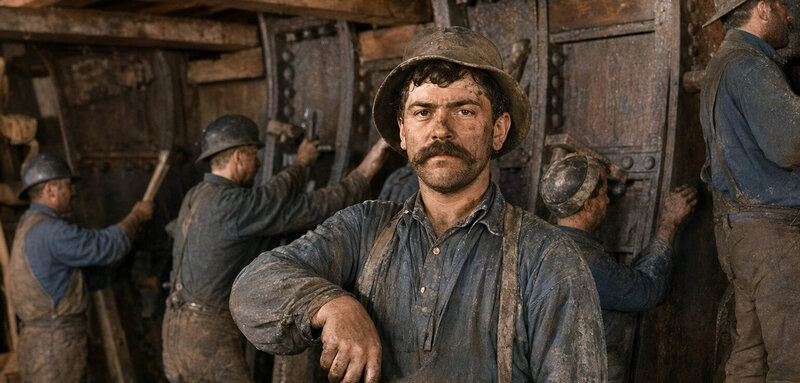
Haskin’s solution was audacious in its simplicity and terrifying in its implications. Workers—sandhogs, in the vernacular of the trade—would enter a pressurized iron tube driven horizontally through the riverbed. Compressed air, pumped in continuously, would hold back the Hudson above them. There were no watertight bulkheads ahead of the working face. No mechanical shield pressing against the earth. Nothing between the men and the river but atmosphere, maintained at roughly 34 pounds per square inch—more than twice the pressure at sea level. If the air pressure dropped for any reason, the river did not wait for an invitation.
The geological problem compounded everything. The bed of the Hudson is not the solid, predictable rock a tunneler dreams of. It is a shifting, treacherous mix: soft silt near the surface, stiff clay beneath it, and sudden, unannounced intrusions of hard trap-rock ledge. The conditions that made tunneling under rivers consistently brutal—from the Thames Tunnel in London to the projects that would follow Haskin’s attempt—were all present under that half-mile of gray water. Haskin secured his construction contract and broke ground on the New Jersey side in 1874. Within months, he was borrowing personally against the project to keep his payroll alive.
July 21, 1880: The Day the River Won
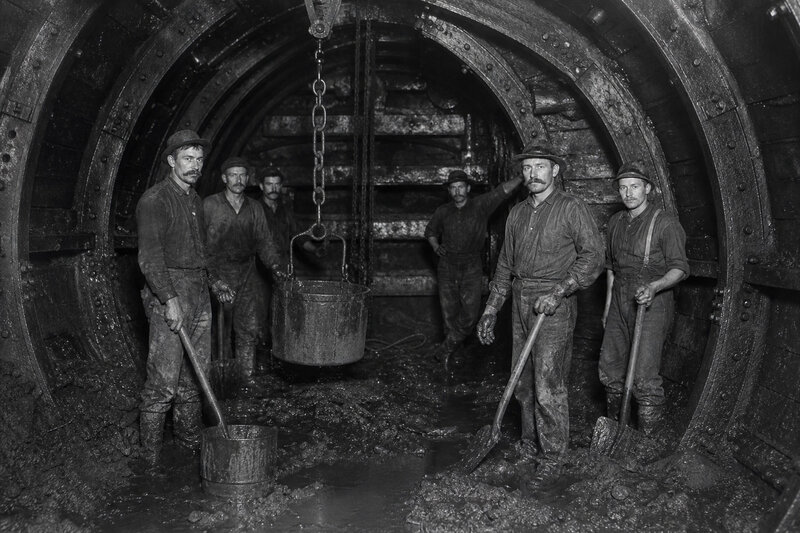
The disaster, when it came, arrived the way disasters in pressurized tunnels always do: without sufficient warning and with terrible speed. On the morning of July 21, 1880, a pocket of exceptionally soft silt gave way near the tunnel heading. The compressed air that had been holding the Hudson at bay found its breach and blew out through it. The river came in. Twenty men were inside the tube.
Nineteen made it out. Peter Woodland, a sandhog from County Clare, Ireland, did not. The coroner’s inquest that followed recorded his death alongside a detail of the kind that history occasionally preserves with unintentional cruelty: the men had been earning $2.25 per day for the privilege of working in that pressurized dark.
Haskin arrived at the shaft head within the hour. Contemporary newspaper accounts place him at the iron collar of the flooded tube, standing in silence before turning to tell reporters that the work would resume. It was, depending on your view of the man, either an act of stubborn courage or a statement so detached from reality that it finished what the blowout had started. His remaining investors did not share his composure. The project stalled. The financing collapsed. By 1882, Haskin had lost operational control of the tunnel he had conceived, though he spent years in litigation trying to reclaim it—the kind of legal struggle that grinds on long after everyone else has moved on, sustained by a man who cannot quite accept that the river beat him.
The partially bored tubes sat flooded and idle. The project had reached what looked very much like its permanent ending.
The Engineer Who Changed the Odds
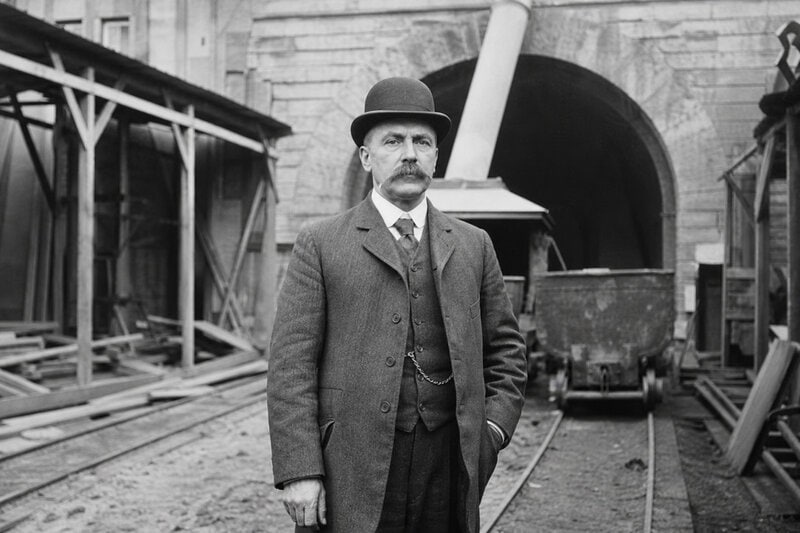
It took British money and a British engineer with an unusual background to drag the project back from its watery grave. In 1888, reorganized under the Hudson Tunnel Railroad Company and backed by English financiers, construction resumed under contractor S. Pearson & Son. With them came Dr. Ernest Moir, an engineer who had spent time studying what workers on the Forth Bridge had been calling “the bends”—the agonizing and sometimes fatal condition that struck sandhogs when they left the pressurized tunnel too quickly.
What Moir understood, and what had killed men across two continents for decades, was that nitrogen dissolved in the blood under pressure forms bubbles when pressure drops too fast. Workers who staggered out of the tunnel heading after a shift described joints that seized without warning, vision that went suddenly black, a sensation documented in sworn testimony as being wrung out like a wet cloth. Paralysis. Death. Workers in the nineteenth century had no name for the mechanism and no remedy beyond lying still and hoping.
Moir built a small iron chamber at the tunnel exit—a primitive decompression lock where men could reduce pressure slowly over several minutes rather than stepping from 34 pounds per square inch directly into the open air of New Jersey. It did not eliminate the bends. But it reduced fatalities measurably, and Moir documented the results carefully enough to present a paper on compressed-air illness to the Institution of Civil Engineers in London in 1896, one of the earliest systematic treatments of the subject in engineering literature. Progress in tunnel safety has always moved at this pace: slowly, empirically, paid for in advance by the people it eventually protects.
Four Minutes and Eighteen Seconds

On February 25, 1908—thirty-four years after Haskin drove his stake into the mud—the first electric train ran through the completed Hudson River tunnel. The New York Times reported that the crossing took exactly four minutes and eighteen seconds.
Haskin, elderly and financially ruined, did not attend the opening. The tunnel that had consumed his working life was inaugurated by successor railroad interests with no public acknowledgment of his name. This is not an unusual ending for the people who start large things; it is, in fact, the most common one.
What the completed tunnel represented, structurally, was two parallel single-track bores—the first operational example in this region of what engineers today call a twin-tube configuration. The same fundamental design is now being replicated beneath the same river. The echo is not coincidental. The Hudson’s geology has not changed, the railroad’s operational logic has not changed, and the basic problem of moving pressurized machinery through soft riverbed silt remains what it was when Haskin’s men were earning two dollars and twenty-five cents a day to do it by hand.
The Second Machine Enters the Ground
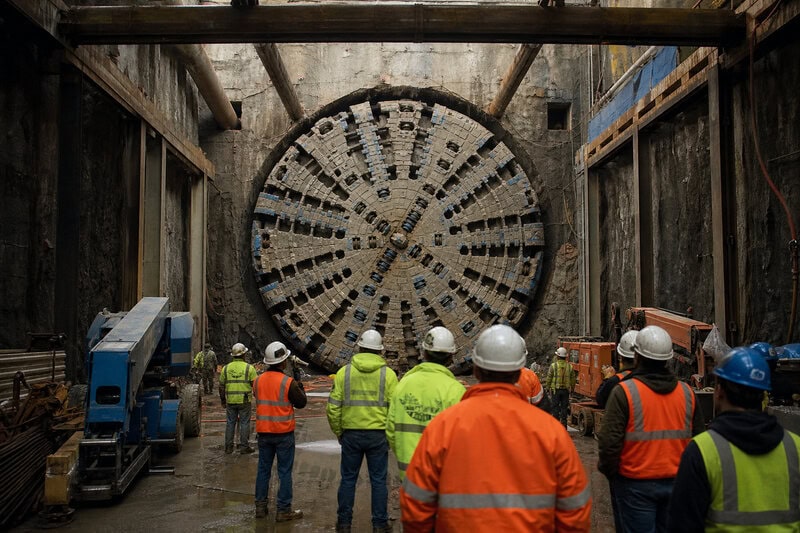
In 2025, with Governor Hochul marking the start of tunnel boring for the Gateway Hudson Tunnel Project, a second tunnel boring machine—a rotating steel cylinder wider than a four-lane highway—began working through the same geology that swallowed Haskin’s heading in 1880. With both boring machines now operating on their respective tubes, the new rail connection between Newark, New Jersey and Penn Station in New York is advancing on two fronts simultaneously.
The Gateway Program, of which this Hudson Tunnel Project is Phase 1, is a comprehensive re-engineering of the chokepoint Haskin first tried to solve with iron pipe and compressed air. It includes new rail bridges across the New Jersey Meadowlands and new tunnels under Bergen Hill through the Hudson Palisades—the full architecture of a problem that has been deferred, partially addressed, and deferred again for more than a century.
The new tunnel’s boring machines operate on a pressurized slurry shield principle: liquid bentonite is held against the cutting face, mechanically balancing earth pressure and groundwater in a continuous, computer-monitored process. It is, conceptually, the direct descendant of Moir’s decompression chamber—the same fundamental problem of managing pressure at a tunnel’s working face, now chemically and mechanically systematized across millions of dollars of instrumentation. Where Haskin’s men had one iron lock between them and the bends, today’s sandhogs work under OSHA compressed-air regulations, real-time atmospheric monitoring, and medical protocols developed across a century of hard-won understanding.
What the River Remembers
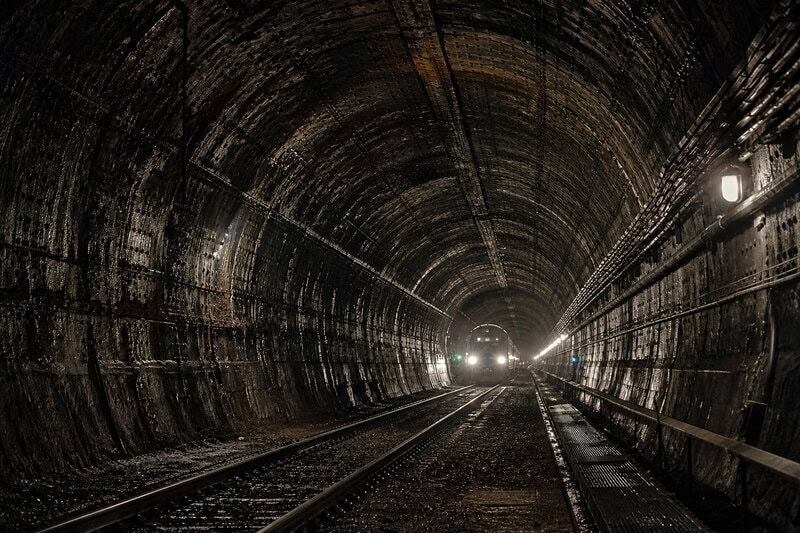
The original tunnel—the one born from Haskin’s obsession and finished by other men’s money—is still in daily service. Amtrak and NJ Transit trains pass through its cast-iron lining on the Northeast Corridor every hour of every operating day. That lining is now more than a century old, showing the cracks and water infiltration that made the Gateway project not just desirable but urgent. The new tunnel is not replacing the old one. It is running beside it, the new southern tube positioning itself as a companion to the bore that nearly broke the men who first imagined it.
Haskin’s name appears on no station wall and no bridge plaque. The men who died in his tunnel—Peter Woodland among them—are recorded only in coroner’s ledgers and immigration documents, their stories largely unread outside specialist histories. The gap between what these projects cost the people who build them and what gets commemorated when they open is one of infrastructure’s oldest and least examined traditions.
But the second tunnel boring machine now turning beneath the Hudson River is, in the most literal sense, finishing an argument Haskin started on a Jersey City mudflat a hundred and fifty years ago. The argument that the river could be crossed. That the gap could be closed. That the cost—in treasure, in time, in the lives of men working in pressurized dark for $2.25 a day—would eventually, finally, be worth it. The machine does not know any of this, of course. It simply turns.