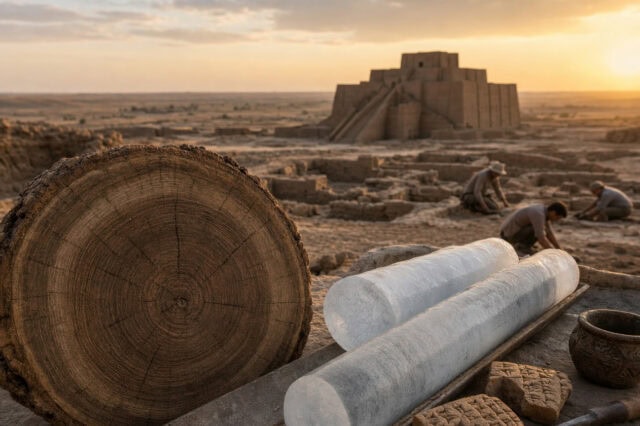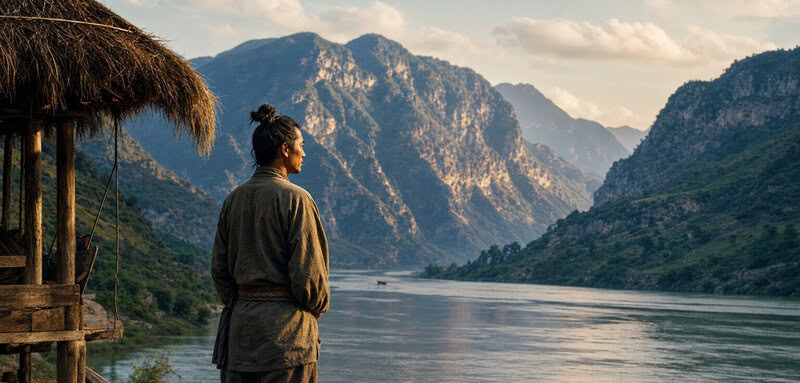
Most people, if asked where Chinese civilization began, would point to the Yellow River — the so-called “cradle of China.” But running nearly 6,300 kilometers from the Tibetan Plateau to the East China Sea, the Yangtze River tells a parallel story, older and stranger than the dynasty-by-dynasty account most history books offer, one that archaeologists are still piecing together today.
~45 Million Years Ago: The Tibetan Plateau Begins Sculpting the Yangtze’s Basin
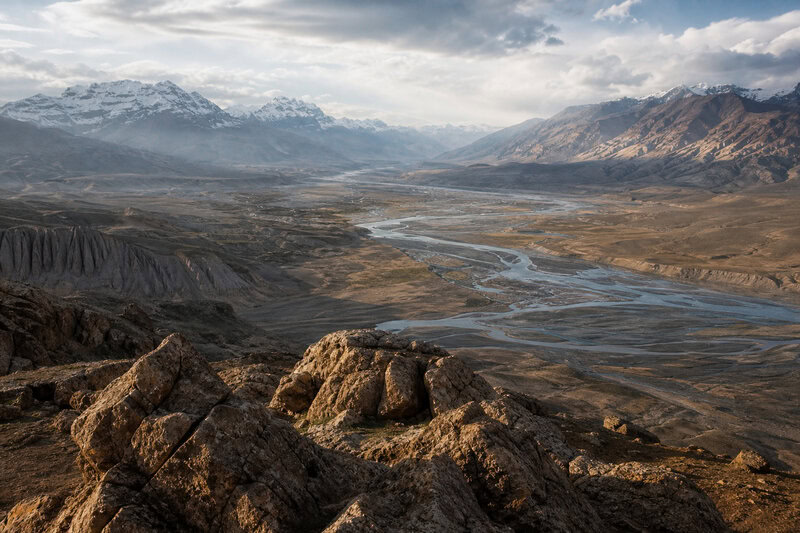
Long before any human hand touched its banks, the Yangtze’s fate was being decided by the slow violence of colliding tectonic plates. As the Indian subcontinent drove northward into Eurasia and the Tibetan Plateau heaved upward, sediment cascaded eastward and collected in a vast basin upstream of what would eventually become the Three Gorges — the geological rough draft of one of Earth’s great rivers. The river’s eventual course, rising at Jari Hill in the Tanggula Mountains and threading its way to the East China Sea, was being sketched out tens of millions of years before the first hominins wandered into Asia.
Geologists studying that ancient sediment record, with findings reported in 2010, pushed the river’s formative history back further than many had assumed — a reminder that the Yangtze’s story is not measured in dynasties or even in millennia, but in deep geological time. Everything that came after — every rice paddy, jade altar, and bronze mask — was built on a foundation laid by forces that make the entirety of human history look like an afternoon.
~2 Million Years Ago: Old Stone Age Humans Leave the Yangtze’s Earliest Fingerprints
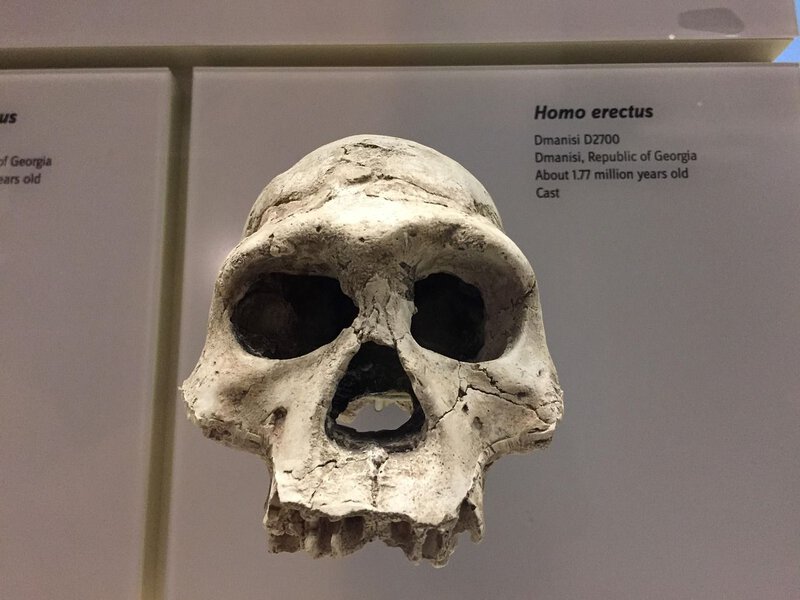
The first sign that the Yangtze’s story was becoming a human one arrives at a staggering distance in the past. Hominin fossils excavated in the Yangtze River region push evidence of human activity in the basin back approximately 2 million years, to the Old Stone Age — placing these early valley dwellers among contemporaries of some of the earliest known human ancestors active in Africa and elsewhere in Asia. The river was already, in some meaningful sense, inhabited.
These finds reframe the Yangtze not as a mere backdrop to recorded Chinese history but as one of the longest-continuously-inhabited river corridors on Earth. Whatever those ancient people ate, feared, or celebrated is largely beyond recovery, but their remains in the valley’s sediment insist that this river has known human company for an almost incomprehensible span of time.
~7000-5000 BCE: The Hemudu Culture Builds a Rice-Farming World on the Yangtze’s Lower Reaches

Roughly nine thousand years ago, in the wetland lowlands south of the Yangtze delta near present-day Ningbo in Zhejiang province, a people now called the Hemudu were doing something quietly revolutionary: systematically cultivating rice. Their settlement has yielded carved bone tools, lacquerware, wooden paddles, and — most remarkably — large quantities of domesticated rice remains, the material residue of a society that was simultaneously agrarian and maritime, farming the wetlands and working the water. Their wooden stilt-houses, engineered to elevate living quarters above the boggy delta ground, rank among the earliest evidence of organized rice agriculture anywhere in the world.
Hemudu’s existence quietly dismantles one of the most persistent assumptions in accounts of earliest Chinese civilization — that innovation flowed exclusively from the Yellow River basin to the north. Here, centuries before any dynasty rose, a fully articulated culture was feeding itself on rice, decorating its objects, and building homes designed to last. The north had no monopoly on ingenuity.
~3300-2300 BCE: The Liangzhu Culture Raises Jade Altars and Earthen Cities Near the Yangtze Delta
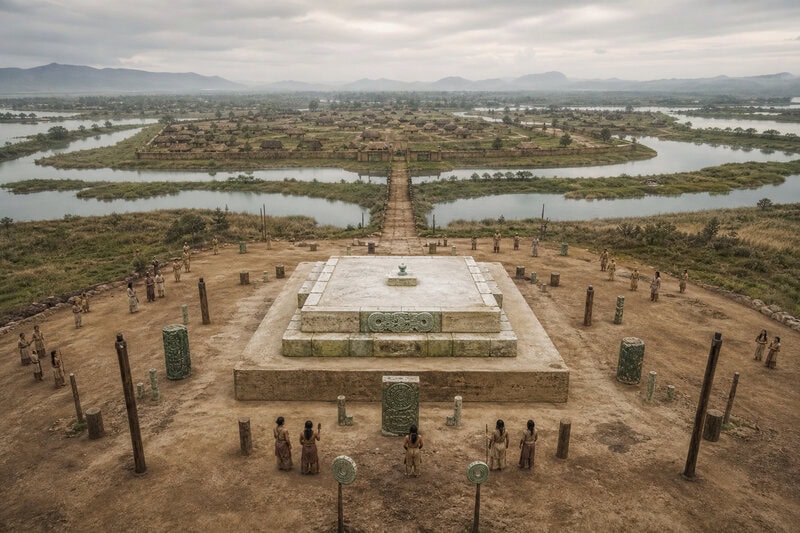
A few thousand years after the Hemudu faded, another culture rose in roughly the same wetland world south of the lower Yangtze, and it was breathtaking in its ambition. The Liangzhu people engineered a hydraulic system of dams and canals covering more than 100 square kilometers — an infrastructure achievement that predates the Qin dynasty’s unification of China by roughly two millennia. Their cities were planned, their water managed, and their dead were buried with exquisitely carved jade cong and bi — ritual cylinders and discs whose recurring motifs of a masked figure astride a beast encoded a cosmological worldview of striking sophistication.
For decades, Liangzhu was treated as a regional curiosity rather than a civilization in its own right. That changed decisively in 2019, when UNESCO inscribed the Liangzhu Archaeological Ruins as a World Heritage Site, formally recognizing this Yangtze-delta culture as evidence of a state-level society and one of the earliest Chinese civilizations on record. The jade is still luminous. The canals still trace through the earth. What was once a footnote in Chinese prehistory is now a headline.
~2000-1000 BCE: The Sanxingdui Culture Stuns the Archaeological World in the Yangtze’s Upper Reaches

Deep in the Sichuan basin, far up the Yangtze’s upper reaches, another civilization was producing objects that nothing else in the ancient world — including the Shang dynasty then flourishing to the north — quite prepares you for. The Sanxingdui people cast enormous bronze masks with eyes that protrude outward like telescopes, built a sacred bronze tree nearly four meters tall, and fashioned gold-foil coverings for the faces of their dead. Nothing remotely like it was being produced anywhere else in Bronze Age China, and it arrived in the archaeological record almost without warning when farmers first stumbled upon bronzes near Guanghan in 1929.
Sanxingdui’s major sacrificial pits are dated to roughly 1200-1000 BCE, and new pits uncovered in 2021 and 2022 yielded thousands of additional artifacts — silk residues, ivory carvings, and burnished bronze vessels unlike anything in the existing typologies — confirming that this was no peripheral outpost but a fully independent Yangtze-basin civilization of the first order. It is proof that ancient China was not a single story told from one center, but a conversation between worlds that barely knew each other existed.
~1046-221 BCE: The Chu State Transforms the Middle Yangtze Into a Rival Heartland of Chinese Culture
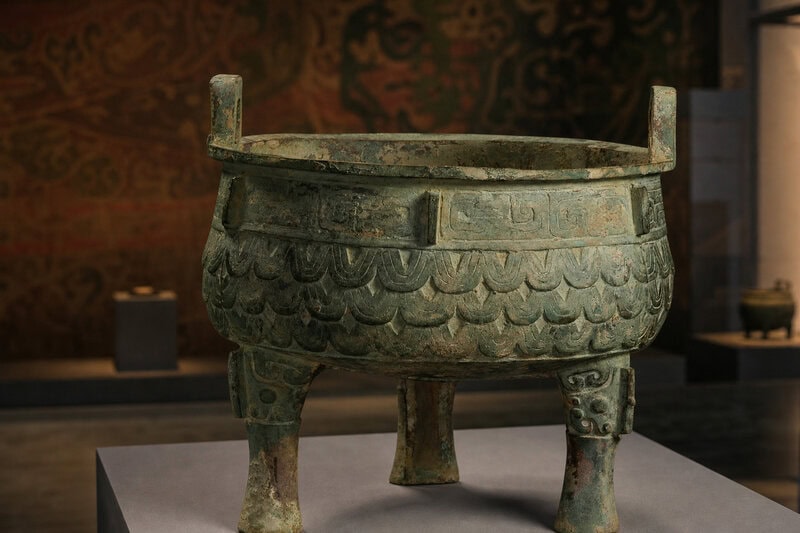
During the long centuries of the Zhou dynasty, the middle Yangtze valley became the heartland of something the northern courts regarded with a mixture of fascination and unease: the state of Chu. Sprawling across the river’s midsection from roughly modern Hubei westward, Chu developed a literary, artistic, and religious culture so distinct that it produced what many consider China’s first great regional poetic canon — the Chu Ci, or Songs of the South. The lacquerware, silk paintings, and bronze ritual vessels recovered from Chu tombs near modern Jingzhou are not provincial imitations of northern style; they are masterworks in their own idiom, vivid and technically assured.
No single figure embodies Chu’s legacy more achingly than the poet Qu Yuan, a Chu nobleman and minister who drowned himself in the Miluo River — a Yangtze tributary — around 278 BCE in protest of his state’s political collapse under pressure from the expanding Qin. His death became legend, and the annual Dragon Boat Festival, still celebrated across China and its diaspora, began as a ritual search for his body. A poet’s act of despair in a Yangtze tributary echoes, more than two thousand years later, in every boat race held in his memory.
September 1994: Archaeologists Race the Rising Waters of the Three Gorges Dam
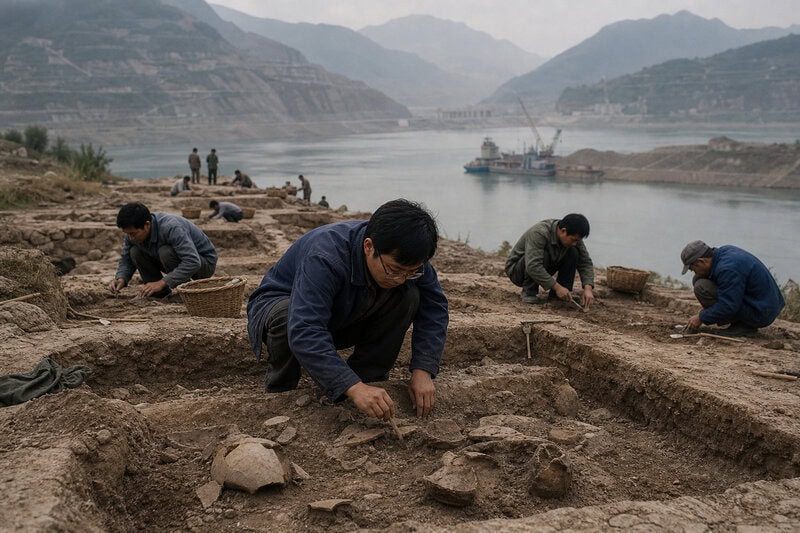
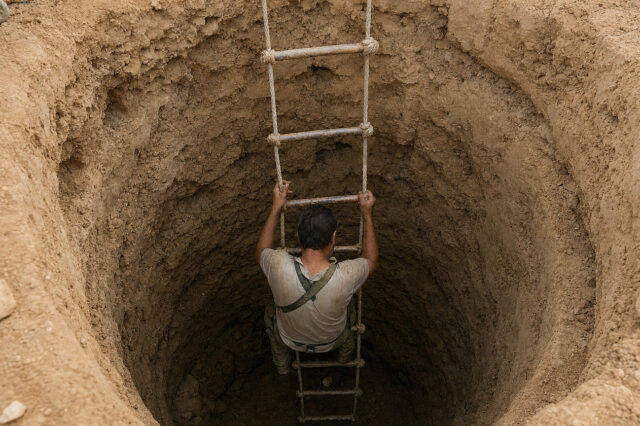
By September 1994, the future was already casting its shadow over the Yangtze’s past. With the Three Gorges Dam approved and construction underway, Chinese archaeologists were working in urgent, sometimes desperate haste along the river’s banks near Yichang, excavating sites they knew would soon lie under more than a hundred meters of reservoir water. The race against inundation was documented in real time, a salvage operation targeting remains spanning Paleolithic camps, Neolithic villages, and layered Ba and Chu cultural deposits that had survived for millennia precisely because the region’s steep gorge walls had discouraged intensive development.
It ranked among the largest archaeological salvage projects ever attempted anywhere in the world, and it was powered by a bittersweet calculus: every day of digging was a day of recovery, but the clock was always running. The window that opened in 1994 was narrow, measured in years rather than decades, and what came through it would have to stand as the record of a world about to be permanently altered.
2003-2009: The Three Gorges Reservoir Fills — and Seals Millennia of Yangtze History Underwater

When the Three Gorges Dam’s reservoir reached its full operational level in 2009, more than a thousand known archaeological sites slipped beneath the surface for good. Among them were sections of the ancient Ba culture’s cliff-coffin burial grounds — tombs carved into the gorge walls at vertiginous heights, some accessible before inundation only by boat, many never fully documented before the water rose. Scholars have noted that the incomplete salvage record means significant portions of the Yangtze’s layered ancient history now constitute a permanent archive beyond reach.
The submergence fundamentally transformed the conversation around the Yangtze’s ancient past. What had been recovered became, by definition, a partial record — a sample rather than a survey — and the new lakebed became a kind of sealed vault, holding whatever it holds in permanent silence. The Three Gorges Dam is rightly noted as a major feat of civil engineering; it is also, in the quieter reckoning of archaeology, an irreversible act of erasure.
November 2026: Four New Discoveries Reopen the Question of How Deep the Yangtze’s Past Really Goes
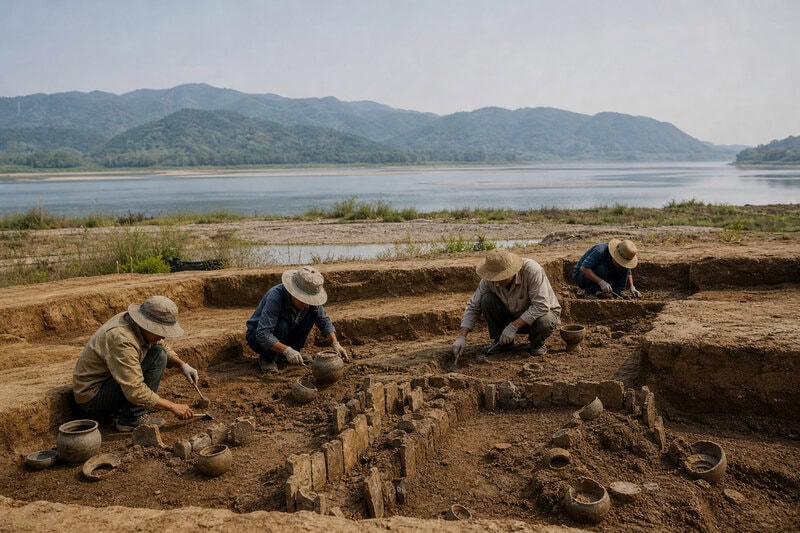
Even after a century of modern excavation, the Yangtze continues to surprise. As reported by China Daily on 18 November 2026, four significant archaeological discoveries in the Yangtze River Basin were shedding new light on the region’s rich and complex ancient past. Each find added fresh texture to an ongoing record that has been accumulating for generations, reinforcing that the basin — China’s longest river corridor and the world’s third-longest river — has not yet yielded all of its secrets to the excavator’s trowel.
Together, the discoveries underline what the evidence has been building toward for decades: the Yangtze was never a secondary stage in the drama of earliest Chinese civilization. It was a parallel arena, independently evolving cultures of genuine complexity, repeatedly astonishing those who look closely, and far older in its human story than the dynasties that most of us were taught to call ancient.
From the tectonic forces that first shaped its bed tens of millions of years ago to the archaeologists still brushing sediment from newly unearthed artifacts today, the Yangtze’s past keeps reaching further back and growing richer with each season of fieldwork — a reminder that the story of where, and how, civilization took root in China is still, in the best possible way, unfinished.