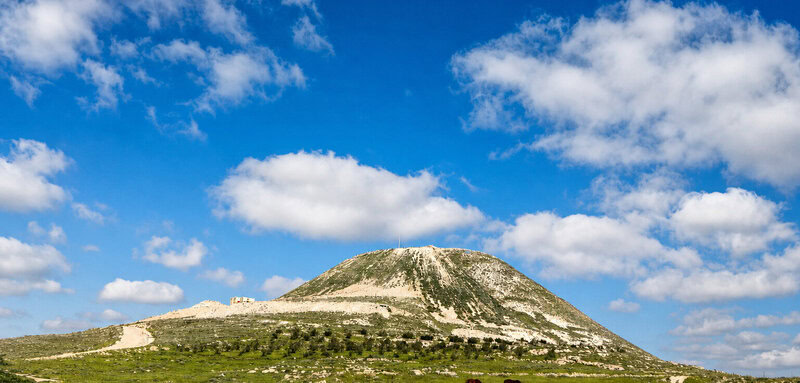
Stand in the Judean desert south of Jerusalem on a clear morning and you will see it before you can explain it: a perfect cone rising from the scrubland, too symmetrical for geology, too massive for accident, its silhouette hovering above the heat haze like something dreamed rather than built. For Ehud Netzer, an Israeli archaeologist at the Hebrew University of Jerusalem, that cone became the consuming obsession of a career — and, in the end, something closer to a fate.
The Mountain That Shouldn’t Exist
Herodium is the kind of place that stops conversation. Herod the Great, ruler of Judea under Roman patronage from 37 B.C. until his death in 4 B.C., ordered thousands of tons of earth moved by human labor to bury the lower half of a natural hill and sculpt its upper portion into a cone visible from Jerusalem and from Bethlehem in the valley below. The result was not merely a palace set into a landscape but a palace that became the landscape — a man-made mountain enclosing courtyards, bathhouses, and towers within its hollowed interior. He named it after himself, making Herodium the only site in the ancient world that a ruler named for his own person. Modesty was never really part of Herod’s architectural vocabulary.
Ancient sources, principally the first-century Jewish historian Josephus, make clear that Herod intended Herodium as his burial place. In his Jewish War, Josephus described the king’s funeral procession in almost cinematic detail: a golden bier draped in purple cloth, a diadem and a golden crown resting on the body, soldiers marching in formation across the desert — the cortège traveling some twenty-four miles from Jericho, where Herod died, to Herodium, before the king was laid to rest somewhere within or upon his impossible hill. That account was vivid enough to feel like a map. It turned out to be something considerably more complicated.
For nearly two thousand years, the question hung in the desert air alongside the dust: somewhere inside or around this engineered mountain lay the tomb of the most prolific builder in the ancient world — and nobody, despite Josephus’s seemingly generous directions, could find it.
The King Who Built Everything Except a Modest Exit
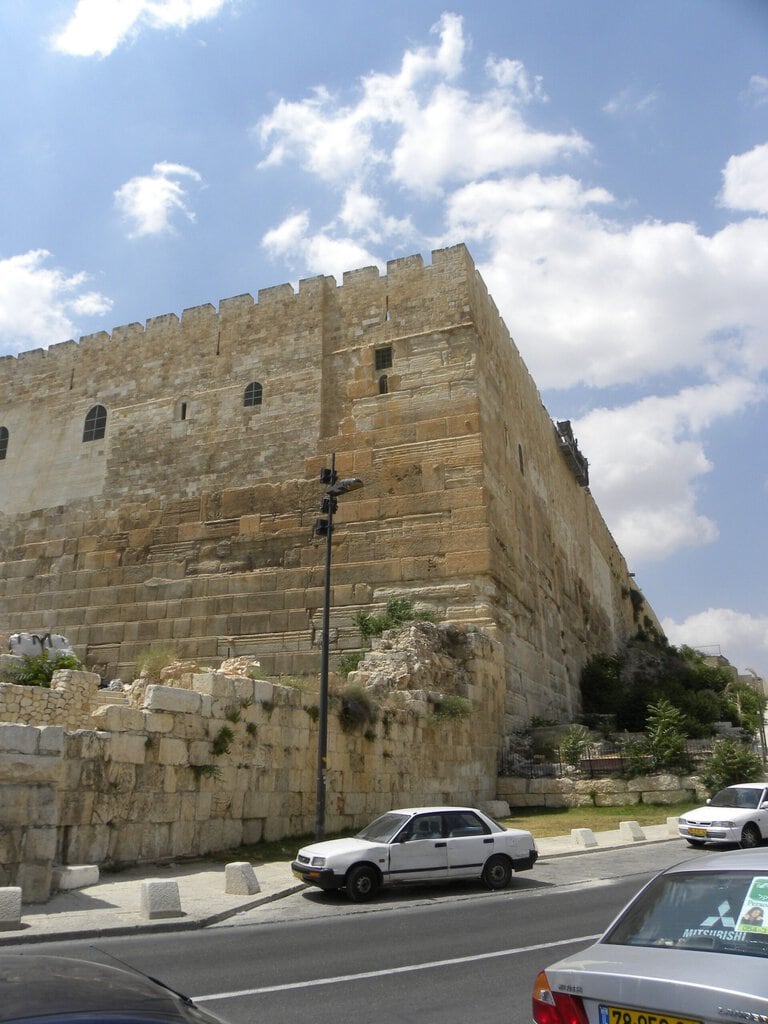
To understand why Herodium mattered so much — to Herod, and later to Netzer — it helps to appreciate the scale of the man’s ambitions. Herod expanded the Temple Mount in Jerusalem into one of the largest religious precincts in the ancient world, its retaining walls enclosing a platform of roughly 36 acres. He raised the port city of Caesarea Maritima from scratch on an engineered harbor, complete with a breakwater constructed from hydraulic concrete poured into the sea. He transformed Masada into a vertical palace clinging to a desert plateau above the Dead Sea. Each project was a demonstration that the physical world could be bent to a single will, provided that will was sufficiently absolute and sufficiently funded.
But Herodium was different — personal in a way his other projects were not. The other great building sites were functional: temples, harbors, fortresses. Herodium was a monument to the idea of Herod himself, a structure whose purpose was partly to exist and to be seen existing. Josephus’s account of the funeral procession gave archaeologists their most tantalizing evidence: the cortège had moved to Herodium, the body had been placed there, and Herod, for all his flair for the grand gesture, had entered the historical record and then simply refused to stay visible.
The description implied the procession arrived at the base of the hill. That implication would cost decades of work.
Thirty-Five Years Searching the Wrong Slope
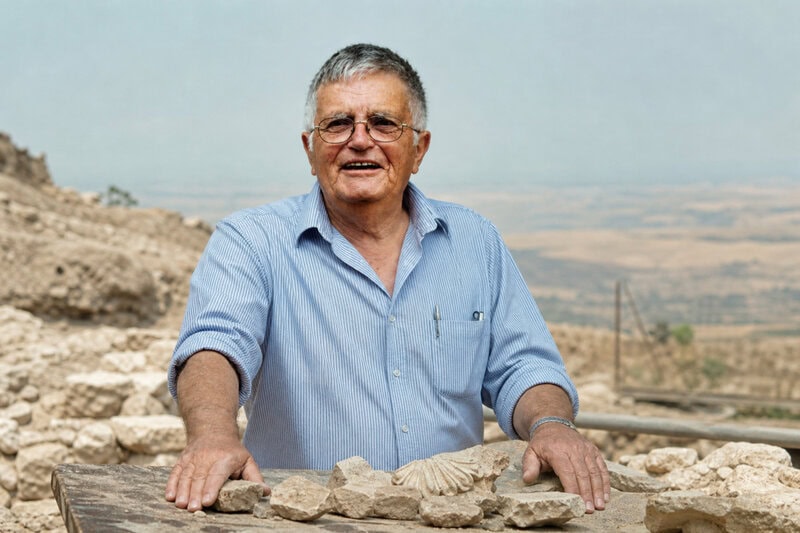
Ehud Netzer first led excavations connected to the Herodium site in 1976, beginning what would become one of archaeology’s most patient and, at moments, quietly agonizing quests. Netzer’s relationship with Herodium was never purely professional; he described working inside the mountain as working inside Herod’s mind, every water channel and column drum a decision the king had made — and yet the king himself remained absent, perpetually just out of reach.
Because Josephus’s description implied a procession arriving at the base of the hill, the search for decades concentrated on Herodium’s sprawling lower complex — a vast lower palace, ornamental pools, and service buildings spread across the desert floor. Teams dug systematically through the lower terraces and found extraordinary things: architectural elements of exceptional quality, evidence of Herod’s obsessive refinement of the site. What they did not find was the tomb. After more than three decades of scouring the lower reaches and surrounding terrain, the absence had begun to feel less like an unsolved puzzle and more like a deliberate erasure — as though Herod had managed, even from 4 B.C., to outwit his excavators.
Some scholars began to wonder whether the tomb had been so thoroughly destroyed in antiquity that nothing identifiable remained. It was an uncomfortable thought for everyone who had spent years on the question, and for Netzer in particular it must have carried a specific weight.
The Announcement That Rewrote the Maps
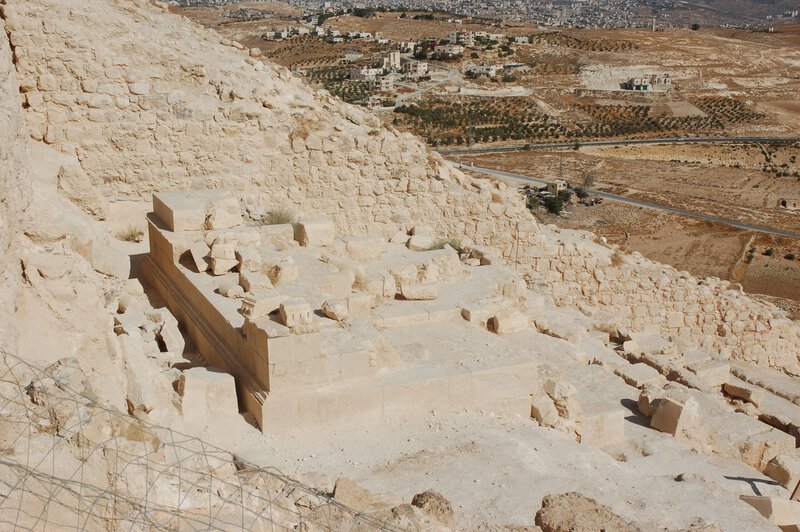
In May 2007, the silence broke. Ehud Netzer stood before the press and announced that the search was over: archaeologists had found what he identified as King Herod’s tomb on the northeastern slope of the cone itself — not at the base, where the dominant interpretation of Josephus had directed everyone’s attention, but partway up the man-made mountain. The answer had been on the hillside all along, at an elevation the funeral procession narrative had quietly discouraged everyone from examining.
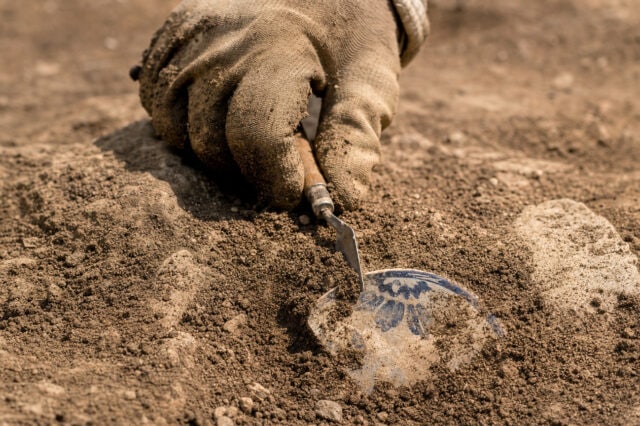
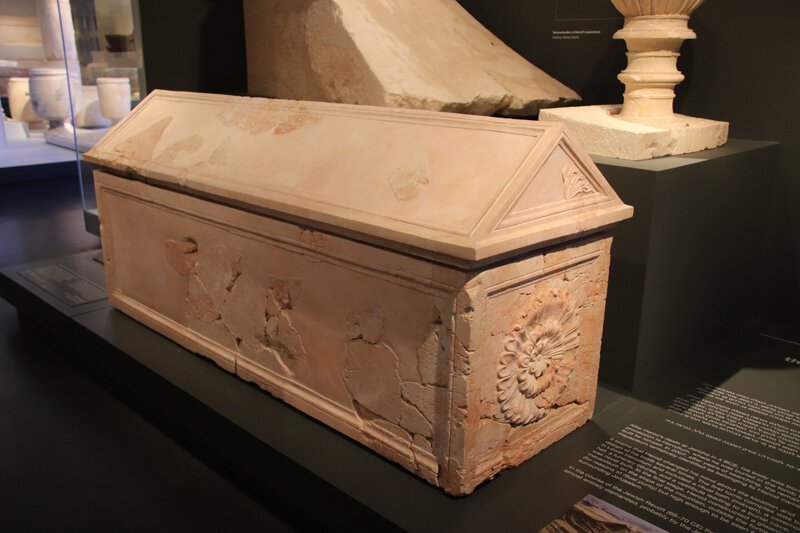
The discovery was, as the excavation record makes plain, the result of systematic, methodical archaeological work, the kind that moves in careful horizontal layers and reads soil changes the way a physician reads a scan. What the layers eventually produced were fragments of a sarcophagus in reddish limestone, finely worked with rosette carvings of a quality reserved for the highest tier of Herodian patronage. The sarcophagus had been smashed — deliberately, it appears, in an act of ancient desecration that said something eloquent about how Herod had been remembered by at least some of those who came after him. Two additional, plainer sarcophagi were found nearby, possibly belonging to members of his family.
The location reframed the entire site. Herod had not simply built a palace and appended a tomb somewhere convenient. He had engineered the mountain as a monument whose geometry served a single designed purpose: the summit as a visual beacon seen from Jerusalem, the flank as the guardian of his remains. The tomb was not inside the palace — the palace was, in a profound sense, inside the tomb’s monument.
What the Slope Revealed: A Theater at the Edge of Eternity
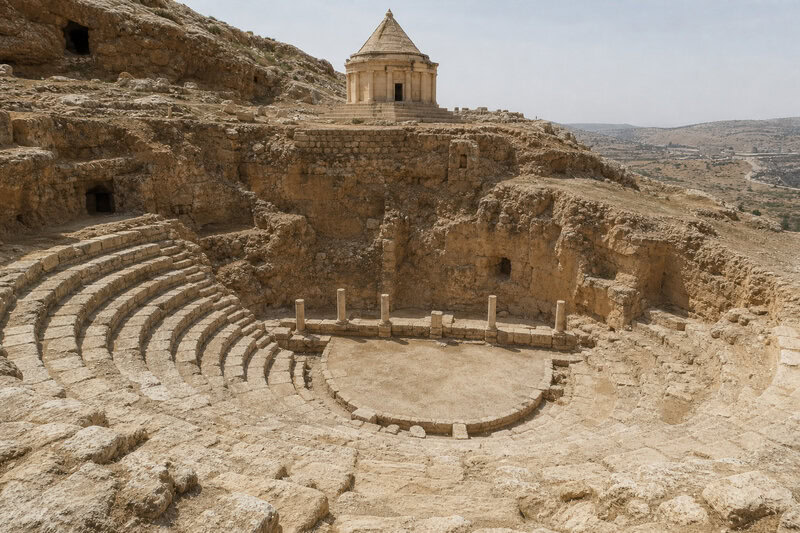
As Netzer’s team continued to excavate around the mausoleum, they uncovered a detail that stopped the work and required a moment of quiet astonishment: immediately to the west of the tomb structure sat an intimate theater seating just 300 spectators, small enough to feel personal, large enough to stage theatrical performances for a chosen court. Alongside it, archaeologists found a loggia and a royal box — a dedicated elevated position where Herod himself could sit apart from the audience, watching performances framed by the Judean desert and the distant roofline of Bethlehem below.
The theater’s frescoed walls, painted to resemble marble panels in red, yellow, and architectural trompe-l’oeil, survive in fragments vivid enough to suggest the color the king expected his guests to experience — a desert hillside made to feel, briefly, like Rome. That a man who knew he would be buried on this slope also arranged for living guests to be entertained beside his future grave says something about Herod’s relationship with his own mortality: he seems to have regarded it less as an ending than as another design problem to be solved with sufficient ambition.
The juxtaposition — a theater for the living pressed against a mausoleum for the dead — was not an accident of planning. It was the point. Herodium’s slope was conceived as a single designed experience: entertainment, power, and eternity arranged in deliberate sequence on the same hillside, all of it visible, in Herod’s imagination, to posterity.
Scholarly Debate: Is the Attribution Certain?
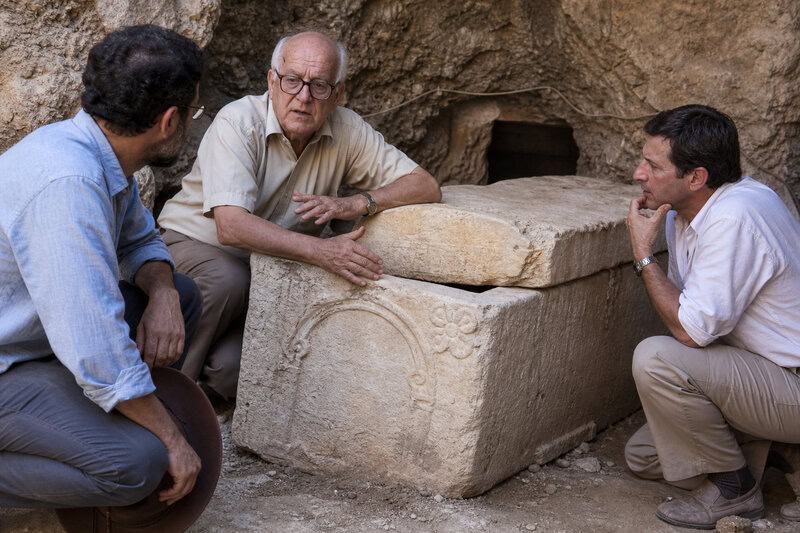
Not every archaeologist has accepted Netzer’s identification without reservation. The principal difficulty is that no inscription bearing Herod’s name was found in direct association with the sarcophagus. Netzer’s case rested on a convergence of factors: the exceptional quality of the limestone carving, consistent with royal Herodian craftsmanship seen elsewhere; the precise location on the slope that best matched a re-reading of Josephus; the scale of the mausoleum structure itself; and the deliberate destruction of the sarcophagus, which suggested later Jewish rebels — possibly during the First Jewish Revolt of 66-70 A.D., when Herodium served as a rebel stronghold — had targeted it with particular intent. Critics have noted that the absence of an inscription leaves the identification inferential rather than definitive, and that other high-status individuals could in principle have been interred at the site. The scholarly consensus, while broadly supportive of Netzer’s conclusion, acknowledges that absolute certainty remains out of reach without a direct identifying marker.
Netzer’s Life Work and Its Cruel Postscript
The 2007 announcement brought Ehud Netzer international recognition as the archaeologist who had finally answered one of the ancient world’s most durable mysteries — where Herod the Great was buried, and how the most ambitious builder of the ancient world had arranged his own exit from it. His interpretation of the broken sarcophagus as Herod’s own rested on its exceptional craftsmanship, its location directly beside the mausoleum structure, and its scale: the fragments, when reconstructed, indicated a coffin made for a man who had spent his life insisting on the superlative in everything he commissioned.
In a strange and sobering parallel that history seems to have arranged with unusual deliberateness, Netzer died in October 2010 from injuries sustained when he fell from a viewing platform at the Herodium excavation site. He was 76. The mountain he had spent decades interrogating claimed him in the end. His colleagues continued the work after him, and ongoing excavations have deepened and confirmed the picture of Herodium’s slope that Netzer identified — the scholarly consensus for the location of Herod the Great’s tomb remains where he placed it.
There is something in that continuity — the work outlasting the man, the site enduring — that Herod himself might have recognized, and perhaps even approved of.
What the Hidden Tomb Tells Us About the Man
The Herodium excavation, taken whole, reveals a ruler who thought in centuries rather than decades. He built a mountain to be seen from Jerusalem, placed a theater on its flank so the living could be entertained in the shadow of his future grave, and positioned his sarcophagus at a point on the cone’s geometry where it remained invisible from the desert floor below. That concealment — building upward and inward rather than marking the tomb with a conspicuous monument at ground level — may reflect Herod’s clear-eyed awareness of how hated he was among segments of his own population. A visible tomb was an open invitation to desecration. The sarcophagus was smashed anyway, which suggests the concealment was only partially successful, and that some people were willing to climb to find it.
The discovery also quietly corrects a long assumption about how to read ancient sources. Josephus’s account of the funeral procession was not a straightforward map but a ceremonial description, filtered through rhetoric and shaped by what the historian chose to emphasize. The actual location of Herod the Great’s tomb proved to be where geology, geometry, and systematic excavation intersected — not where the prose pointed most obviously. It took more than three decades, one uncommonly patient archaeologist, and the slow accumulation of carefully read soil to find it.
Herodium now stands as the only site in the ancient world where we can say, with reasonable archaeological confidence, that we have found the burial place of the king who built it — a man who shaped the landscape so thoroughly that his tomb had been hiding inside his own masterpiece the entire time, waiting for someone stubborn enough to look in the right place on the right slope of the right mountain.
Visiting Herodium Today
Herodium is an active archaeological site and national park administered by the Israel Nature and Parks Authority, located roughly 12 kilometers south of Jerusalem in the West Bank. Visitors can walk through the lower palace complex, climb to the upper fortress, and view the area of the tomb on the northeastern slope, where excavation continues. The site’s combination of monumental architecture, desert landscape, and unresolved historical questions makes it one of the most rewarding destinations in the region for anyone interested in the archaeology of the ancient Near East. Given that work is ongoing, the picture presented by any single visit is necessarily partial — which is, in a sense, an accurate reflection of where scholarship on Herod’s burial still stands.