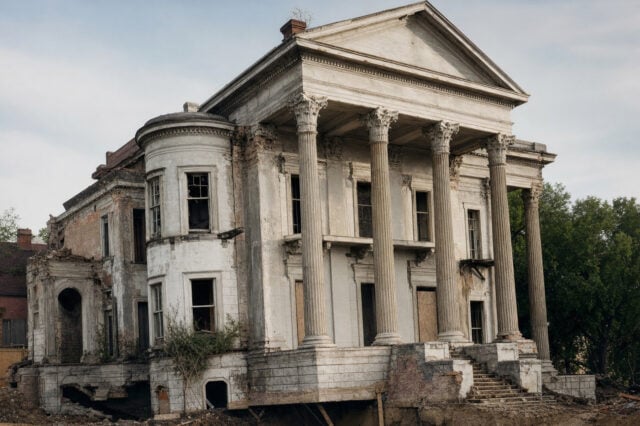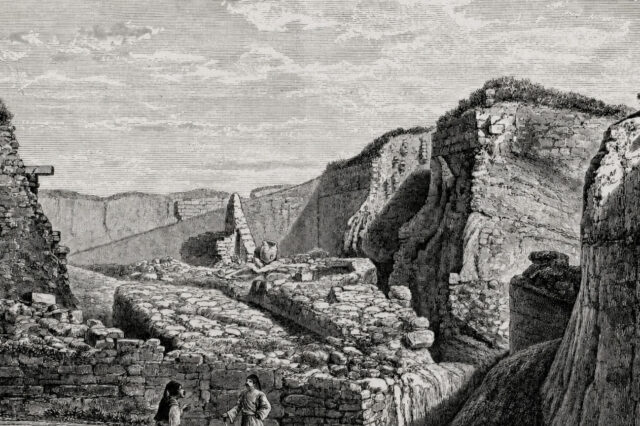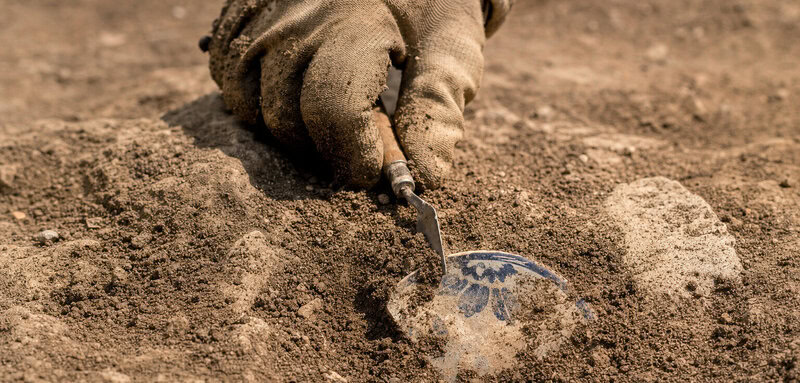
The trowel scrapes through caliche and time, and something turns up that the city of Phoenix spent a century forgetting: a shard of household pottery, the compressed footprint of a home, the broken domestic edge of a life sitting in soil that the maps long ago stopped marking as anything worth remembering. The archaeologists working this Phoenix excavation know, before they even brush the dust away, that they are not digging up an absence. They are digging up an erasure. And beneath the 20th-century residential layer, waiting with the patience only geology can sustain, lies something older still.
A City That Drew Lines in the Desert Sand
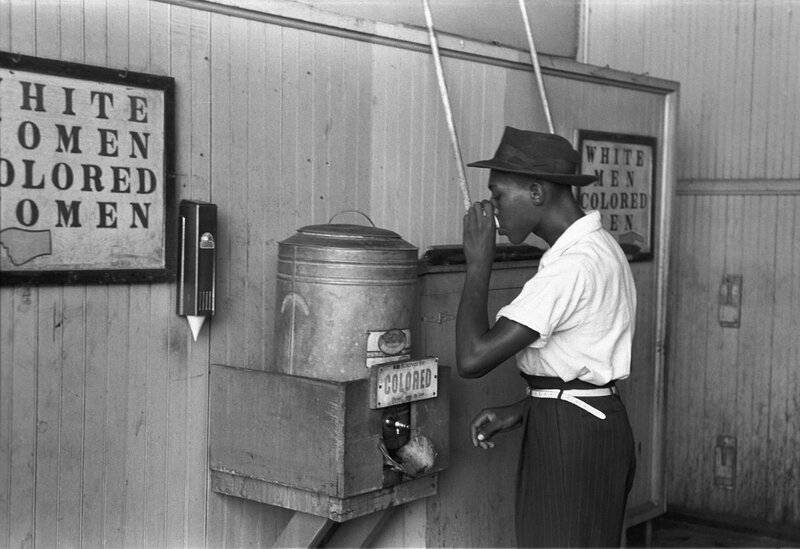
Phoenix in the 1920s was a boomtown in a hurry — ambitious, sun-drenched, and deeply committed to the customs of Jim Crow, even if Arizona had never formally joined the Confederacy. The exclusions here were southwestern in character: rarely codified with the specificity of Mississippi law, but insistent, enforceable, and geographic. If you were Black in Phoenix in this era, the city did not simply discourage you from certain neighborhoods. It made other neighborhoods functionally impossible — through deed restrictions, through social pressure, through the quiet violence of a real estate market that had already decided who counted as a buyer.
What that meant in practice was that Phoenix’s Black community did not scatter across the valley. It concentrated, by necessity and by choice, in the spaces the city left open. By the 1920s, Phoenix’s Black community had developed fledgling communities in three regions of the city — each one a negotiated foothold, each one a small act of collective insistence that Black Phoenicians would have a place, even if the city’s power structure preferred otherwise. These were not random clusters. They were, in a very real sense, the architecture of survival — and of something more than survival.
Into this landscape stepped a man named Marshall Shelton, carrying blueprints and a singular understanding of what land ownership actually meant in segregation-era America. It meant permanence. It meant dignity made material. It meant that you could not simply be swept aside. Shelton intended to build something that would last.
Marshall Shelton and the Historical Portland Tract
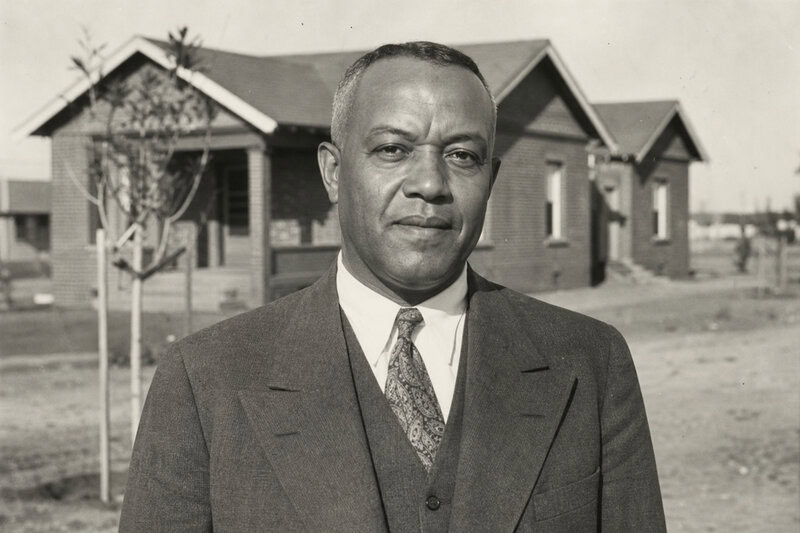
The neighborhood Shelton developed was, by any measure, extraordinary for its time and place — described by researchers as “this very unique, really massive neighborhood,” built by a man who stood as the most prominent Black developer in Phoenix. The Historical Portland Tract was not an enclave that accumulated gradually around a church or a gathering point. It was platted: named, mapped, intentional. Shelton laid out streets and sold lots in a city whose laws and informal customs were designed to prevent exactly this kind of Black economic power from taking root.
To plat a neighborhood is an act of profound optimism, or perhaps defiance — it assumes a future. You draw the lines because you believe people will come, will stay, will raise children who will stay after them. Every lot Shelton sold was a household started, a family anchored to a specific square of Phoenix earth with a deed in hand. In the context of segregation-era Phoenix, where Black residents had been systematically excluded from the architecture of property ownership that built white middle-class stability, this was not merely real estate development. It was a counter-argument, made in the language of streets and surveys and legal title.
The Portland Tract gave residents not just housing but self-determined community infrastructure — the kind of neighborhood where the ground beneath your feet was legally, undeniably yours. For Shelton, the goal was not profit alone, though profit surely mattered. The point was permanence. The city might prefer its Black residents invisible, but Marshall Shelton was building something that could be seen on a surveyor’s map — and could not easily be wished away.
What the Soil Remembers: Daily Life Inside the Portland Tract
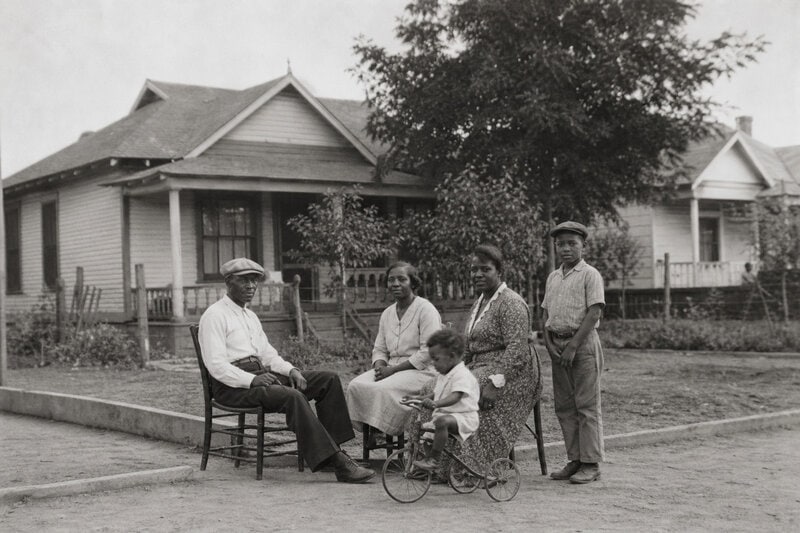
What did daily life look like in the Historical Portland Tract during the 1920s? The ASU archaeology project has begun to answer that question in the most literal way possible — by recovering 20th-century residential remains from the soil itself. These are not the remnants of a community in crisis. The material culture emerging from this dig speaks to ordinary domesticity, to aspiration, to the rhythms of a neighborhood that was thriving. The objects of a household. The footprint of a home. The evidence that people here were not merely surviving; they were building the kind of lives that leave behind the same archaeological signature as any other prospering community.
This matters more than it might initially seem. The dominant narrative about segregation-era Black neighborhoods — the one that decades of redevelopment and neglect helped to calcify — tends toward images of poverty and marginality. What careful archaeology recovers is the fuller picture: a neighborhood where Shelton’s decision to sell lots translated into households with possessions, with domestic arrangements, with the texture of everyday life that historians call material culture. Each fragment the archaeologists surface is downstream evidence of choices Shelton made decades ago — which lot to plat, which street to name, which price to set so that a family of modest means could actually make the purchase.
The Portland Tract existed within Phoenix’s larger geography of Black community life, one node in a network of three distinct regions that the city’s African American residents had built by the 1920s. Each region had its own character; Shelton’s development was remarkable precisely because it was so deliberately scaled, so formally organized, so insistently present on the map of a city that would have preferred to leave it blank.
The Deeper Erasure: Hohokam Beneath the Neighborhood
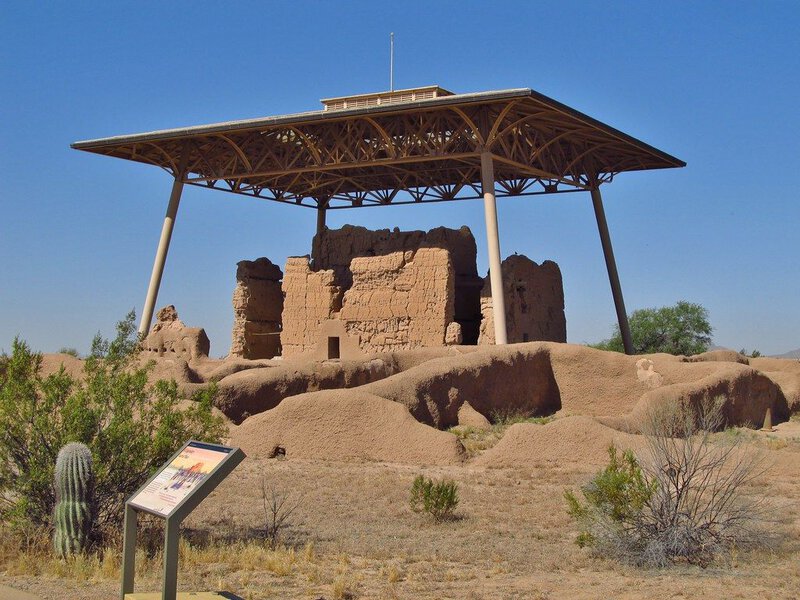
Then the trowels went deeper, and the excavation delivered a complication that any historian would recognize as something more than coincidence.
Beneath the 1920s residential layer, the ASU team found remnants of the Hohokam civilization — present on this land from roughly A.D. 475 to 1450, nearly a thousand years of occupation before the Spanish arrived in the Southwest, let alone the Anglo-American settlers who would eventually draw Phoenix’s grid. The site, it turns out, is a palimpsest: one disappeared community literally resting atop another, two erasures stacked in the same column of earth, waiting for someone with enough patience and enough shovels to read them both at once.
In an urban excavation context, Hohokam remnants typically appear as the traces of a sophisticated, irrigation-based agricultural society — canal fragments, ceramic sherds in styles distinctive to specific Hohokam periods, the compressed evidence of structures that organized communal life across the Salt River Valley for centuries. The Hohokam did not simply vanish; they dispersed and transformed, their descendants present in the region today. But the civilization as a coherent whole receded from this landscape long before Phoenix was a name on any map, leaving behind exactly the kind of buried record that archaeology exists to recover.
What does it mean that the same trench holds a Hohokam village and a Black neighborhood — two communities erased by forces larger than themselves, one on top of the other, in the same patch of Phoenix soil? The overlap is not metaphor. It is geographical fact. This particular piece of earth has been home, been erased, been home again, more than once. The land has a longer memory than the city built on top of it.
How a Neighborhood Disappears — and How History Forgets It Did
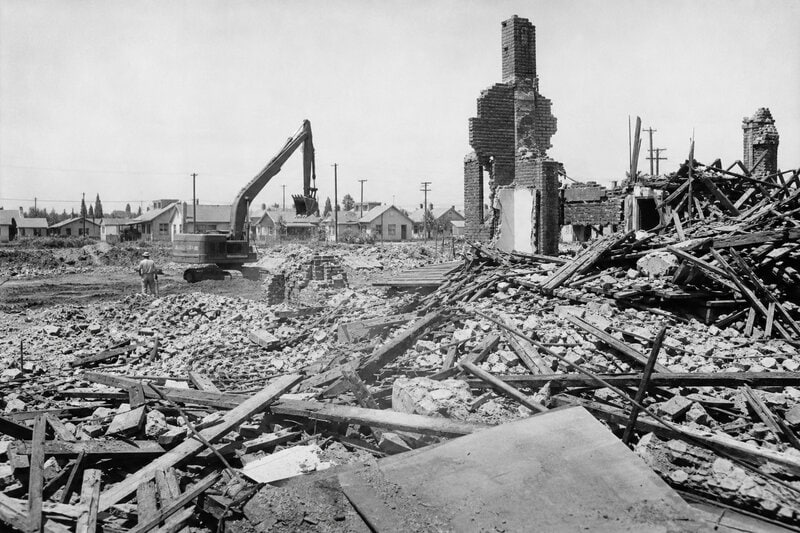
The Historical Portland Tract did not crumble on its own. The forces that removed it from Phoenix’s physical landscape are well-documented patterns in mid-20th-century American urban history: redevelopment programs marketed as modernization, highway construction that required the convenient sacrifice of neighborhoods whose residents lacked the political power to object, and the institutional neglect that followed — the failure to document, to commemorate, to include in the city’s official story of itself.
African American history in Arizona has been particularly vulnerable to this double erasure: first the physical destruction of community space, then the archival silence that makes it easy, decades later, to claim the neighborhood never really mattered — or never really existed as anything coherent. The African American Historic Property Survey conducted by the City of Phoenix represents one sustained effort to push back against that silence and restore a historical record that redevelopment and neglect had allowed to thin out.
The particular cruelty of what happened to neighborhoods like the Portland Tract is that urban renewal targeted exactly the zones where Black Phoenicians had achieved something — where people like Marshall Shelton had succeeded in creating the concentrated community life and property ownership that segregation was designed to prevent. The concentration that made these neighborhoods culturally rich also made them legible targets. When the bulldozers came, the damage was not diffuse. It was aimed precisely at the places that mattered most.
Shelton had built for posterity. He had platted streets and sold lots and watched a neighborhood rise because he understood that permanence was the whole argument. The redevelopment era answered that argument by removing the evidence. The city, in a sense, tried to win the debate retroactively.
The Excavation as Counter-Archive: Why This Dig Matters Now
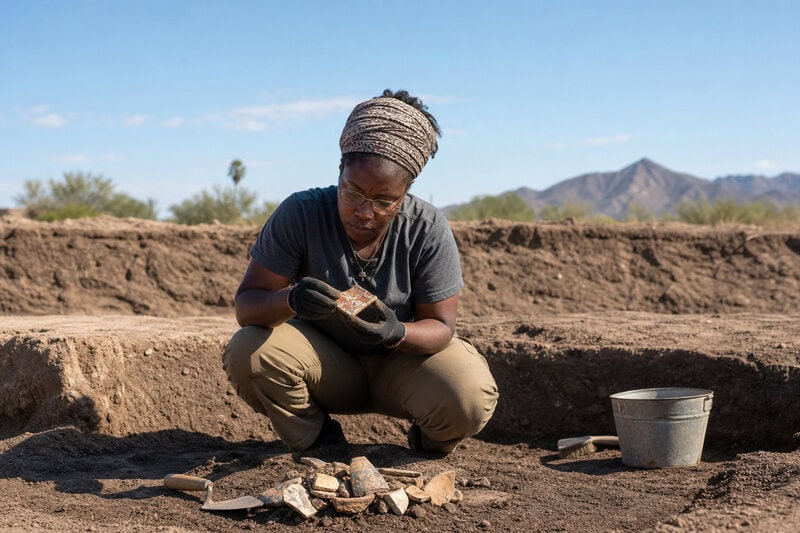
What the ASU archaeology project is doing in Phoenix is not simply digging. It is counter-archiving — using the soil as a document in the absence of robust institutional records about the Portland Tract and the people who lived there. When the paper trail grows thin, when the photographs were never taken or never preserved, when the commemorative plaques were never installed, the earth retains what the city chose to forget. Archaeology, in this context, is an act of historical recovery as much as scientific inquiry.
Community archaeology at its most meaningful brings together descendant communities, local historians, and university researchers in a shared project of restoration — putting a neighborhood back on the map, literally and figuratively, restoring it to Phoenix’s African American history not as a footnote but as a named, excavated, documented place. The Historical Portland Tract deserves to be known not because it represents tragedy alone, though the story of its erasure is tragic, but because it represents achievement — the achievement of Marshall Shelton and everyone who bought a lot, built a house, and made a life there.
Consider Shelton one final time: a developer who platted a neighborhood so that people would have a place, so that the ground beneath their feet would be theirs, so that Phoenix could not simply pretend they were not there. The archaeologists working this site are, in a sense, re-platting it — insisting again, with trowels and field notebooks and the slow patience of careful science, that this place existed, that it was full of life, that it held within it both ordinary domesticity and extraordinary determination.
Beneath it all, the Hohokam remain in their own layer, their own story of home and disappearance. A Hohokam village, then a Black neighborhood, then the indifferent surface of a modern city that stopped asking questions — and now an excavation that refuses to let erasure be the final word. Phoenix is being asked, by its own soil, to remember what it spent a century trying to forget. The answer was always there. Someone just had to be willing to dig.