The permit signs are already rattling in the wind, the excavators are idling at the curb, and somewhere in a county planning office a phone is ringing — because before a single foundation bolt drops, an archaeologist may have just flagged the parcel for review, and the construction clock has quietly, legally, stopped.
The Moment the Bulldozer Stops
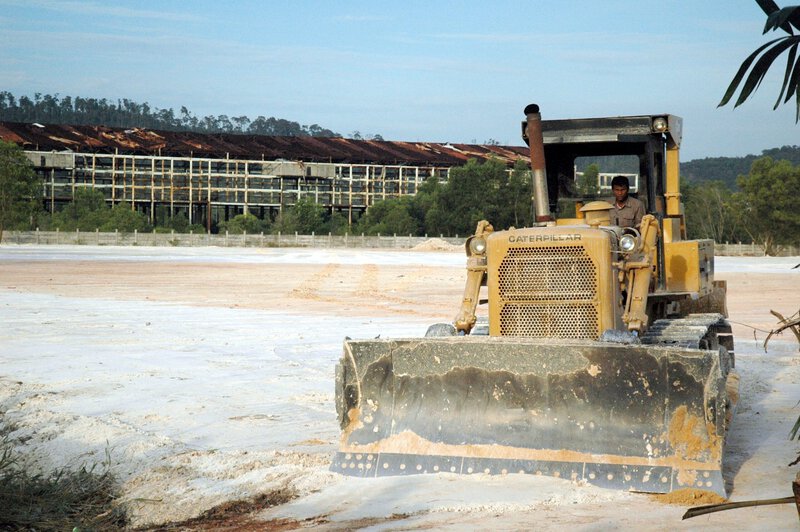
Most passersby would never notice the pause. No yellow tape, no dramatic standoff, no news cameras. Just a bureaucratic heartbeat — the archaeology review before construction that federal law has mandated since 1966 — pulsing invisibly beneath the noise of a modern building site. For a TXST archaeologist who has spent a career moving between the microscopic world of parasites in ancient human remains and the applied world of cultural resource management archaeology, that pause is familiar territory. Each one is a race against a clock measured not in minutes but in construction seasons.
What most people do not realize is that this process has a formal architecture. The Advisory Council on Historic Preservation (ACHP) — the federal body that oversees the review — provides specific Section 106 archaeology guidance, structured around five sequential categories that mirror the actual steps of the review. Five tidy categories. And beneath them, the chaotic, irreplaceable richness of everything humans have ever left in the ground.
Question One: What Is This Process, and Who Is Actually Running It?
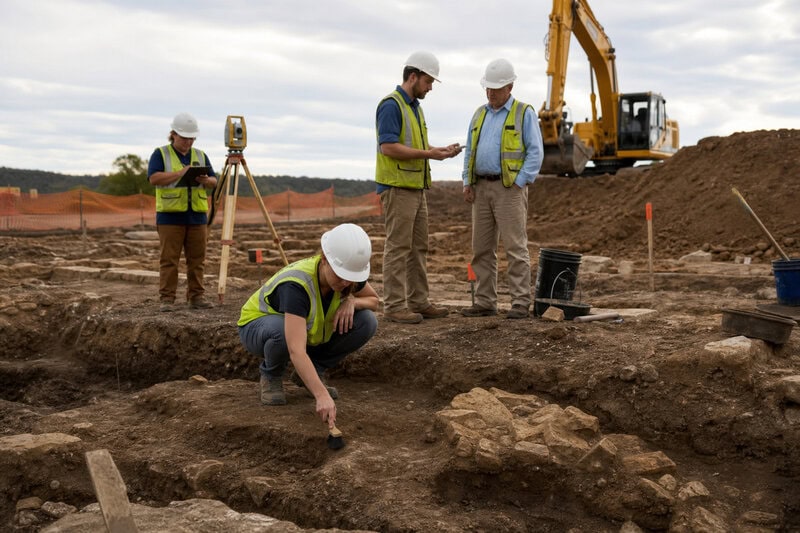
The legal spine of every archaeological survey tied to construction is the Section 106 process, named for a section of the National Historic Preservation Act of 1966. Any project that involves federal money, a federal permit, or federal land triggers it — which, in practice, covers an enormous slice of American construction activity. The ACHP serves as the governing body, and its five-category guidance document functions as a road map that federal agencies, tribal nations, developers, and archaeologists all read from the same page.
Cultural resource management (CRM) archaeology is the applied discipline that steps between a developer’s timeline and the irreplaceable record of human experience buried underfoot. It translates legal obligation into field science. It is, in short, what happens when society decides that the past has rights too, even when it cannot speak for itself in a zoning hearing.
The first thing a team does, before anyone laces up a field boot, is a desk-based assessment. Historical maps, land-grant records, prior survey reports — all of it reviewed at a table, not a trench. It is research that can surface surprises without disturbing a single gram of soil, and it is, as Texas State University colleagues have noted, where most cultural resource reviews begin. The archive, it turns out, is itself a kind of excavation.
Question Two: What Does an Archaeological Survey Before Construction Actually Look Like on the Ground?
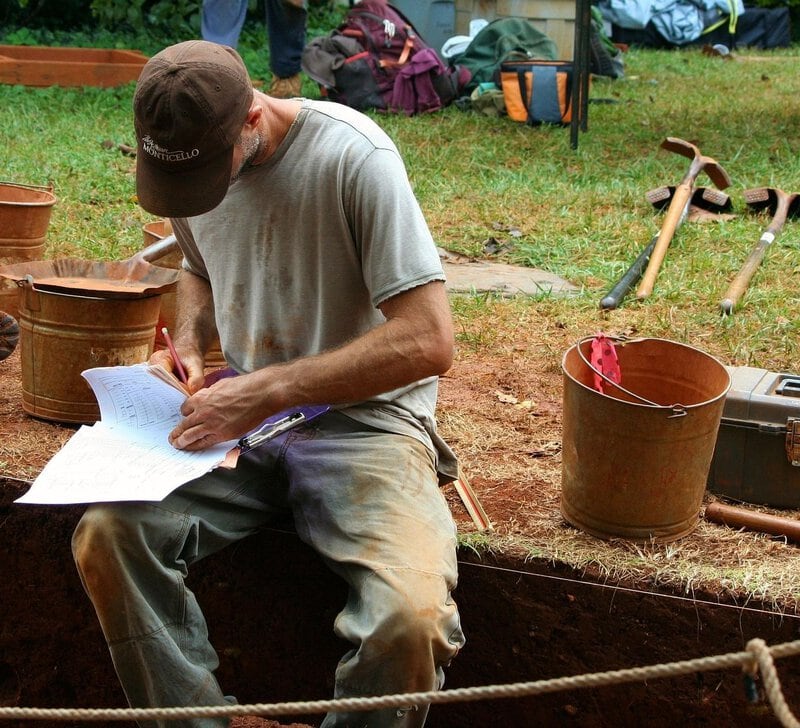
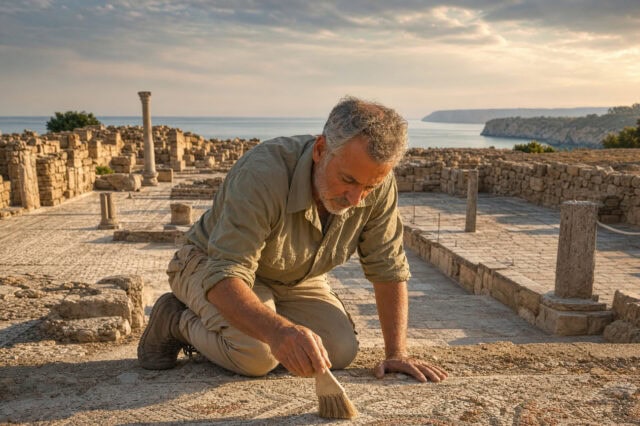
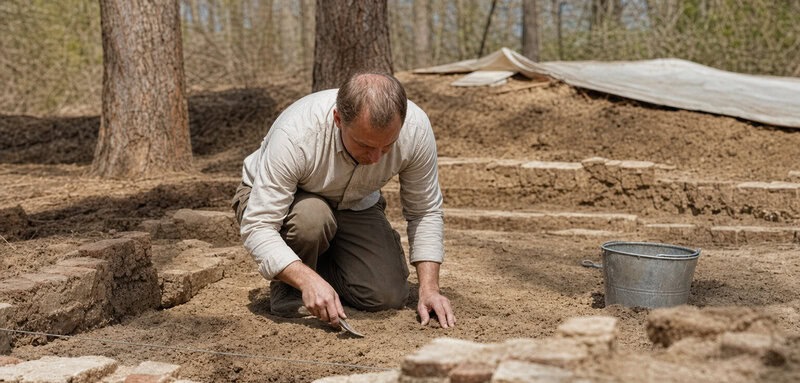
Once the desk-based work is done, Phase I begins — and this is where the boots finally meet the earth. A crew walks the parcel in transects, probing the soil with shovels at regular intervals and logging every potsherd, every charcoal fleck, every flint chip by GPS coordinate. It is methodical, often muddy, and entirely unglamorous in the way that most genuinely important work tends to be.
What archaeologists find before building is rarely what popular imagination expects. Fieldwork has turned up desiccated seeds, woven fiber fragments, and the mineralized evidence of ancient diets — objects that a layperson might walk past without a second glance, but that a trained specialist recognizes as a window into human lives that no written record preserved. The spectacular does occasionally surface: intact eighteenth-century mission floors have been found beneath Texas strip malls. But the statistically common discovery — fire-cracked rock scatters marking where someone cooked a meal a thousand years before the first Spanish expedition crossed the Rio Grande — is culturally just as vital, even if it makes for a quieter press release.
If Phase I turns up artifacts or features that meet a threshold of historical importance, a more intensive Phase II evaluation follows. The project clock ticks louder with every trowel pass. Nobody on either side of the fence — developer or archaeologist — particularly enjoys this part.
Question Three: How Do Reviewers Decide Whether a Site Is Worth Protecting?
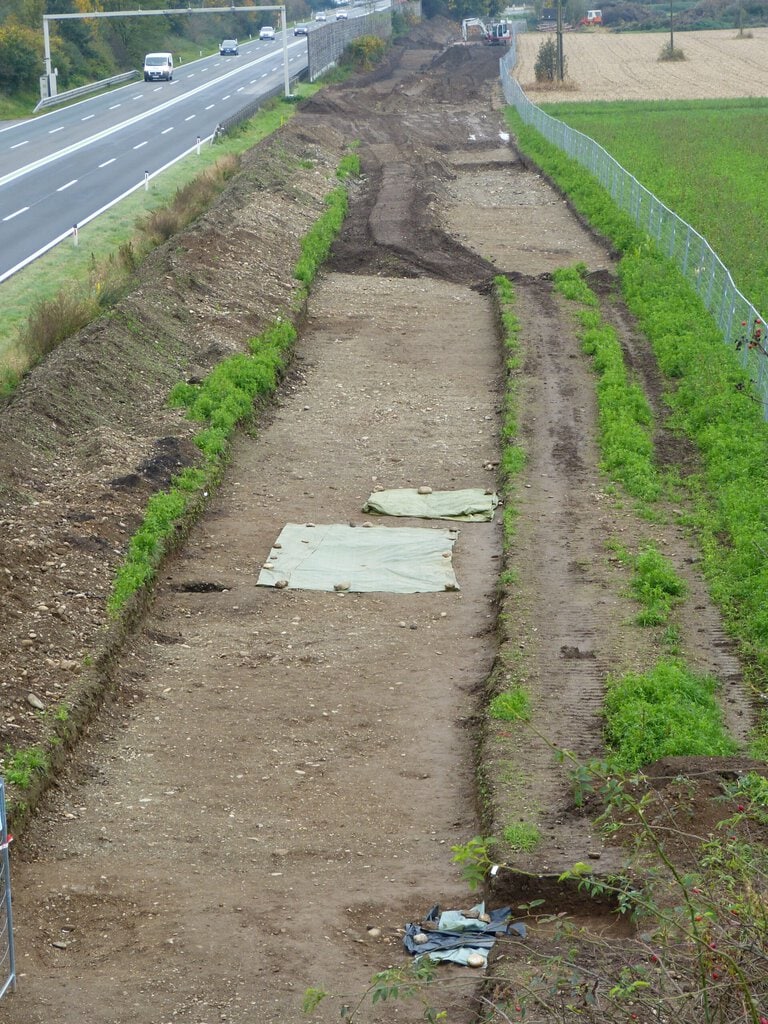
The legal fulcrum is eligibility for the National Register of Historic Places. A site must meet at least one of four criteria: historical association, connection to a significant person, distinctive architecture, or — the one that keeps CRM archaeologists employed — information potential. That last criterion is deceptively powerful. A scatter of worked flint that looks like debris to the untrained eye can legally halt a highway project if it promises to answer a question about human prehistory that no standing document can answer.
Specialization in bioarchaeology and ancient pathogens sharpens the point dramatically. Human remains recovered during a cultural resource assessment may carry DNA or parasite evidence capable of rewriting the story of disease in the Americas — data that exists nowhere else on earth, and that disappears permanently the moment a backhoe passes through. The irreversibility is total. This is not a contaminated aquifer that can be remediated or a historic building that can be restored. It is simply gone.
The official eligibility determination, under the ACHP’s Section 106 framework, belongs to the lead federal agency — not the developer, not the archaeologist. But that agency must consult with the State Historic Preservation Officer, known as the SHPO, and, where applicable, with tribal representatives. The process is collaborative by design, adversarial by occasional necessity.
Question Four: What Happens When the Site Matters and the Builder Still Needs to Build?

A formal finding of “adverse effect” — the conclusion that a proposed project will harm a significant site — triggers a negotiation phase that can produce legally binding Memoranda of Agreement, or MOAs, specifying exactly how the harm will be mitigated. The options run a spectrum. Physical avoidance means redesigning the building footprint to steer clear of the sensitive area entirely. Data recovery excavation means the site is thoroughly excavated before it is destroyed — the knowledge saved even as the physical context is lost. In rare cases, full preservation in place reshapes the structure built above it.
Texas State University’s cultural resource management archaeology program has contributed faculty expertise to exactly these negotiations, treating the MOA not as a bureaucratic formality but as the document that will determine what future generations actually know about a place. It is, in a quiet way, one of the more consequential pieces of paper a construction project ever produces.
The desk-based assessment phase — the archival work that precedes any field mobilization — often surfaces the evidence that makes an adverse-effect finding inevitable. When the records already suggest a significant site lies in a project’s path, a Phase I survey sometimes serves mainly to confirm what the maps long implied. Knowing that early spares everyone considerable expense and no small amount of frustration.
Question Five: Who Else Gets a Seat at the Table, and Why Does That Change Everything?
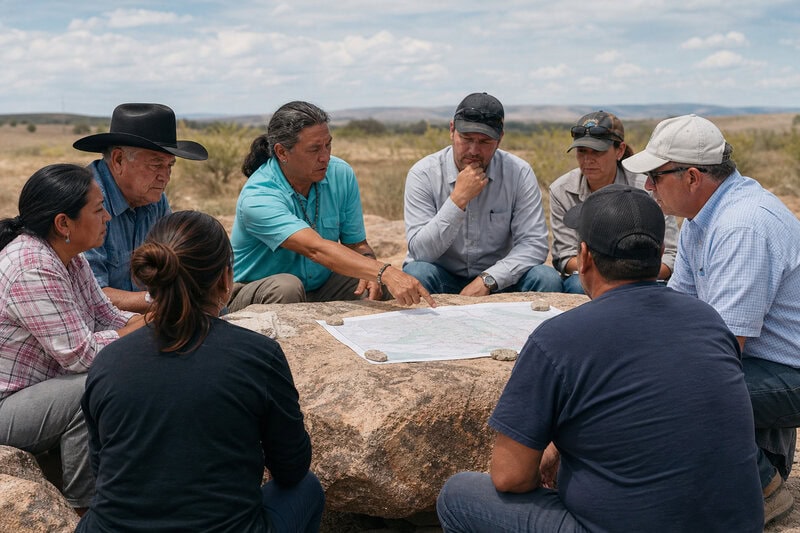
Section 106 mandates consultation with any Indian tribe or Native Hawaiian organization that attaches religious or cultural significance to an affected area. That provision has transformed CRM archaeology from a two-party transaction between agency and developer into a multi-voice negotiation with historical stakes that run far deeper than any permit timeline.
Tribal historic preservation officers — THPOs — bring oral histories, ceremonial geography, and ancestral knowledge that no archive holds, for the straightforward reason that written archives were kept by the people who dispossessed the site’s original stewards. Their input has redirected surveys toward sites that written records never recorded. It has also, on occasion, redirected entire project footprints.
The ACHP’s five-category guidance document treats tribal consultation as a discrete step, not an afterthought — an acknowledgment that cultural resource management archaeology is inseparable from questions of sovereignty and living cultural identity. For archaeologists working in Texas, a state whose soil compresses thousands of years of continuous Indigenous occupation beneath Spanish colonial layers, beneath Anglo-American settlement, beneath the poured concrete of the Sun Belt boom, that seat at the table is the difference between excavating a site and actually understanding it.
Why the Pause Before the Bulldozer Is Worth Every Minute
It is worth stating plainly, because the misconception is widespread: the archaeology review before construction is not, in practice, a mechanism for stopping development. In the vast majority of Section 106 reviews, construction proceeds — often on its original schedule — once the archaeological survey confirms that no significant resources are present. The process exists not to obstruct but to ensure that what is irreplaceable is at least seen before it disappears.
The construction boom reshaping American cities in the 2020s — taller buildings, deeper foundations, faster timelines — is simultaneously the greatest threat and the greatest opportunity the archaeological record has faced in a generation. Texas State University’s sustained investment in CRM archaeology training reflects a recognition that someone has to be ready when the phone rings and the excavators are already idling at the curb.
The five questions that the ACHP organizes its Section 106 archaeology guidance around are, at bottom, one question asked five different ways: what did the people who stood on this ground before us leave behind that we cannot afford to lose — and are we willing to pause, however briefly, to find out? That question has never been abstract. It arrives with permit signs rattling in the wind, an excavator idling just out of frame, and a clock that is already running.