
A storm-battered Massachusetts beach, a tangle of ancient timbers clawing up through the sand, and a name that almost fit — until it didn’t. What began as a routine archaeological identification has unravelled into one of the more confounding shipwreck mysteries on the New England coast, leaving researchers without a name, a date, or an owner for a hull that refuses to match anything in the historical record.
A Powerful Storm Strips the Beach and Reveals Buried Timbers
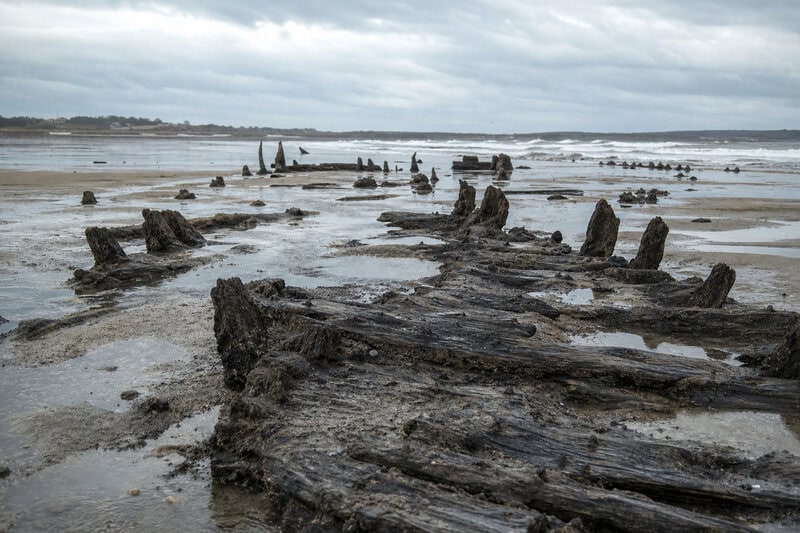
Along the Massachusetts shoreline near Nantucket, a major coastal storm did what storms along this stretch of the Atlantic have done for centuries: it scoured the sand away and let the past breathe. The exposed bones of an old wooden vessel broke the surface, dark and waterlogged, their grain still holding the shape of a ship that had once been someone’s livelihood or lifeline.
Storm erosion is among the most common catalysts for historic shipwreck discoveries in New England, where the seafloor and the shoreline together form a kind of archive, burying and occasionally surrendering vessels lost across hundreds of years of maritime traffic. A mother walking the beach first spotted the emerging timbers — an ordinary outing that abruptly became something else entirely, as she realized the shapes beneath the sand were the ribs of a ship.
At first, nobody had reason to think the find would be especially complicated. The coast near Nantucket is well-documented territory — charted, researched, catalogued across centuries of maritime history. Investigators arrived expecting to match timbers to a name and close the file. That expectation would not survive contact with the evidence.
Archaeologists Arrive on Site and Begin the First Survey
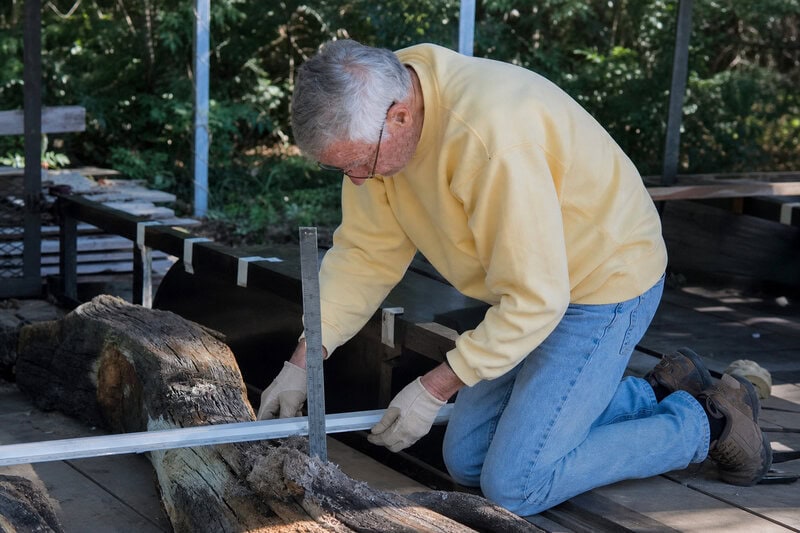
Maritime archaeologists moved quickly once word of the exposure reached them. They set up at the site and began the painstaking work of documentation: measuring timber dimensions, recording how the planks were fastened together, noting construction details that a trained eye can read like a signature left by a long-dead shipwright. In any unidentified shipwreck investigation, this early fieldwork is about building a physical profile precise enough to compare against known vessels — a process part forensic science, part historical detective work.
The Nantucket area gave them plenty of candidates. Few stretches of the American Atlantic seaboard saw heavier maritime traffic in the age of sail, and the region’s wrecking history is correspondingly dense. The team had no shortage of documented losses to check the evidence against. That abundance of options, it would turn out, was not going to help them.
The Warren Sawyer Emerges as the Prime Suspect
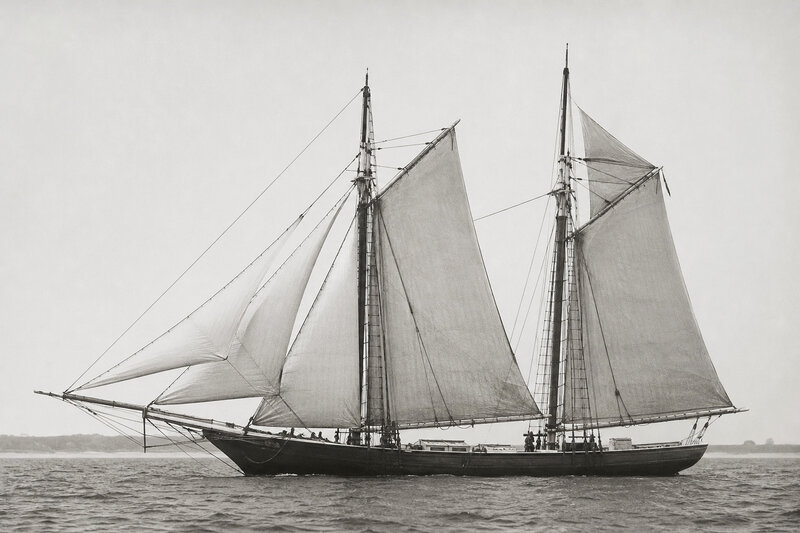
Early in the investigation, one vessel rose to the top of the list: the schooner Warren Sawyer. A documented historic vessel associated with the Massachusetts coast, the Warren Sawyer had a known loss position that placed it in the right general area, making it a geographically credible match. Researchers began building their case around it, running the site’s physical characteristics against what was on record for the schooner and treating the identification as the working hypothesis to be tested.
The investigation files themselves tell this part of the story. The working label later attached to the case — NantucketWreckNotWarrenSawyer — captures, in shorthand, the arc of what came next: a promising lead pursued seriously, and then abandoned. But that conclusion was still in the future. For the moment, the Warren Sawyer looked like an answer.
A Closer Look at the Timbers Raises the First Red Flags
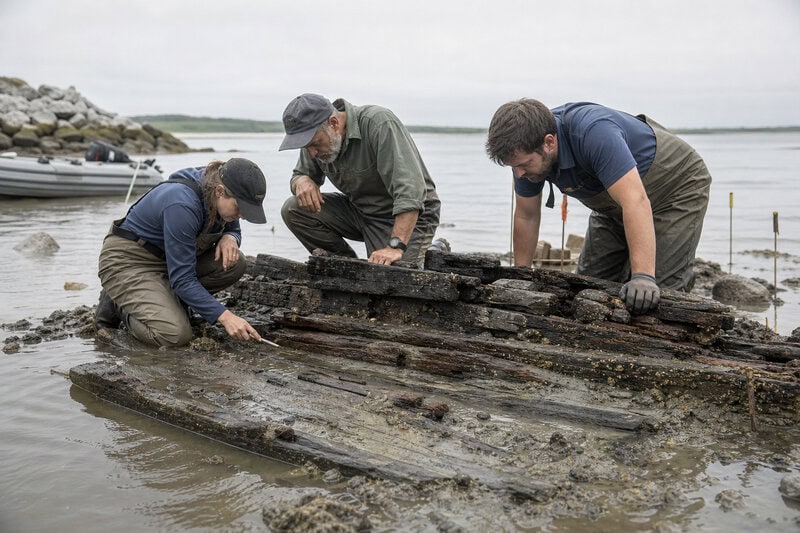
As archaeologists moved from the broad survey into detailed physical examination, the confidence that had gathered around the Warren Sawyer identification began to erode. Joinery methods, timber species, fastening types, structural proportions — each element examined produced measurements or details that didn’t sit comfortably with the schooner’s documented profile.
In historic shipwreck investigation, these kinds of mismatches carry real weight. Shipbuilding in the age of wood and sail was a craft shaped by specific eras, specific regions, and sometimes specific yards, and the physical evidence a hull leaves behind is correspondingly distinctive. The deeper the researchers looked into the wood, the more the clean identification they had hoped for seemed to slip away. Construction evidence was speaking, clearly enough — it just wasn’t saying Warren Sawyer.
The Warren Sawyer Identification Is Formally Ruled Out
After rigorous comparison against all available documentation for the Warren Sawyer, archaeologists reached a conclusion they couldn’t avoid: the physical evidence from the Nantucket wreck could not be reconciled with the known schooner. The ruling-out was formal and definitive, the pivot point encoded in that working label — NantucketWreckNotWarrenSawyer — which now reads less like a file name and more like a small monument to a dead end. The team had done the work, followed the most credible lead available, and arrived at a closed door.
With the Warren Sawyer eliminated, the shipwreck mystery was effectively unsolved again — no confirmed name, no confirmed date of loss, no confirmed origin. The investigation had shed one identity without finding another, and the hull in the sand remained stubbornly anonymous.
Researchers Cross-Check the Clues Against the Broader Historical Record
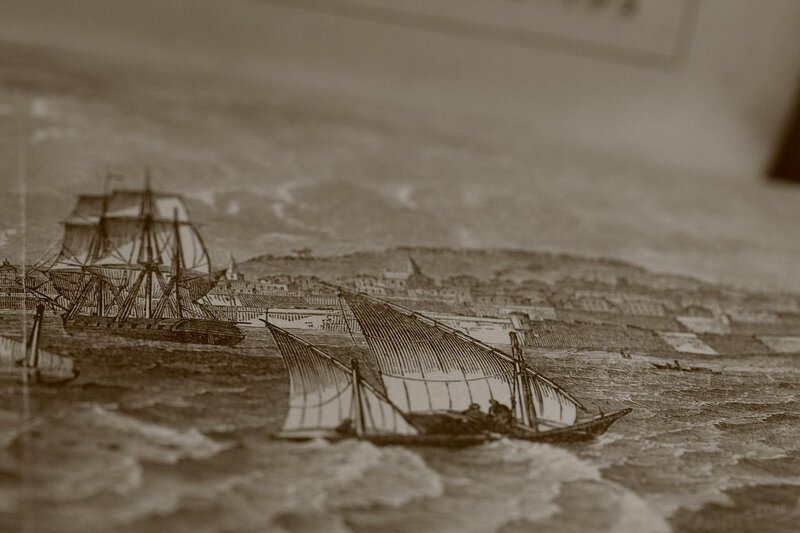
With the schooner ruled out, the team widened the search considerably. Vessel registries, insurance records, harbor logs, and newspaper accounts of historic losses along the Massachusetts coast were all pulled in and cross-referenced against the physical evidence the site had produced: construction style, estimated size, material evidence, and building techniques. It was exhaustive, methodical work of the kind that usually yields at least a plausible match or a class of vessel to anchor the inquiry.
This time, the search turned up nothing. Not a partial match, not a near-fit that could be refined with further evidence — nothing that corresponded convincingly to what the hull in the sand was showing. The case was sliding from “unidentified” into something more uncomfortable: potentially unknown.
The Unexpected Twist: No Known Vessel Fits the Evidence
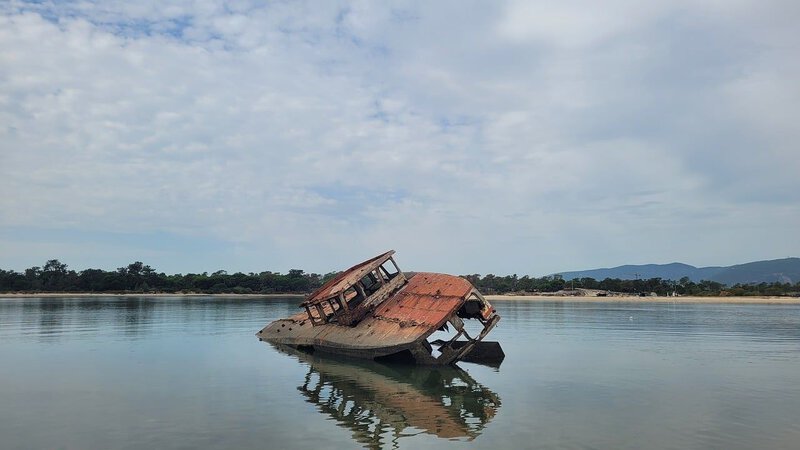
The clues from the wreck do not correspond to any vessel currently in the documented archaeological or historical record. There is no name to attach to the hull, no owner to trace, no loss account to locate in the archives. Fox News described the development explicitly as an “unexpected twist” — language that reflects genuine surprise within the investigative team rather than a tidy narrative planted for public consumption. The mismatch of clues was not a planned revelation; it was a finding that upended the case from inside.
The scenario is relatively rare along the New England coast. Most wrecks in this region can eventually be matched to at least a class of vessel, even when a specific ship name proves elusive. A shipwreck mystery with no resolution in sight — no category, no era, no origin point that fits — is a different kind of problem, and a more unsettling one for researchers accustomed to the archive eventually yielding an answer.
What Comes Next: Advanced Analysis and a Reopened Case
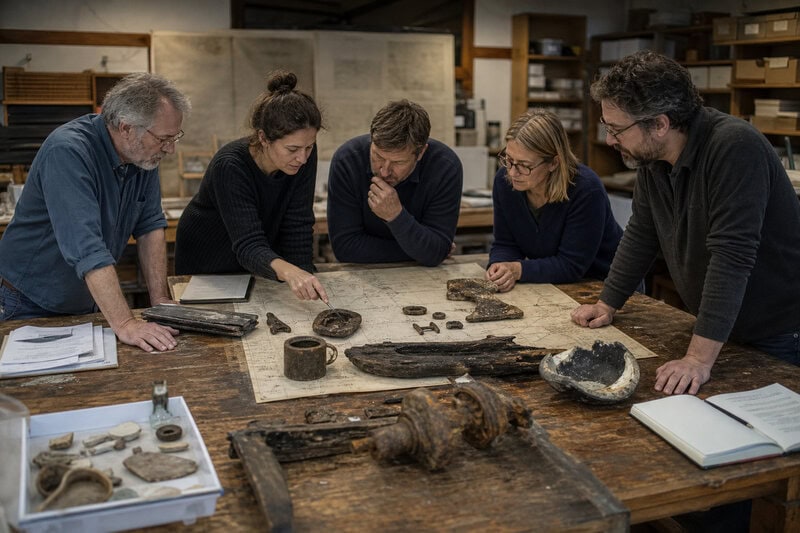
Unable to assign an identity, archaeologists did the only defensible thing: they reopened the case file and treated the Nantucket wreck as an ongoing investigation rather than a completed discovery. Reopening a case after a failed identification is uncommon, and it signals something important — the physical evidence is sufficiently distinctive, or sufficiently anomalous, to justify sustained attention rather than a provisional label and a closed folder.
The next phase of the investigation may draw on specialized analytical tools that go beyond visual inspection and archival comparison. Wood-species identification can narrow the geographic origin of the timber. Dendrochronology — which dates wood by reading the pattern of annual growth rings — can sometimes pin construction to within a few years. Metal isotope testing on fastening materials can point toward the region where the iron or copper was smelted. Each technique has the potential to generate a new lead in a mystery that has so far resisted every conventional approach.
Wider public exposure adds another dimension to the search. In cases of unidentified shipwreck archaeology, broader attention has a track record of surfacing useful material — maritime historians who recognize an obscure construction detail, descendant communities who hold family records of a vessel’s loss, amateur researchers who have encountered a document that never made it into a professional archive. The Nantucket wreck’s story is now in enough hands that the next clue could come from almost anywhere.
A stretch of Massachusetts shoreline gave up a ghost ship, and the ghost refused to be named. The timbers are still there, still waiting, and the investigation that began with a storm shows no sign of ending quietly.