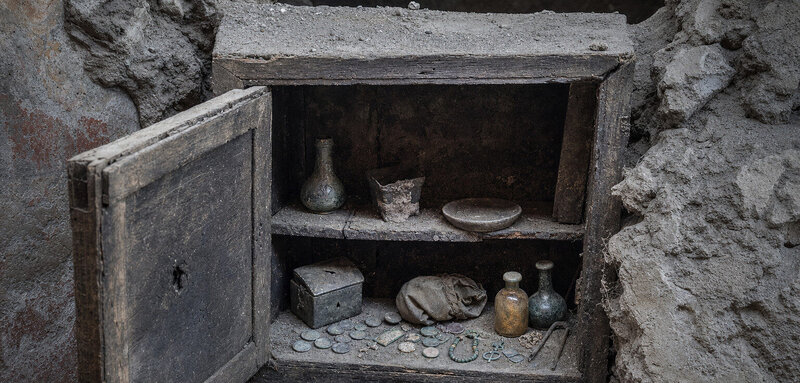
The ash had not been disturbed. That was the first thing the archaeologists noticed — a wooden door, filmed in grey volcanic dust, sitting exactly as someone had left it on what became the last ordinary morning Pompeii would ever have. Brushing the surface clean with the particular care that defines modern excavation, the team realised they were looking at a seal that had held, undisturbed, for the better part of two thousand years.
A Door No One Had Opened Since Vesuvius Erupted
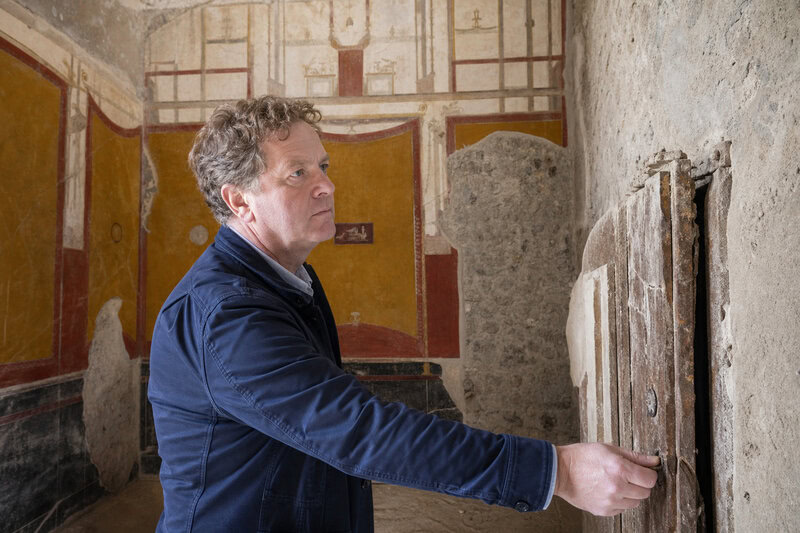
Gabriel Zuchtriegel, Director of the Pompeii Archaeological Park, has spent years overseeing excavations at a site that never quite stops surprising him. But even by Pompeii’s standards — a city that routinely hands back things the ancient world forgot to keep — a sealed wooden cupboard still in place, still containing its original contents, still arranged as its owner left them, qualifies as archaeology’s rarest kind of gift. Not a temple. Not a monument. Not a hero’s tomb. A cupboard. The kind of unremarkable domestic storage piece that would have stood in tens of thousands of Roman homes, noticed by no one, remembered by no one — until a volcano made it eternal.
The cupboard was not a treasure chest in any dramatic sense. It was, in all likelihood, exactly as mundane as it looked: a place to keep things. What makes it extraordinary is not what it held but what it sealed — the spatial memory of a specific person’s specific choices on a specific day. Zuchtriegel has described moments like this as the human scale of archaeology made suddenly, uncomfortably legible. The question that threads through the find, and through every room excavated in this buried city, is a simple one with no clean answer: who put these objects away, and what did they expect when they came back to open the door?
What the Pompeii Excavation Actually Found Inside
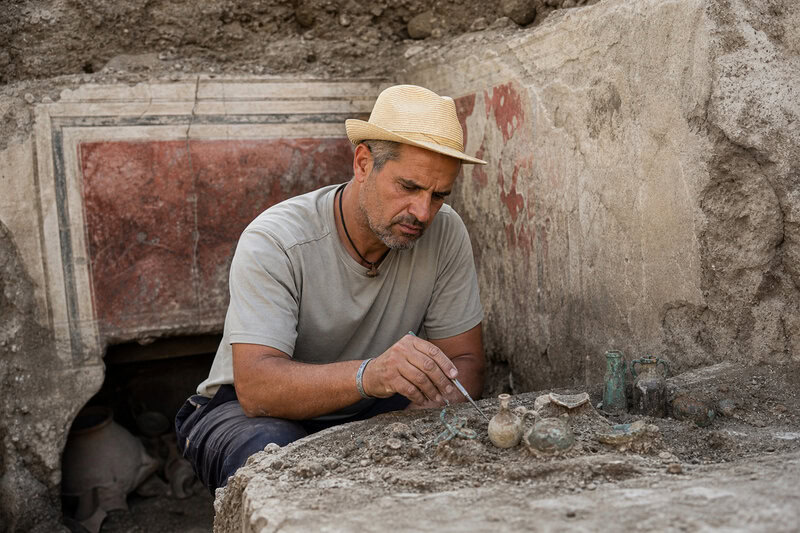
The cupboard emerged as part of Pompeii’s continuing, methodical push into zones that centuries of looting, amateur excavation, and simple neglect had never reached. The Great Pompeii Project — the large-scale, EU-backed excavation and conservation programme that has transformed the site over the past decade — has made it a discipline to document everything in place before a single object is moved. That discipline is what makes a find like this legible at all. The spatial story of how someone arranged their possessions is itself evidence; once you disturb the arrangement, you lose it forever.
The inventory recovered from inside the sealed Pompeii cupboard reads, as one account put it, like a packing list for a life interrupted: pottery vessels, coins, amulets, and a vessel of perfume. Objects spanning the practical, the financial, and the deeply personal — the whole human range compressed into one wooden box, sealed by catastrophe, and returned to the light almost two millennia later.
Zuchtriegel has emphasised, in his characteristic way of turning excavation reports into human narratives, that the sealed condition of the cupboard is precisely what makes it exceptional. Wood, in almost any other burial context, does not survive. It rots. What remains of ancient Roman furniture in the archaeological record is usually inferred from iron fittings left in soil, or reconstructed from painted frescoes and mosaic images. A wooden structure intact enough to have retained its contents in their original positions is, by any measure, a vanishingly rare physical document.
Coins, Amulets, and Perfume: Reading a Stranger’s Shelves
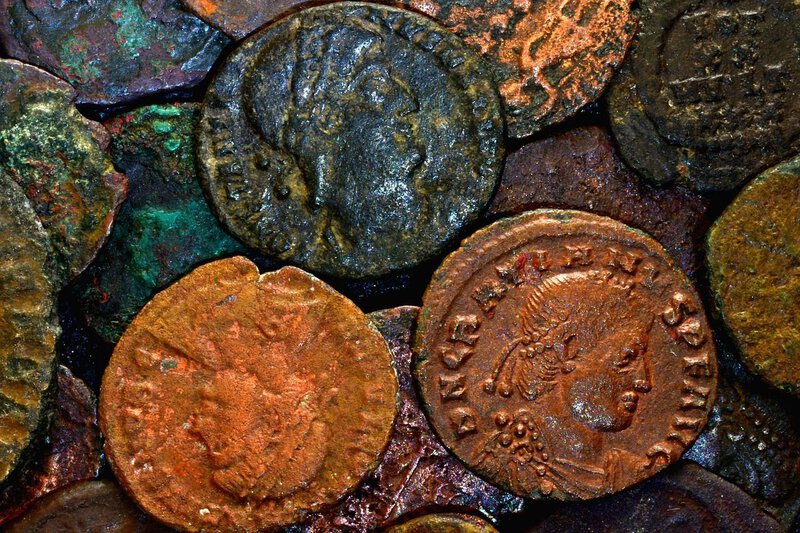
Consider what each category of object tells us, and then consider what they tell us together. The coins are the most immediately legible. Pompeii in AD 79 was a prosperous, commercially active city — a place where money moved through daily transactions with the same casual regularity that it moves through ours. Coins kept at home were not unusual; they were savings, change, the small financial infrastructure of an ordinary household. Finding them in a domestic cupboard confirms, in the most direct way possible, that this was a home embedded in the cash economy of the Roman world.
The amulets shift the register entirely, from economics to something closer to emotion. Romans wore and stored amulets as protective objects — against illness, against the evil eye, against the thousand unnamed anxieties of daily life. Finding them shelved rather than worn raises a question the archaeology cannot definitively answer: were they kept there because they belonged to a child? Stored carefully before a hurried flight from the city? Tucked away for reasons that seemed to make sense on the morning the eruption began and that no longer matter to anyone except the people trying to understand what happened?
And then there is the perfume. A vessel of perfume surviving nearly two millennia sealed inside a wooden cupboard is among the most intimate objects archaeology can return to us — and it is worth pausing on that for a moment, because it is genuinely strange. Perfume in the Roman world was not a luxury reserved for the wealthy; it was used in daily grooming, in religious ritual, as a marker of social aspiration and personal care. Someone valued it enough to keep it. Someone may have planned to use it again. Archaeologists uncovering these coins, amulets, and perfume together found, as Zuchtriegel has framed such assemblages, not a collection of artefacts but a portrait: the outline of a specific person, navigating a specific day, that never ended the way they planned.
Daily Life in Pompeii: The World Behind the Cupboard Door
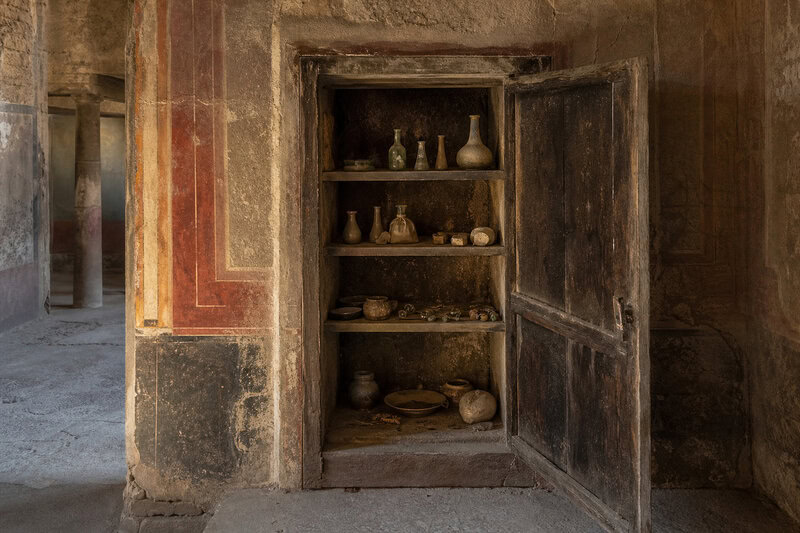
Pompeii in AD 79 was a bustling city — a place with streets busy enough to have worn ruts into their paving stones, with food stalls and bakeries and thermopolia serving hot meals, with household shrines tended as casually as we leave keys on a hook by the door. It was, by any measure, a functioning, thriving, layered urban society, and the texture of that society is exactly what the cupboard’s contents reflect.
Nothing among the recovered objects is purely functional, and nothing is purely symbolic — which is entirely consistent with what previous Pompeii daily life artefacts have already shown us. Pottery is practical, but the specific vessels chosen, their size and type, speak to household routines. Coins are transactional, but their presence at home rather than deposited elsewhere tells us something about trust and habit. Amulets are protective, but their placement tells us something about anxiety. Perfume is sensory, but its keeping tells us something about what this person thought a good life required.
The cupboard’s contents also carry a quieter implication about the eruption itself. These are not objects someone grabbed on the way out of the door. They are objects someone left behind — which suggests either a conviction that they would return, a paralysis of decision in the face of the unthinkable, or simply no time to choose. The Vesuvius eruption over Pompeii did not announce itself as a civilisation-ending event; in its early hours, the falling pumice seemed survivable to many residents. The closed cupboard door is, among other things, evidence of that fatal optimism.
How Vesuvius Preserved Wood for Two Thousand Years
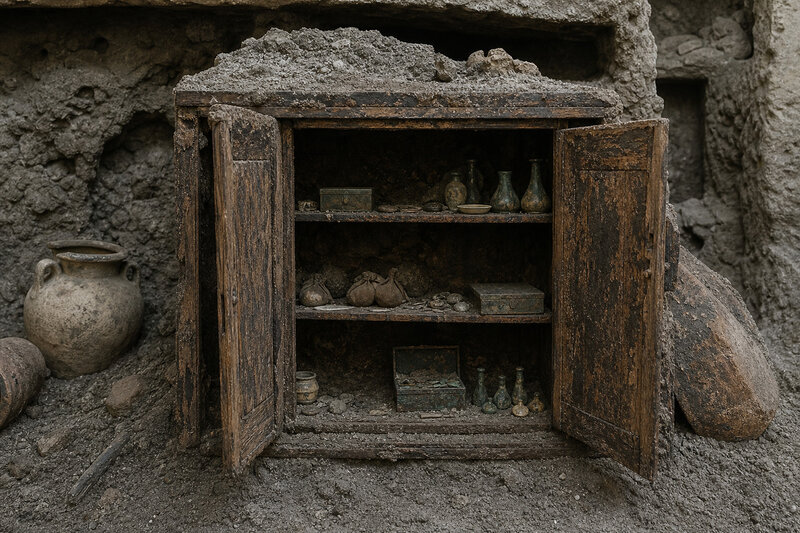
The eruption of Vesuvius buried Pompeii under metres of volcanic pumice and pyroclastic material — a burial that was catastrophic for the living and, in a grim irony, remarkably preservative for certain categories of evidence. The low-moisture, oxygen-depleted conditions created by the volcanic encasement can preserve organic material in ways that ordinary burial almost never achieves. Soil burial, over centuries, introduces moisture, bacteria, and oxygen — the trifecta that destroys wood. Volcanic encasement, in the right conditions, works against all three.
The sealed cupboard created a micro-environment even more protective than the surrounding ash layer. The wooden structure itself formed a secondary seal over its contents, meaning the interior experienced conditions far removed from normal burial. That is why the objects inside survived in a condition that allowed archaeologists not just to catalogue them but to read their arrangement — to see, however partially, how a person in AD 79 had organised what they valued.
Zuchtriegel has spoken about the ongoing excavation programme as an act of rescue as much as research. Each season at Pompeii is also, he has noted, a race: against rising ground moisture, against the pressure of millions of annual visitors, against time. Finds like this sealed cupboard are, in that context, arguments — concrete, public, emotionally compelling arguments — for continued investment in a site that has not finished giving back what it holds.
A New Pompeii: Where Discovery Meets Public Imagination
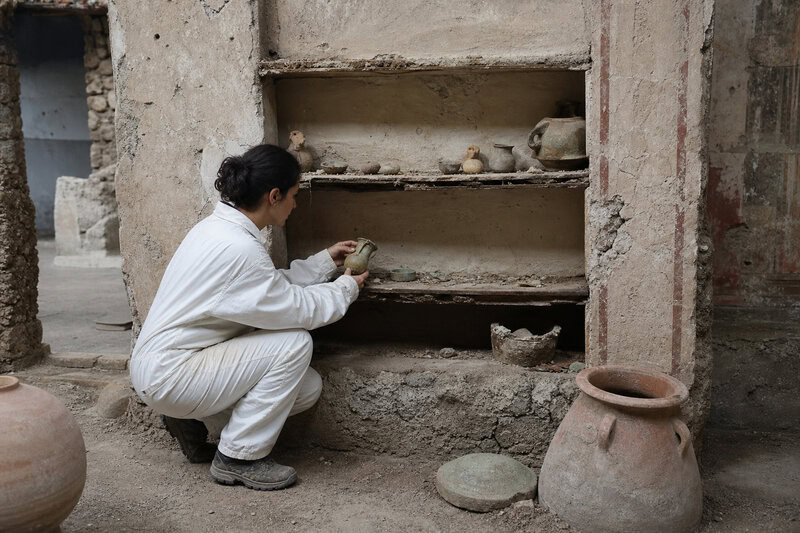
This cupboard joins a remarkable run of recent high-profile Pompeii discoveries — painted rooms recovered in vivid colour, food stalls with their last meals still in the pots, skeletal remains found in postures that speak to the final desperate minutes of people trying to shelter. Together, these finds have repositioned Pompeii in public imagination: not a ruin to be visited but a live excavation to be followed, season by season, find by find.
Zuchtriegel has been the deliberate public face of this shift. His instinct — evident in how finds are communicated, framed, and released — is to lead with the human story rather than the scholarly one. The cupboard fits that approach perfectly. Described by Reuters as yielding “an intimate snapshot of one resident’s life” before Vesuvius destroyed the city, it is a phrase that tells a general reader everything they need to feel the weight of the find — and nothing that requires a degree in classical archaeology to process.
The risk in that approach — one Zuchtriegel himself has acknowledged — is that the appetite for the vivid find can overshadow the slow, unglamorous stratigraphic work that makes each discovery legible in the first place. The cupboard is a headline. But the story behind it took decades of methodical excavation, careful documentation, and sustained institutional investment to make possible. The headline and the decades are not in competition; they depend on each other.
The Person Who Never Came Back for Their Things
Return, finally, to the anchor question. Someone placed coins, amulets, pottery, and a vessel of perfume inside a wooden cupboard in Pompeii, arranged them in some order that made sense to them, and closed the door. For reasons the archaeology cannot fully recover — flight, death, or something in between — they never returned to open it.
What the Pompeii cupboard sealed for almost two thousand years offers is not treasure in any conventional sense. It is something harder to categorise and, in its way, more unsettling. It is the most direct evidence available of how a specific person in AD 79 organised what they valued — which objects they kept close, which they stored, which they held in enough regard to place on a shelf rather than abandon. Zuchtriegel’s framing of such finds as intimate snapshots is not sentimentality; it is an epistemological claim about what objects, in situ, in arrangement, can actually tell us about the people who placed them there.
The door is open now. What it contains — coins, amulets, a perfume vessel, the ordinary pottery of a Roman household — is being held in trust, as Zuchtriegel and his team hold all of it in trust: for the curious, for the scholars, and for the simple human reflex that makes us want to know who lived here, what they kept, and whether they were, in any way that matters, like us. The answer, as it always is at Pompeii, is yes. Uncomfortably, recognisably, exactly yes.