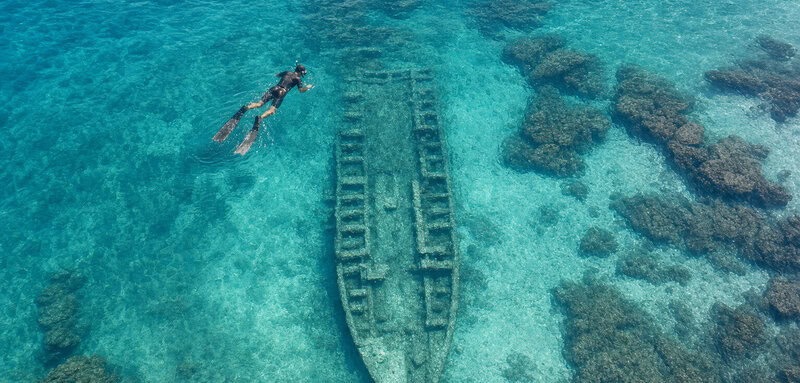
The water off Kekova Island, Turkey, is so clear on a calm morning that you can watch your shadow move across the seabed long before you reach it — and somewhere down there, beneath centuries of silt and silence, a wooden ship has been waiting for nearly five thousand years for someone to notice it was there. Harun Özdaş noticed.
A Ship at the Bottom of Time
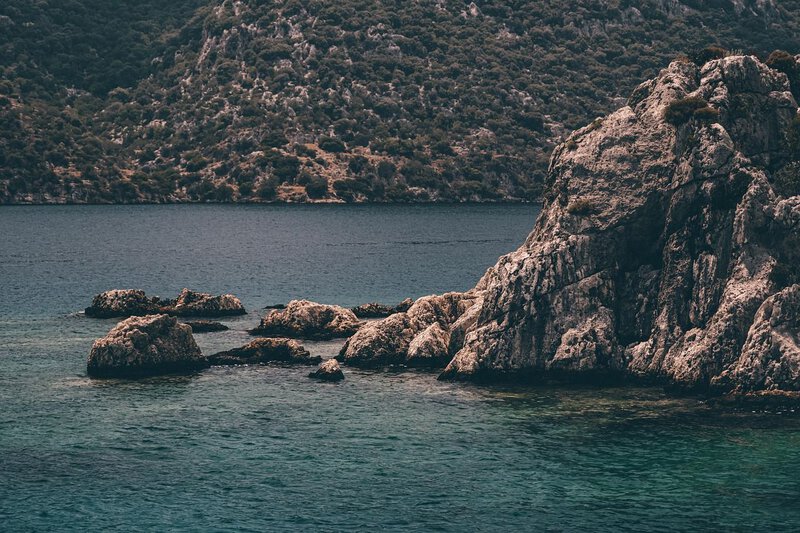
Özdaş, who directs the Underwater Research Center at Dokuz Eylül University, had good reasons to look hard at the sheltered waters around Kekova. The small, elongated island in Turkey’s Antalya province is already one of the Mediterranean’s most storied underwater sites — its shallows swallowed a Lycian city sometime around the second century CE, and the drowned walls and staircases of that settlement are visible to snorkelers today. Archaeologists had long understood Kekova’s lagoons as an underwater zone of extraordinary density. What Özdaş and his dive team found, however, was older than anything the Lycians ever built, older than anything their ancestors had built, older, quite possibly, than anything yet recovered from the floor of any ocean on Earth.
The wreck is estimated to be between 4,400 and 4,700 years old, placing it squarely in the Early Bronze Age — before the Great Pyramid at Giza was completed, before alphabetic writing existed anywhere, before iron tools had reached the Aegean. Researchers now believe this may be the world’s oldest known shipwreck — a designation that carries the weight of every sea voyage, every merchant gamble, and every squall that human sailors have ever faced. It also quietly reframes a coastline that already thought it had seen everything.
What Özdaş’s Team Actually Found
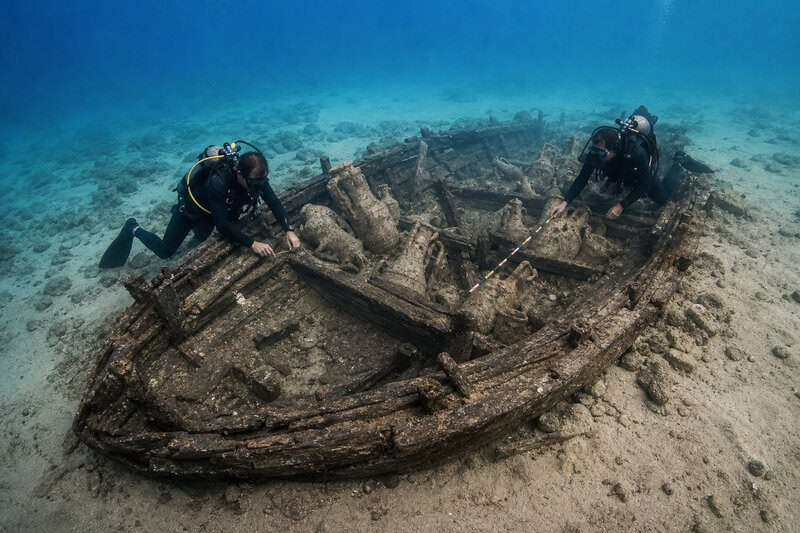
The vessel was a wooden cargo ship — not a warship, not a royal barge, but a working freighter of the kind that kept the ancient Mediterranean economy turning. Surviving structural timber and the spatial arrangement of associated artifacts allowed Özdaş’s team to reconstruct its basic form and purpose. The wreck had not been picked clean by centuries of opportunistic salvage, which is itself a small miracle; the depth of the site and the low-oxygen conditions of the particular pocket of water where it rests created a preservation envelope that wood almost never survives long enough to inhabit.
That wood survived at all is the kind of detail that makes underwater archaeologists go quiet for a moment. Organic material — hull planking, framing, rope — degrades with ruthless efficiency in warm, oxygenated water. The fact that timber structure remained at Kekova after nearly five millennia points to rapid burial under sediment shortly after the ship sank, a geological kindness that also protected the artifact field from disturbance. Archaeologists date the wreck to between 4,400 and 4,700 years old, anchoring that range to pottery forms and cargo remnants whose shapes and fabric align with known Early Bronze Age sequences — approximately 2700 to 2400 BCE.
It was systematic survey work, Özdaş has been careful to emphasize, not a lucky drag-net discovery, that brought the site into focus. Local fishermen had reported seabed anomalies in the area for years. The difference between an anomaly and an archaeological find is exactly the kind of methodical attention that a university research center brings to a dive.
How Old Is Old? Putting 4,700 Years in Human Scale

When Özdaş’s team assigns a date range of 2700-2400 BCE to the wreck, they are describing a world almost impossible to visualize. Stonehenge was still under active construction. Cuneiform — one of humanity’s earliest writing systems — was a relatively recent invention, and most of the known world had not encountered it. Egypt’s Old Kingdom pharaohs were consolidating power along the Nile but had not yet finished the monuments we now think of as synonymous with antiquity itself. The sailors aboard this ship lived without coined money, without iron tools, and without any written record that would survive to tell us who they were or where they were going.
The previous benchmark for the world’s oldest known shipwreck was the Uluburun wreck — also discovered off Turkey’s coast — dated to approximately 1300 BCE. If the Kekova dating holds under further scrutiny, this new discovery is more than a thousand years older: a gap in time nearly as long as the entire lifespan of the Roman Empire. The comparison is worth sitting with. Historians consider Rome’s arc — from its founding to the fall of the Western Empire — to be one of the longest continuous political stories in recorded history. The gulf between Uluburun and Kekova is longer than that.
An Early Bronze Age cargo voyage in the eastern Mediterranean was not a casual undertaking. Sailors of this period navigated by stars and coastal landmarks, carried ceramic jars likely containing oil, wine, or grain, and faced the same sudden squalls that still catch modern yachtsmen off Kekova today. The sheltered lagoon between the island and the Lycian mainland was a waypoint, a place to anchor overnight and assess the weather before committing to open water — which means the ship sank, in all likelihood, somewhere it believed itself to be safe.
The Science of Pinning Down a Date
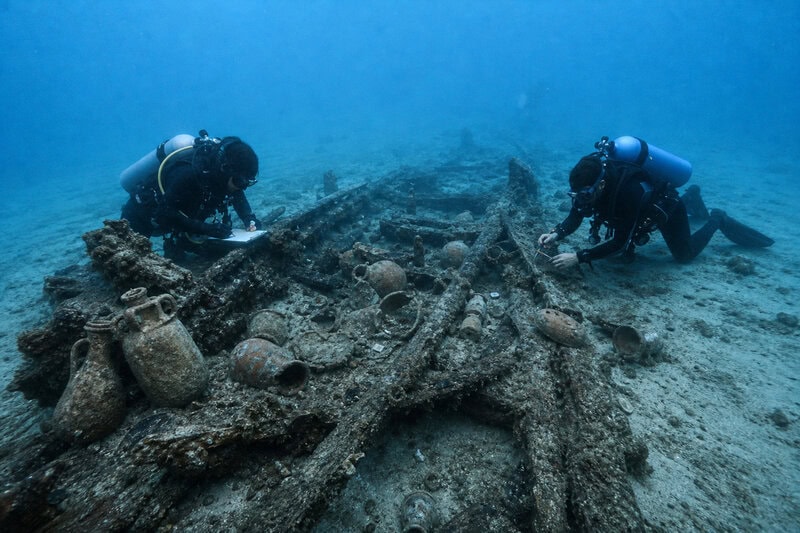
The 300-year window — 2700 to 2400 BCE — reflects honest scientific caution rather than imprecision. Ancient shipwreck archaeology rarely yields a single clean date, because cargo can include older heirlooms alongside contemporary goods, and timber can be salvaged and reused from earlier vessels before being incorporated into a new hull. A ship built in 2500 BCE might carry planks cut a century earlier and amphorae whose style belongs to 2450 BCE, and radiocarbon dating of each element will tell a slightly different story. Layering those stories carefully is how archaeologists arrive at a defensible range.
Özdaş’s team used the standard toolkit for this kind of work: artifact typology — comparing pottery shapes and clay fabric to established Bronze Age sequences — combined with stratigraphic context and, where organic material permitted, radiocarbon dating. Further excavation seasons will be needed before the dating can be tightened significantly, which means this discovery is emphatically a beginning rather than a conclusion. Özdaş and his colleagues have opened a file that a generation of scholars will spend careers trying to close. That is not a criticism; it is how the discipline works, and the site is stable enough to wait.
Kekova Island: A Coast That Has Always Swallowed Ships
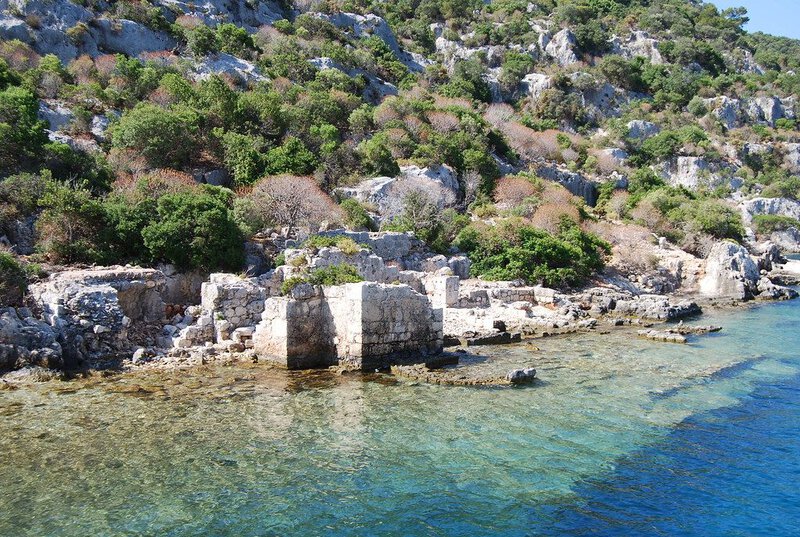
The geography that makes Kekova so attractive to researchers is the same geography that made it attractive to Bronze Age sailors: a natural roadstead formed between the island and the Lycian mainland, offering protection from the open sea’s worst moods. That roadstead sat directly on the trade routes along which copper moved from Cyprus, tin came down from Anatolia, and grain traveled up from Egypt — the arterial commerce of the ancient world running above what may now be its oldest recovered wreck.
The sunken Lycian city of Simena, whose walls descend into the shallows on the island’s northern side, had already established Kekova as an underwater archaeological zone of exceptional importance before Özdaş’s team arrived. Working in water already understood to contain significant heritage, his divers operated with the methodical care that protected both the site’s integrity and its evidentiary value. Artifacts associated with the wreck date back nearly 5,000 years — a sentence that takes a moment to parse when you are standing on an island whose best-known ruins are already considered ancient.
Why the Oldest Shipwreck Title Matters Beyond the Record Books
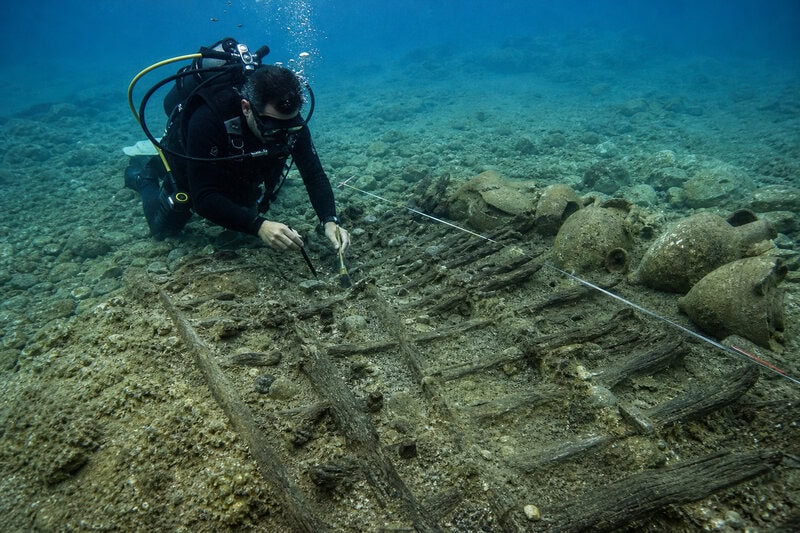
The superlative — oldest known shipwreck — tends to dominate headlines, but for Özdaş and his colleagues the more significant point is what the wreck can teach. Early Bronze Age seafaring in the eastern Mediterranean is poorly understood precisely because wooden ships almost never survive long enough to be found, leaving historians to reconstruct maritime trade from pottery fragments recovered in palace storerooms and harbor-side deposits on land. A dateable, in-situ wreck with associated cargo is a primary source of a kind that a potsherd in a storage magazine can never be: it captures a single voyage, a specific economic decision, a moment that ended badly on a specific day.
If analysis of the cargo confirms the trade routes that land-based sites have long suggested, the wreck could validate — or complicate — current models of how Early Bronze Age Mediterranean commerce actually functioned: who was trading with whom, across what distances, and with what regularity. The implications extend beyond Turkey. If a ship this old survived off a well-visited island whose waters are crossed by tourist boats every summer, then other Early Bronze Age wrecks may be resting in similarly sheltered, inadequately surveyed waters around the Mediterranean and beyond. Archaeologists who have studied the discovery have noted precisely this possibility — that Kekova is not an exception but a proof of concept.
The Crew Who Never Came Home
Özdaş has spoken about the wreck in terms that go beyond the technical, and it is not difficult to understand why. The people aboard this ship committed their lives to a sea crossing in a world without the safety nets — charts, weather forecasting, distress signals — that modern sailors take for granted. They had reasons compelling enough to accept that risk: a cargo to deliver, a contract to honor, a home port to return to. The cargo scatter on the seabed, mapped by Özdaş’s divers through careful photogrammetric survey, is itself a portrait of the hull’s final motion as it settled — objects shifted by the last slow roll of a ship that would not move again.
No human remains have been reported from the site. The sea rarely preserves bone across five thousand years in these conditions, and the crew of this vessel left no names, no log, no inscription — nothing but the arrangement of their goods on the floor of a Turkish lagoon. The next phase of research will involve more precise radiocarbon dating of timber samples, full photogrammetric mapping of the artifact field, and consultation with ceramic specialists to identify where the pottery originated: work that will take years and that Özdaş’s center is positioned to lead.
Until that work is complete, the wreck holds its deepest secrets in the sediment off Kekova — a wooden hull that outlasted every empire, every dynasty, and every civilization that arose and fell in the millennia since it sank, waiting in the water that sailors have crossed without knowing it was there for very nearly five thousand years. Harun Özdaş knew it was there. Now we do too.