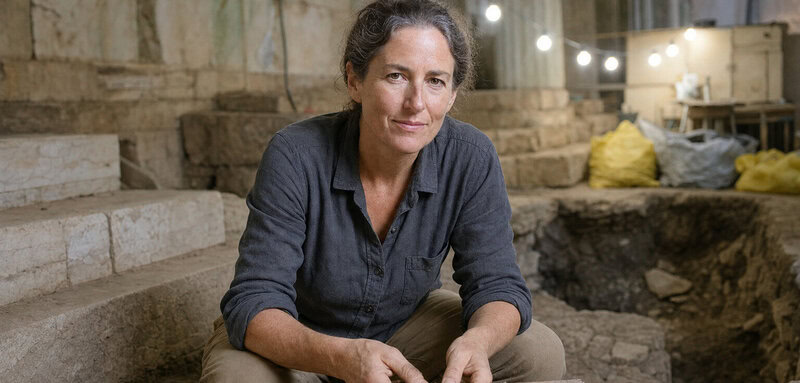
The soil in Naomi Lyon’s hands smelled of summer and centuries — dry, faintly mineral, the compressed residue of a Peloponnesian hillside that had been quietly holding its secrets since the Bronze Age. She was crouched over a sieve in the Greek heat, working through each handful with the unhurried patience the work demanded, and she was not, for the record, wearing a fedora.
Why Pylos? The Ground Beneath the Story
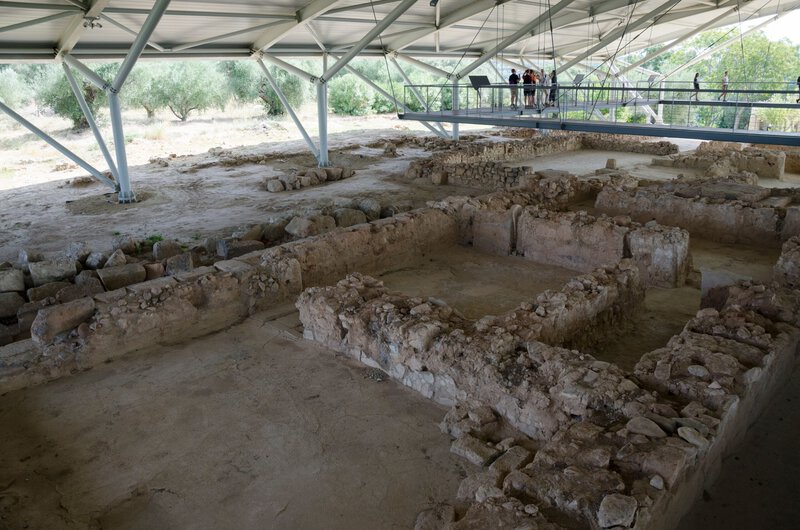
To understand why someone like Naomi Lyon would spend three weeks in the summer of 2024 sifting earth near Pylos, it helps to understand what Pylos is sitting on top of. This stretch of the southwestern Peloponnese was once the seat of Nestor, the elder statesman of Homer’s Iliad, and the Bronze Age palace complex discovered here in the twentieth century confirmed that the legend had roots in something real. The palace’s archive of clay tablets — inscribed in Linear B, the earliest known form of written Greek — recorded with bureaucratic precision everything from grain stores to perfume allocations, offering archaeologists a rare written window into the inner workings of Mycenaean civilisation around 1200 BCE.
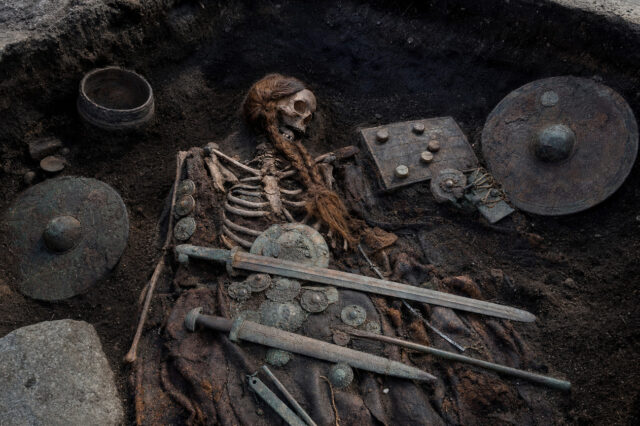
The landscape around Pylos has not finished talking. In 2015, a nearby tomb yielded what became known as the Griffin Warrior — a Bronze Age warrior buried with extraordinary grave goods, including an intricately carved seal stone so fine that scholars initially assumed it must be a later import. It was not. The discovery reset assumptions about the sophistication of early Mycenaean culture and sent a ripple of excitement through the archaeological world that had not entirely subsided by the time Naomi arrived nearly a decade later.
Naomi Lyon represents a new generation of aspiring archaeologists who have understood something important: that the path into this profession runs through the field, not just the library. Her three weeks near Pylos offered the kind of hands-on archaeology fieldwork in Greece that no amount of undergraduate reading can replicate — and her experience offers a remarkably honest look at what the discipline actually demands.
The Working Day: What Nobody Tells You in the Textbook
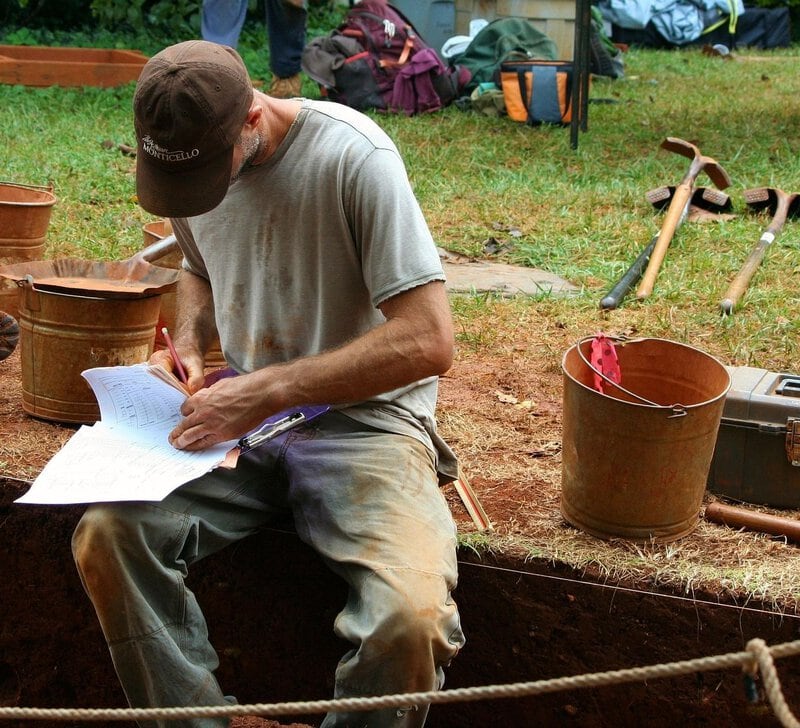
The working day on a Greek excavation site begins early, and for good reason. By mid-morning in a Peloponnesian July, the sun stops feeling like weather and starts feeling like a policy. Fieldwork teams are assigned to specific grid squares — carefully demarcated sections of the site where all activity is documented against a precise spatial reference. You do not simply dig where it looks interesting. You dig where you are told, in the manner you have been shown, and you record everything before you move anything.
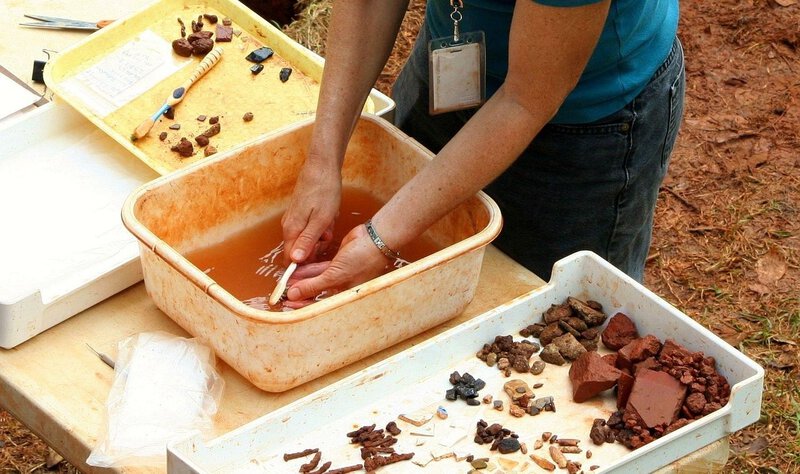
For Naomi, much of the work centred on soil sorting — the patient, repetitive process of sieving excavated earth to recover fragments that a trowel might miss entirely. Some of what she searched for was ceramic: sherds of ancient pottery that can, in trained hands, be dated and identified with surprising precision. Some of it was biological. Seeds. Charred grain. Olive pits. The organic residue of daily life that, under the right conditions of preservation, survives for millennia in the soil.
This is where archaeology requires a cognitive shift that textbooks describe but cannot quite prepare you for. You are not, fundamentally, looking for treasure. You are looking for information. A single carbonised barley grain, properly recorded and contextualised, can contribute to a researcher’s understanding of crop patterns, trade networks, or the timing of a site’s abandonment. The tiniest scrap of evidence can, in the right interpretive hands, rewrite a paragraph of history — a genuinely thrilling thought, even when you are very hot and the sieve is very full.
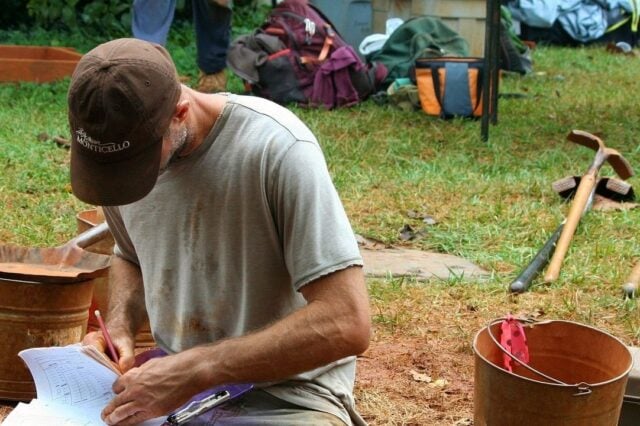
Equally relentless is the administrative labour that runs alongside the digging. Record-keeping on a modern excavation is non-negotiable: context sheets, finds registers, photographic logs, scaled drawings. For every hour spent with a trowel, another is spent with a clipboard. The romance of the discipline is real, but it is built on a foundation of documentation that would make a tax accountant feel at home. Naomi’s experience of that fieldwork reality echoes what most first-time excavators report: the physical difficulty is manageable; the sheer volume of paperwork is the genuine surprise.
The Group Dynamic: Shared Dirt, Accelerated Learning
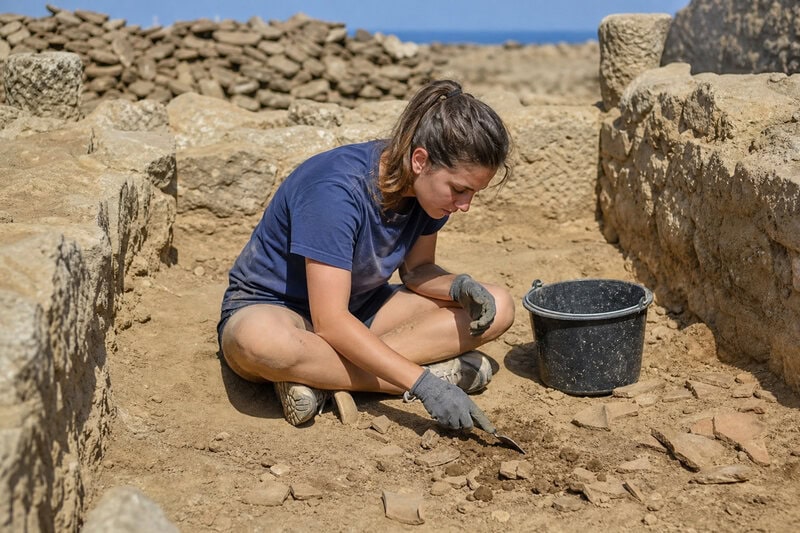
Naomi’s experience near Pylos was her own, but it existed within a broader landscape of immersive archaeological fieldwork drawing young scholars to Greece in 2024. At roughly the same time, a group of nineteen students from Johns Hopkins University were living through their own version of this education on the island of Antiparos, in the Cyclades. Their three-week excavation offered a different geography and a different site, but the underlying experience had recognisable contours: shared accommodation, communal meals, and the peculiar intimacy that develops among a group of people who are simultaneously exhausted, sunburned, and genuinely fascinated by what lies beneath their feet.
What communal fieldwork produces, beyond any individual discovery, is a kind of accelerated education in the habits of archaeological attention. Participants learn to read a stratigraphic layer — the different bands of soil and material that record, like geological chapters, the sequence of human occupation over time. They absorb the discipline of documentation: the understanding that disturbing a find before recording its precise location and context destroys information that can never be recovered. Context, in archaeology, is not background. Context is everything. A gold ring found in a rubbish pit tells a different story from the same ring found in a burial — and once you have moved it, the story it was telling is gone forever.
These are not skills that appear on most university syllabuses in their full, practical weight. They are learned by doing, in the dirt, under supervision, with the specific anxiety of knowing that what you are handling is genuinely irreplaceable. The Johns Hopkins students on Antiparos were absorbing this in real time, as was Naomi, working a different sea of ancient soil on the mainland.
The Archaeology Behind the Archaeology: What the Finds Actually Mean
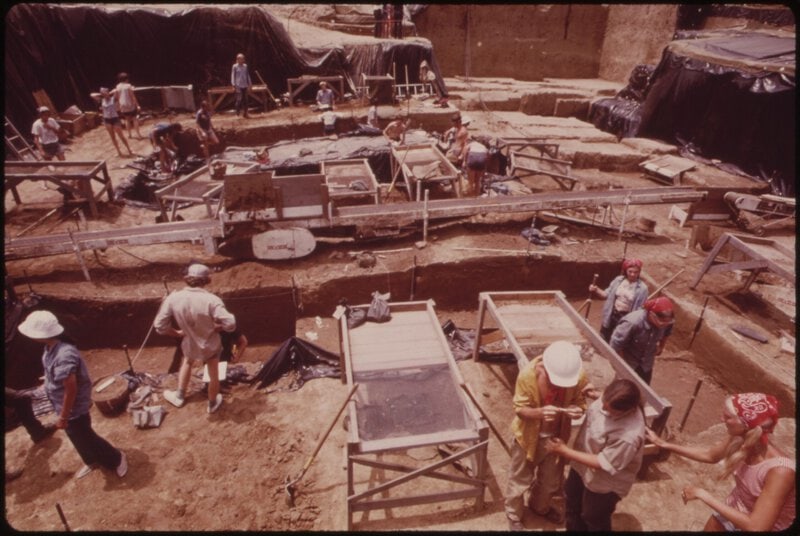
The soil-sorting work that defined much of Naomi’s fieldwork has a formal disciplinary name — archaeobotany — and an importance within modern excavation methodology that is somewhat disproportionate to the glamour it receives. Flotation and fine-sieving for botanical remains is among the most labour-intensive techniques deployed on a dig, and also among the most revealing. Plant remains, when recovered and analysed, can identify which crops were cultivated in a given period, whether a site was occupied year-round or seasonally, and even whether a community was under agricultural stress — a possible indicator of the broader social pressures that preceded the still-debated collapse of Mycenaean civilisation around 1200 BCE.
The interpretive chain connecting Naomi’s careful hands to a researcher’s long-running question is longer than it might appear, and more collaborative. She recovers and records. A specialist analyses. A pattern emerges, or fails to emerge. Either outcome is data. This is one of the hardest lessons that fieldwork teaches aspiring archaeologists: an absence of finds is not failure. It is a negative result, and negative results have their own scientific value — they tell you where the story was not, which helps define where it was.
Most days on an excavation end without anything that would make the news. The dramatic discoveries — the Griffin Warrior, the intact tomb, the Linear B tablet — are the product of accumulated seasons of unglamorous, meticulous, unremarkable work. Naomi’s three weeks were part of that accumulation, a contribution to a research effort whose published conclusions she may not read for years.
How to Get There: The Real Path to Fieldwork Placement
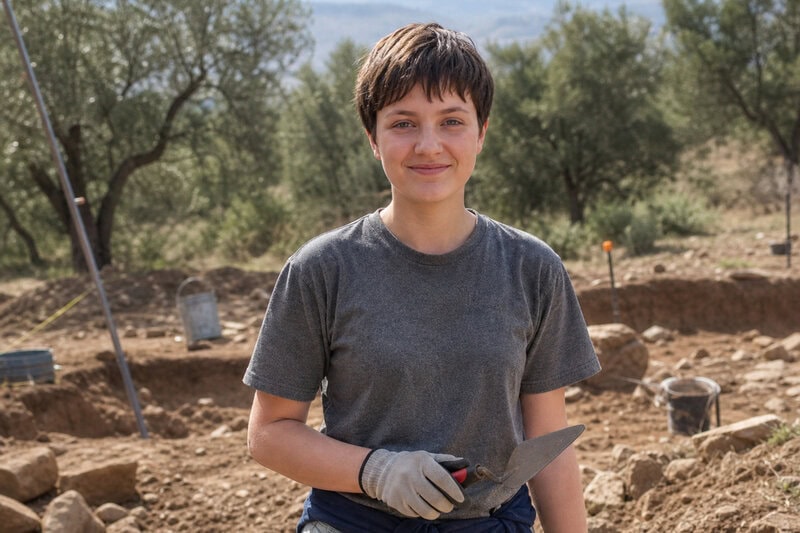
Naomi Lyon’s route to a Peloponnesian hillside followed a path that aspiring archaeologists would do well to map early. Fieldwork placements at the undergraduate level are typically accessed through university-affiliated programmes — excavations run or co-run by academic institutions that take students as part of a formal arrangement. These places are competitive. Student excavation programmes in Greece receive significantly more applications than they have space for, and the candidates who succeed tend to be those who have identified the relevant pipelines and engaged with them proactively, rather than waiting for the opportunity to announce itself.
Funded fieldwork opportunities do exist, attached to institutions and research projects with the resources to support student participation. The Johns Hopkins programme at Antiparos is one example of the kind of institutional partnership that makes this access possible. Identifying equivalent programmes early — and pursuing them with the same rigour one would apply to a scholarship application — is practical advice that the textbooks rarely offer. Relevant starting points include university classics and archaeology departments, national archaeological schools based in Athens, and research projects affiliated with bodies such as the American School of Classical Studies or the British School at Athens.
Physical preparation matters too. Fieldwork in Greece in July is not metaphorically demanding. Candidates who arrive already comfortable with early starts, sustained physical repetition, and methodical record-keeping will adapt faster and contribute more from day one.
Three Weeks Later: What Naomi Brought Home
Naomi Lyon flew home from Greece in the summer of 2024 without a dramatic discovery in her luggage. What she carried instead was harder to weigh and more difficult to lose. Three weeks of actual fieldwork — early starts and careful sieving, learning to move through an ancient landscape with the specific, cultivated attentiveness that archaeology requires — had changed her relationship to objects, to time, and to the idea that the past is a fixed and finished thing.
The work left its mark in the most literal sense. There is a reliable archaeology fieldwork rite of passage that involves arriving at an airport with soil still visible under the fingernails, a notebook full of context sheets, and the slightly disorienting sense that three weeks of careful attention to what lies beneath the surface has permanently altered how you look at everything above it.
Greece’s archaeological landscape is still being written. The tablets of Nestor’s palace were only discovered in the 1930s. The Griffin Warrior tomb was found in 2015 by researchers who had been working the same ground for years. Whatever comes next in the Peloponnesian soil — whatever the landscape is still holding back — will be found by people exactly like Naomi Lyon: trained, patient, willing to show up before the heat peaks, and capable of understanding that a fragment of ancient plant matter in a sieve is not a consolation prize. It is the thing itself. And that work, in all its unglamorous, sunburned, deeply human particularity, is available to anyone who takes it seriously enough to begin.