48. ISIS Terrorists Used Sulfur Against Civilians and Soldiers Near Mosul, 2016: 2 Casualties, 1500 Wounded
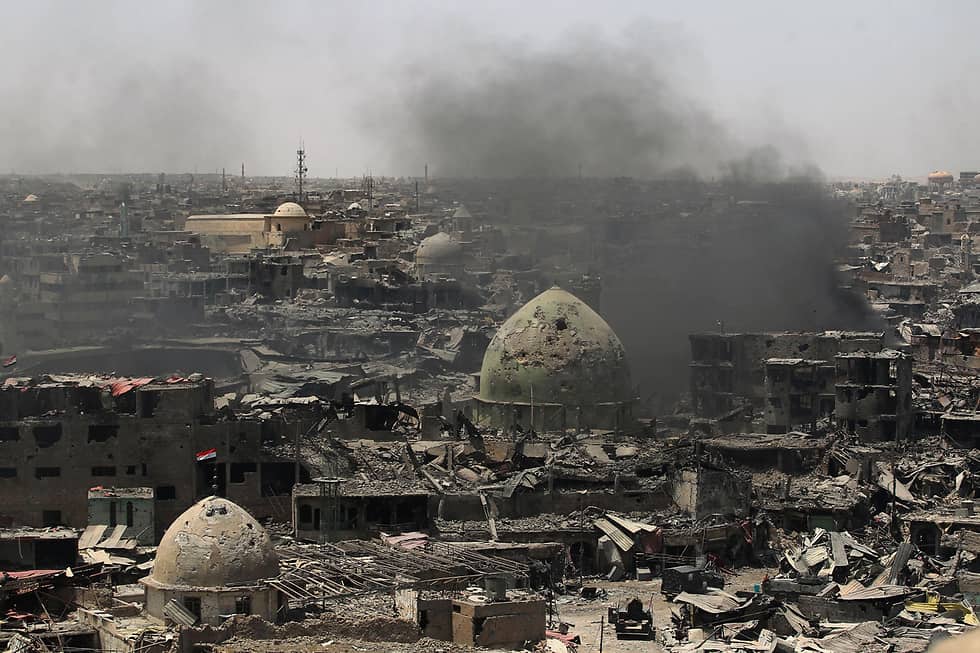
The battle for Mosul was possibly the bloodiest in the move to liberate Iraq from the terrifying reign of ISIS. Despite careful international strategizing, there were mass civilian casualties, due to the fighting, breakdown of law and order, and starvation.
In a counterattack against the encroaching forces, terrorists connected to ISIS set fire to a sulfur mine near Mosul. Sulfur dioxide fumes spread over the city and injured an estimated 1500 individuals. Two people died in the attack that targeted both civilians and soldiers indiscriminately.
Where Did We Find This Stuff? Here Are Our Sources:
“A Brief History of Chemical War,” by Sarah Everts. Science History Distillations. May 11, 2015.
“Tambov Rebellion.” Wikipedia.
“Chemical weapons in the Rif War.” Wikipedia.
“Don’t Forget, Japan Used Biological Weapons on China.” Medium. December 2, 2013.
“Soviet invasion of Xinjiang.” Wikipedia.
“Japan’s Biological and Chemical Warfare in China during WWII.” Don Tow’s Website. April 2009.
“Lessons From Egypt’s Chemical War in Yemen,” by Robert Beckhusen. Medium. September 13, 2013.
“Hmong Resistance in Laos 1975-1992.” OnWar.com.
“Cambodian-Vietnamese War.” Wikipedia.
“The 1979 Anthrax Leak in Sverdlovsk.” PBS Frontline.
“Soviet-Afghan War.” Wikipedia.
“1984 Rajneeshee Bioterror Attack.” Wikipedia.
“1984: Hundreds die in Bhopal chemical accident.” BBC On This Day.
“1988: Thousands die in Halabja gas attack.” BBC On This Day.
“Backgrounder on Repression of the Kurds in Turkey.” Human Rights Watch.
“Amerithrax or Anthrax Investigation.” FBI.gov.
“2002: Hostage crisis in Moscow theater.” This Day in History.
“Chlorine bombings in Iraq.” Wikipedia.
“Use of chemical weapons in the Syrian Civil War.” Wikipedia.
“8 Horrifying Instances of Biological Warfare Before the 20th Century”. History Collection.


