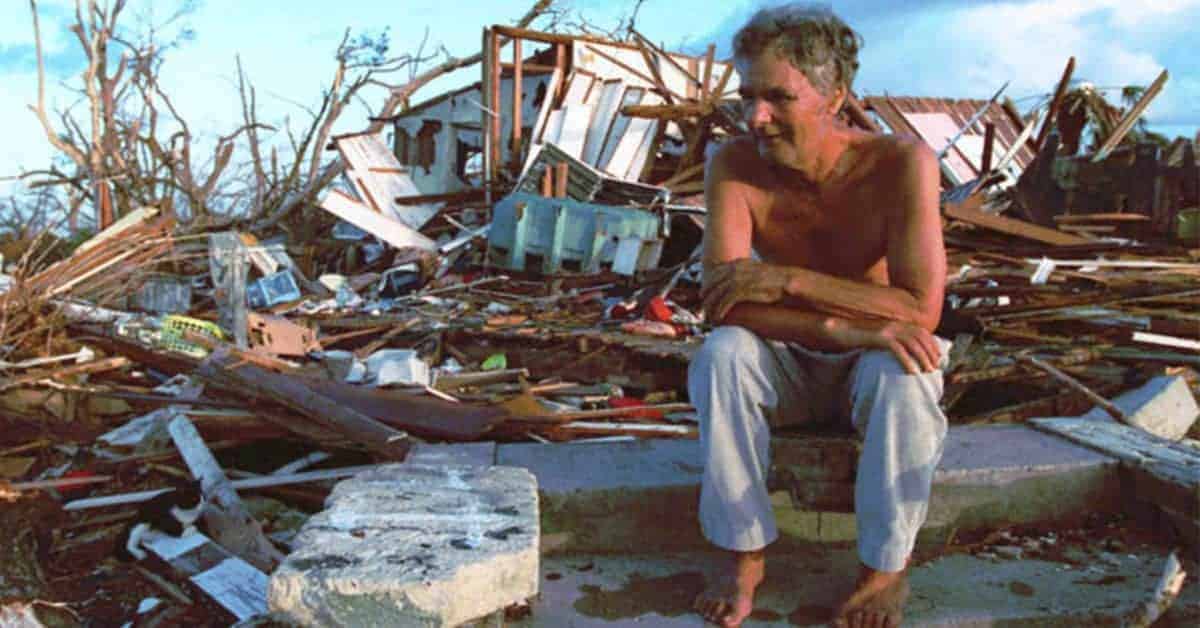
Sept. 1, 1992, Janny Vancedarfield sits in front of the debris that was once his house in Florida City, Fla. Vancedarfield lived in this house with six other family members before it was destroyed by Hurricane Andrew in September 1992. Two decades later, Homestead and Florida City have doubled in size into a demographically different community, better prepared to deal with hurricanes. AP Photo/Lynne Sladky
MIAMI, FL – AUGUST 24: A sailboat sits on its side 24 August 1992 at the Dinner Key Marina in Florida after it was lifted out of the water by Hurricane Andrew. The hurricane smashed ashore before dawn 24 August 1992 with 160-mph winds. At least 12 people were killed. AFP PHOTO Andy ITKOFF/AFP/Getty ImagesThis Aug. 25, 1992, file photo shows the water tower, a landmark in Florida City, still standing over the ruins of the Florida coastal community that was hit by the force of Hurricane Andrew. Two decades later, Homestead and Florida City have doubled in size into a demographically different community, better prepared to deal with hurricanes. (AP Photo)Dade County, FL, August 24, 1992 – An Army tent serving as a State Disaster Assistance Center after Hurricane Andrew Huffington PostHurricane Andrew did extensive damage to homes in Miami, including here at the Silver Palm mobile home park. Huffington PostNOVEMBER 24: Volunteers hand out food to victims of Hurricane Andrew in Homestead, FL 24 November 1992. Charities donated 900 take-home Thanksgiving meals to area residents who had signed up to receive the dinners. ANDREW ITKOFF/AFP/Getty ImagesHurricane Andrew, FL, August 24, 1992 – FEMA provides food, water, clothing, and temporary housing for those people who were displaced. Huffington PostWith the local McDonalds closed, the company opened a food truck in its parking lot. The lines for the familiar foods were huge. Huffington PostHOMESTEAD, FL – SEPTEMBER 1: U.S. President George Bush (L) examines a cot, with the help of Eddie Mosqueda, 01 September 1999 at a tent city for victims of Hurricane Andrew in Homestead, FL. Bush toured military sites and met with local and national officials aiding South Florida hurricane victims. J. DAVID AKE/AFP/Getty ImagesHOMESTEAD, UNITED STATES: Tents are erected 31 August 1992 to house those who were left homeless by Hurricane Andrew. The tents, which are the first of many to be built by the U.S. Armed Forces, are expected to be ready for occupancy as early as 01 September. BRUCE WEAVER/AFP/Getty ImagesHOMESTEAD, FL – AUGUST 30: Victims of Hurricane Andrew eat breakfast 30 August 1992 in front of a military mobile kitchen in Homestead, FL. The military is providing victims of the hurricane with three hot meals a day. ROBERT SULLIVAN/AFP/Getty ImagesA palm tree ripped out of the ground by the strong winds smashed the trunk of the car in the driveway. Huffington PostThe hurricane winds ripped off the entire side of the house, exposing the insides as if it were a doll house. Huffington PostThe storm left many homes completely devastated, and towns unrecognizable. Huffington PostThis May 17, 2012, photo shows a site for a mobile home at what used to be a trailer park before Hurricane Andrew struck Homestead, Fla. The havoc wreaked by Hurricane Andrew two decades earlier still serves as a warning about the devastation even a slow tropical storm season can bring. Homestead was ground zero when Andrew plowed ashore in late August 1992, surprising South Florida residents who hadn’t experienced a a major hurricane landfall in a quarter of a century and forecasters who hadn’t anticipated the storm’s rapid intensification to Category 5 strength. AP Photo/J Pat CarterA woman with her dog in a tent admits hurricane rubble. BBC