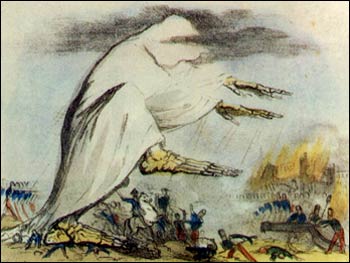
1. Stipulating living creatures could arise from nonliving matter, spontaneous generation was eventually discredited with the discovery of microbial life during the 19th century

Attempting to provide a natural and scientific explanation to the phenomenon of life without resorting to divine agency, Anaximander is the first known individual to offer the argument of primal chaos from which, by elemental means unknown, life is generated. Coherently organized and expanded upon by Aristotle, although recognizing some forms of life are spawned by natural reproduction, the Greek philosopher proposed that living things might also come from nonliving entities. Suggesting an expansive theory of spontaneous generation, Aristotle asserted the interaction of elemental matter and heat could equally produce life.
Although lost following the fall of Rome in the 5th century, following the reintroduction of Aristotle’s works to Western Europe via Islamic scholars his ideas received renewed support. Conflicting with some biblical and religious opinions, for whom many adherents saw all life as created by divine will and not by natural forces, throughout the Middle Ages spontaneous generation remained a leading scientific theory. Increasingly disputed and discredited, the issue was finally settled by Louis Pasteur in 1859. Demonstrating the existence of microbial lifeforms, these tiny forces beyond the human visual spectrum had, unseen to the human eye, provided the circumstances underpinning belief in spontaneous generation and their conclusive existence shredded the ancient theory.
Where do we find this stuff? Here are our sources:
“Superstition: Belief in the Age of Science”, Robert L. Park, Princeton University Press (2008)
“About Face: The ABCs of Face Reading”, Liz Gerstein, Sterling House Publisher (2005)
“The Vegetable Lamb of Tartary”, Alice Tryon, American Fern Journal (1957)
“A Brief History of Miasmic Theory”, Carl S. Sterner, Bulletin of the History of Medicine (2007)
“The Tongue Map: Tasteless Myth Debunked”, Christopher Wanjek, Live Science (August 29, 2006)
“The Great Radium Scandal”, R.M. Macklis, Scientific American (1993)
“The Secrets of Alchemy”, Lawrence M. Principe, University of Chicago Press (2015)
“Alchemy”, Eric John Holmyard, Courier Dover Publications (1990)
“Infants’ Sense of Pain in Recognized, Finally”, PM. Boffey, The New York Times (November 24, 1987)
“Vitalism and the Scientific Image in Post-Enlightenment Life Science, 1800-2010”, Sebastian Normandin and Charles T. Wolfe, Springer Publishing (2013)
“Cadillac Desert”, Marc Reisner, Penguin Books (1993)
“Medicine and Society in Early Modern Europe”, Mary Lindemann, University Printing House (2010)
“Origins of Life: On Earth and in the Cosmos”, Geoffrey Zubay, Academic Press (2000)
“Creatures Born of Mud and Slime: The Wonder and Complexity of Spontaneous Generation”, Daryn Lehoux, Johns Hopkins University Press (2017)


