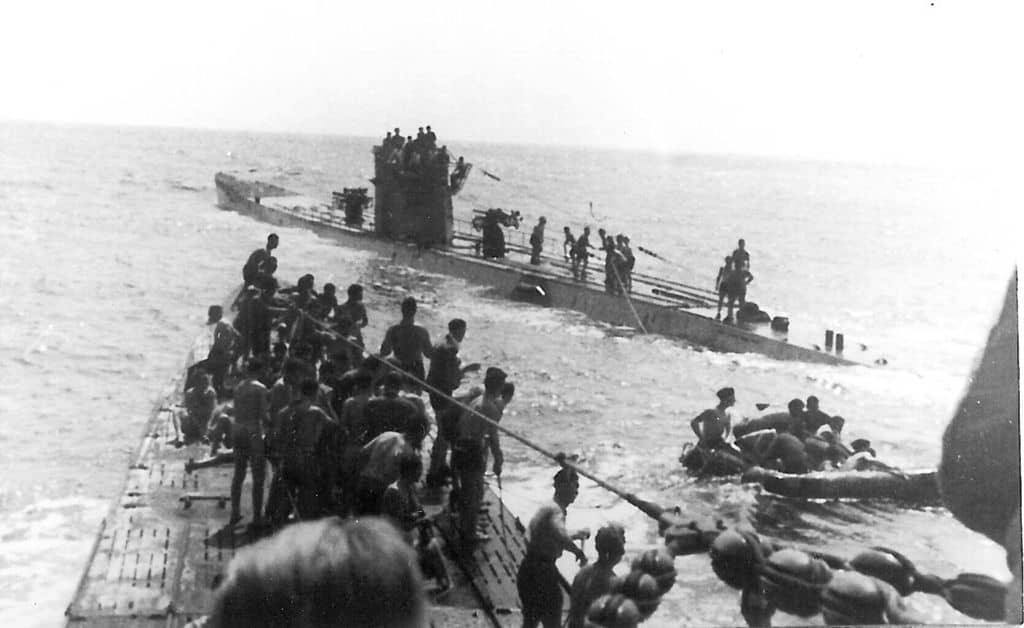
20. Friendly fire incidents marked the War in Vietnam in the air, at sea, and on land

Friendly fire incidents in Vietnam claimed lives throughout America’s long involvement in Southeast Asia. As early as 1966, the United States Coast Guard suffered friendly fire casualties when US Air Force planes attacked the cutter, Point Welcome. Two Coast Guardsmen died in the attack. The official investigation recommended no disciplinary action against the Air Force personnel involved, and as in other incidents, attempted to keep it from the press and public. In 1968, US Navy ships and Swift Boats were attacked by USAF aircraft. One of the ships, USS Boston, was a heavy cruiser, unlike anything available to the North Vietnamese. It was hit by an Air Force missile, as were several other destroyers, with the US Navy sustaining several personnel casualties.
It too remained classified by the services. In Vietnam American aircraft, from all services, bombed positions occupied by American and South Vietnamese troops, usually as a result of misdirected or mistimed ground support missions. The North Vietnamese also made mistakes, several instances of North Vietnamese anti-aircraft batteries opening fire on Soviet-supplied MiG aircraft occurred during the war. In the many conflicts around the globe since, friendly fire incidents continued to haunt the world’s militaries and the families of the victims. In the Falklands War, the Gulf War, Desert Shield, the Kosovo War, and the Global War on Terror, friendly fire claimed the lives of service personnel of all branches. Nearly all governments continue to attempt to limit public awareness of its frequency.
Where do we find this stuff? Here are our sources:
“Battle of Germantown”. Article, George Washington’s Mount Vernon. Online
“Punch Drunk at Karansebes”. Claudia Mendes, War History Online. February 19, 2019
“The Napoleonic Wars: A Global History”. Alexander Mikaberidze. 2020
“We Brits Invented ‘Friendly Fire'”. Patrick West, Spiked. August 29, 2007. Online
“A World Undone: The Story of the Great War, 1914-1918”. Gerald Meyer. 2006
“Fighting the Great War. A Global History”. Michael S. Neiberg. 2005
“C. S. Lewis on War and Peace”. David C. Downing, C. S. Lewis Institute. Online
“Italo Balbo: A Fascist Life”. Claudio G. Segre. 1990
“The Loss of HMS Oxley 1939”. Peter Smith, Naval Historical Review. March, 2003
“Forgotten Fifteenth: The Daring Airmen Who Crippled Hitler’s War Machine”. Barrett Tillman. 2014


