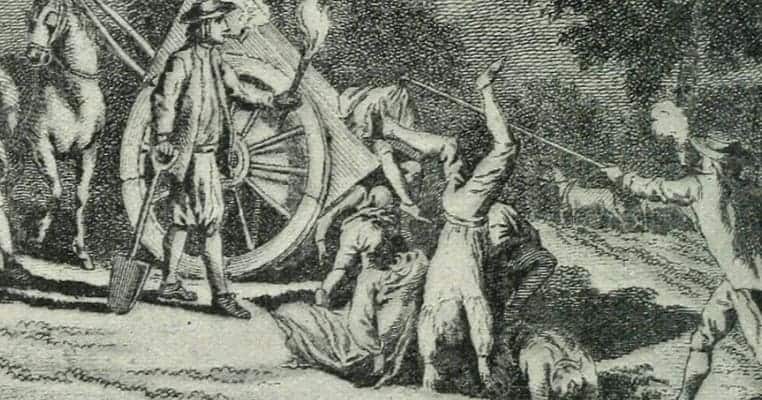

10. Medieval Suicide Victims Were Punished After Death
While previous cultures had been somewhat ambivalent towards suicide, when Christianity rose to prominence, the act of taking one’s life came to be seen as an abomination that would be eternally punished. In Shakespeare’s play, Hamlet, this belief can be seen following Ophelia’s suicide. Even though she had gone mad before taking her own life, she was denied burial and had to be buried secretly by gravediggers.
Often, the person who took his or her own life would be ceremoniously excommunicated, or sent out of the church, posthumously. The belief was that such a practice would condemn the person to purgatory, if not to hell, for eternity. In England, the corpse might be dragged through the streets to ensure that the person experienced shame for the act of self-slaughter. In some places, there would actually be a trial to determine if the person had committed suicide, though the “trial” looked more like a circus with an already-determined outcome than a modern-day autopsy. If found guilty, the person would be subjected to both conventional and canonical law.
In some Christian areas, though, suicide was treated with a bit more leniency, particularly if the perpetrator was feeling intense desperation or was being tormented by demonic forces.


