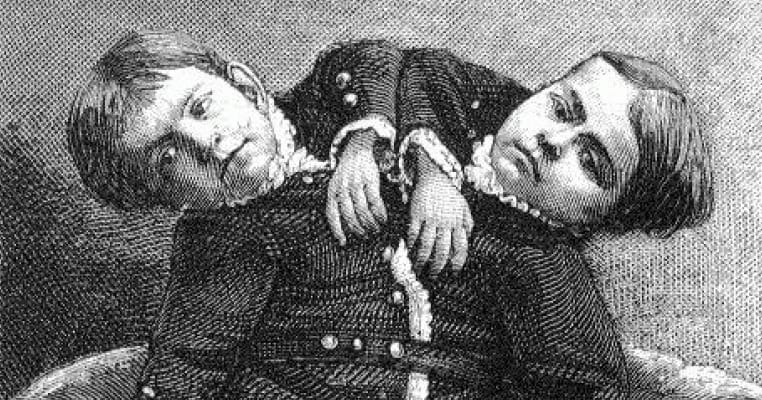

2. The Circumstances of Their Deaths are Unclear
Conjoined twins are unable to continue living if one of them dies. The bodily functions cease once one of the twin dies, and the other dies shortly after that. In the case of Eng and Chang Bunker, Chang was a morbid alcoholic, while Eng never drank; Chang’s death may have been at least partially due to his alcoholism (he was known to look five years older than his brother), and Eng died just a few hours later. The fact that the bodies of conjoined twins may age separately and at distinct rhythms is one reason why separation is usually necessary.
Seeing as the two brothers lived the rest of their lives as recluses, probably anxious about going in public again, reports about their lives and deaths are unclear. Their wives likely also did not appear much in general, seeing as their marriages had created such a scandal. Reports surfaced in 1906 that claimed the brothers had died. However, another story in 1911 verified that the brothers were both alive and well. Other records indicate that they died in the year 1940. The Guinness Book of World Records suggests that they may have been the longest-living conjoined twins in history until the year 2014. Whatever the case may be, the brothers certainly had a life expectancy that far surpassed what the doctors, in turn, predicted when they were infants.


