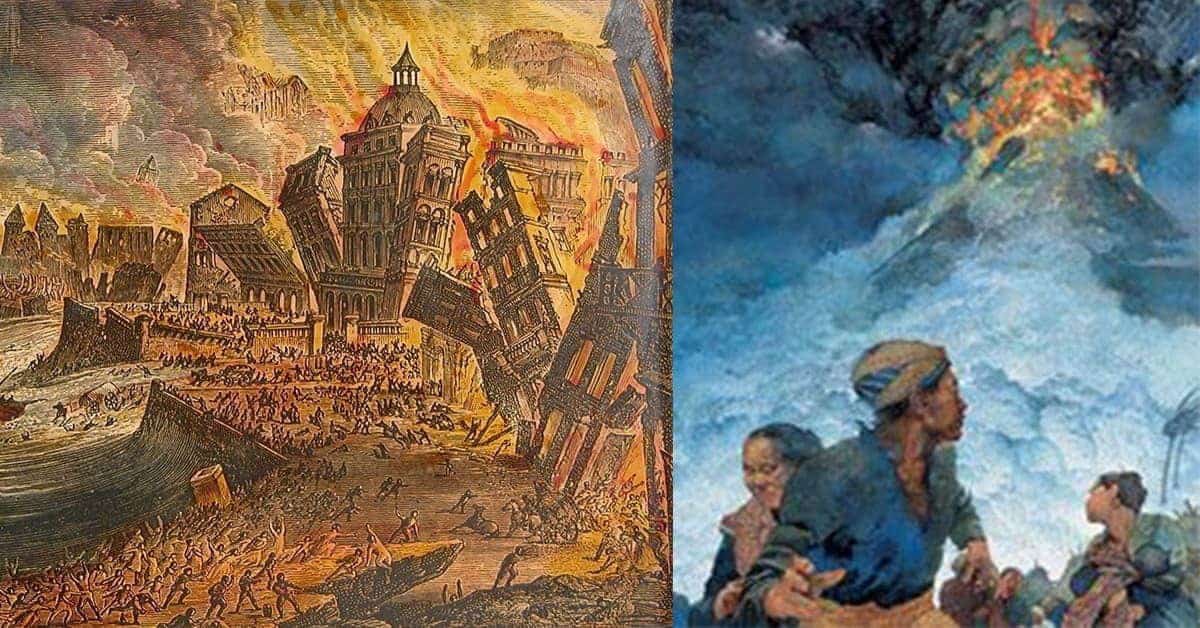

115 Antioch Earthquake
On December 13th, 115, the city of Antioch in the Roman province of Syria, modern Antakya in Turkey, was rocked by an extremely intense earthquake that caused widespread devastation and high loss of life in the region, destroying not only Antioch, but also the nearby city of Apamea, and inflicting significant damage upon Beirut as well.
The tremors also triggered a tsunami that slammed into the eastern Mediterranean coast and caused extensive damage as far south as the seaport of Caesarea in the Roman province of Palestine, whose harbor was wrecked by the wall of water. It is estimated that about 260,000 people lost their lives, with many more injured and/or made homeless.
Antioch at the time was a flourishing and economically vibrant Greco-Roman city on the Orontes river and was the Roman Empire’s third-biggest metropolis after Rome and Alexandria. The city owed its success to its location at the closest terminus of the Persian Royal Road linking the Mediterranean with Mesopotamia and Persia, making it a trading center and entrepot for goods between the Roman and Persian worlds.
Unfortunately, Antioch’s location also had the misfortune of being near the junction of three tectonic plates – the African, Anatolian, and Arabian – whose friction made the region particularly susceptible to large earthquakes.
As described by the Roman historian Cassius Dio, a loud and bellowing roar preceded the earthquake, after which the ground started to violently vibrate and shake, tossing people and entire trees up into the air as if they were water drops shaken off a wet dog’s fur, and lifting buildings off the ground and slamming them back to earth.
Many were killed or injured by falling debris, and many more still by buildings collapsing atop and burying them. The aftershocks, which continued for days, killed and injured many survivors of the first day’s tremors.
When the earthquake struck, the Roman emperor Trajan and his chief deputy and successor, the future emperor Hadrian, were wintering in Antioch, overseeing preparations for a military campaign against Parthia. Because Antioch served as headquarters for the war against Parthia, the city and the surrounding region were even more crowded than usual, due to the presence of legions encamped nearby, as well as the camp followers and other civilians engaged in support activities for the Roman army.
The emperor Trajan managed to escape via a window from the building in which he had been housed, and was fortunate to suffer only light injuries. As buildings and debris kept falling due to aftershocks, the emperor and his entourage relocated to the open hippodrome, or race track, where they erected tents and set up house.
His deputy Hadrian also escaped with only slight injuries, and both set to overseeing the recovery and rebuilding process, which was begun by Trajan, and after his death in 117, continued and completed by his successor, Hadrian.


