
Mount Unzen’s 1792 Eruption Was Japan’s Deadliest Volcanic Disaster
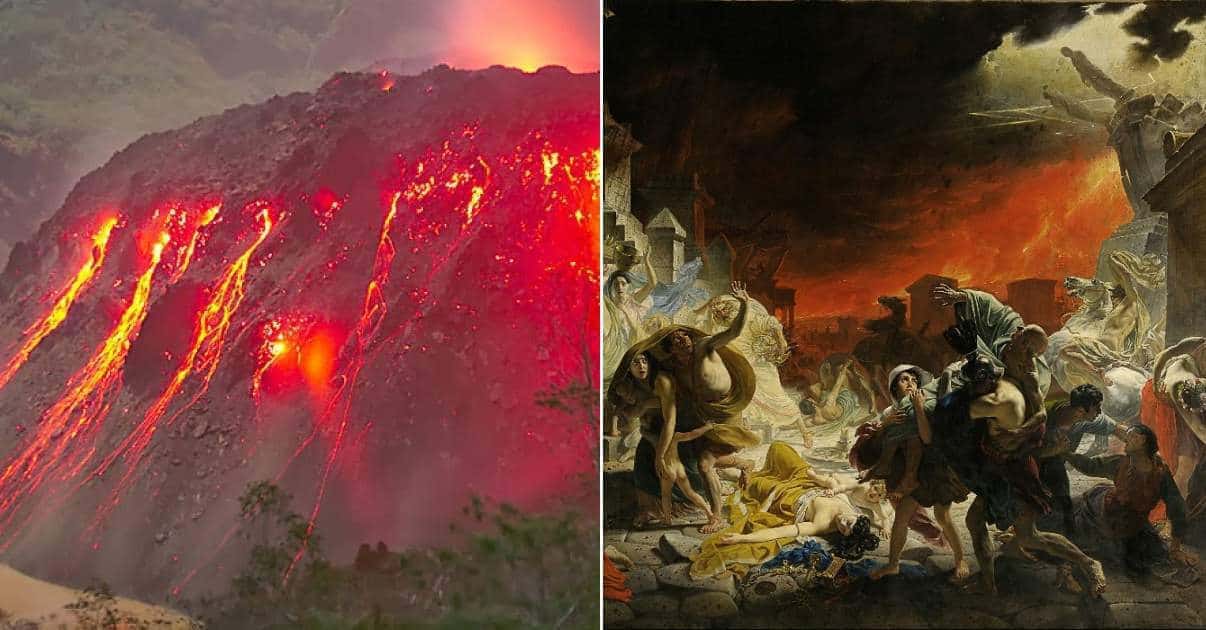
Mount Unzen is a volcanic group in the island of Kyushu, Japan. It is situated on the Shimabara Peninsula, about 25 miles east of Nagasaki. Unzen has several lava domes – mounds atop volcanoes, resulting from the accumulation of slow seeping lava, which cools and solidifies before flowing very far. On May 21st, 1792, a volcanic eruption caused one of those lava domes to fall into the sea, resulting in a tsunami and earthquake that caused considerable devastation and loss of life.
It began months earlier, in late 1791, with tremors and earthquakes on the western side of Mount Unzen, which gradually made their up to one of its volcanic peaks. In February of 1792, one of those began erupting, causing lava to flow for the next two months. In the meantime, the earthquakes and tremors continued, until the night of May 21st, 1792, when two big quakes hit. They were powerful enough to shake one of the lava domes loose, causing it to collapse down the eastern side of the mountain. That triggered a landslide, which swept through the city of Shimabara down below, and continued on to Ariake Bay.
When the landslide struck the water, it caused a mega tsunami, with waves nearly 70 feet high, rising up to 187 feet high in some places because of the seabed’s topography. The tsunami travelled across Ariake Bay, until it hit the city of Higo on the other side, where it caused widespread devastation. It then bounced back across the bay, and hit the city of Shimabara, where the dust had still not settled from the landslide that had swept through it and triggered the tsunami in the first place. About 15,000 people were killed in the disaster, making it Japan’s deadliest volcanic eruption.
Of the roughly 15,000 dead, about 5000 were estimated to have been killed in the landslide that swept through Shimabara city. Another 5000 were estimated to have been killed by the ensuing tsunami when it reached Higo, across the bay from Shimabara. And another 5000 were estimated to have been killed when the tsunami bounced back from Higo, recrossed the bay, and struck Shimabara. Because the eruption happened on Mount Unzen, in the Shimabara Peninsula, but many deaths from the ensuing tsunami occurred in Higo, about 15 miles away across the Ariake Bay, the Japanese coined a phrase: Shimabara erupted, Higo affected.


