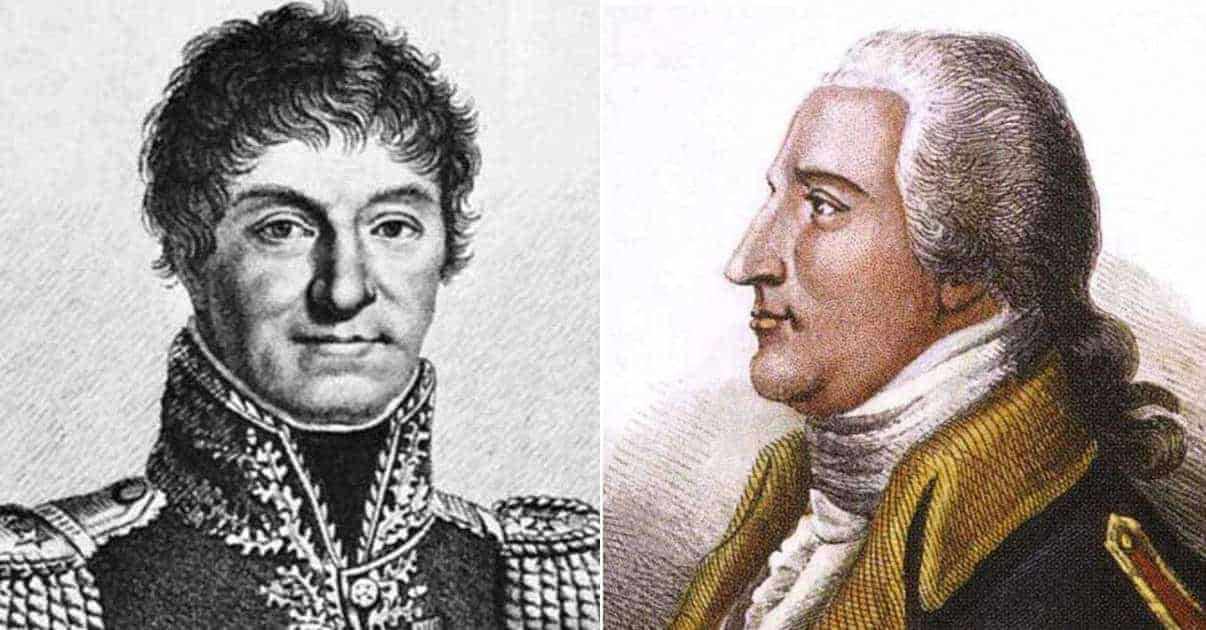

Benedict Arnold
Before becoming America’s most infamous traitor, Benedict Arnold (1741 – 1801) was one his country’s most celebrated heroes. He had been a leading patriot in the fight against the British, and was perhaps the most capable combat leader on the rebels’ side. Then, he got screwed over, and eventually, resentments over slights, coupled with financial distress, led him to sell out to the enemy.
Arnold provided valuable service to the patriots in the American Revolution. It is possible that the rebellion might have been snuffed out early on, if not for him. His first exploit came in the war’s opening stages, when he played a leading role in the capture of Fort Ticonderoga, in Upstate New York. Artillery and munitions seized at the fort were then dragged across difficult terrain to Boston, where they helped expel the British, giving the Americans an early victory and boost in confidence. Arnold then led an expedition through extremely rough terrain in an attempt to capture Quebec. It failed, but he exhibited remarkable leadership in even getting his men to the outskirts of Quebec.
In 1776, an enterprising Arnold built a fleet from scratch at Lake Champlain, which he used to defeat a far superior British fleet. However, while he was being lionized as a hero by the public, Arnold’s string of successes, rash courage, and aggressive style aroused the jealousy and resentment of fellow officers. They began a whispering campaign, and backbit and schemed against him. It worked: when Congress created five new major generals in 1777, Arnold was stung to discover he was not amongst their numbers. Adding insult to injury, some of those promoted had been his juniors, whose accomplishments paled in comparison to Arnold’s. Only George Washington’s personal pleas prevented Arnold’s resignation.
Soon thereafter, he repelled a British attack in Connecticut, and was finally promoted to major general, but his seniority was not restored – another slight that ate at him. He again tried to resign but was prevailed upon to remain. He performed brilliantly in halting the British advance into upstate New York in 1777, and was instrumental in bringing about its defeat. It culminated in the British surrender at Saratoga, where Arnold fought courageously and was severely injured.
Crippled by his wounds, he was put in charge of Philadelphia, where he began socializing with loyalist families. He also took to lavish living, which he financed with questionable dealings that led to scandal. In Philadelphia, Arnold met and married a younger woman of loyalist sympathies and spendthrift habits, that soon drove Arnold deep in debt. His situation was worsened by his government’s failure to pay him on time, or to reimburse him for personal expenses he had incurred in fighting the British. Between resentments over getting screwed over and financial difficulties, Arnold secretly approached the British to offer his services.
He was placed in charge of fortifications at West Point on the Hudson river, upstream from British-occupied New York City and barring them from sailing upriver. Arnold plotted to sell plans of the fortifications to the enemy, and contrived to deliver them into British hands for £20,000. However, his British contact was captured, along with documents incriminating Arnold, who fled just in time to evade arrest. His reputation in tatters, Benedict Arnold went from hero to villain, and his very name became an epithet for betrayal.
Fully turning coat, Arnold was made a brigadier general in the British army, and led Redcoats into battle against his former comrades. His new masters never warmed to him however, and he was unable to secure a regular commission in the British army after the war. Following the conflict’s end, he engaged himself in a variety of enterprises, including privateering and land speculation in Canada. Eventually, he retired and settled in London, where he died in 1801.


