Dorothy Lawrence
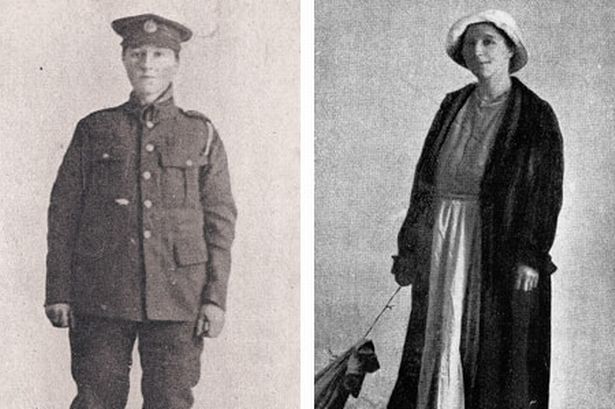
A little over 150 years after Hannah Snell wore the uniform, another British woman wanted to make her contribution to the cause and this time it was doing the First World War. Dorothy Lawrence was born on October 4, 1896, in the town of Hendon in Middlesex. Her lineage is cloudy and it was believed that she was an illegitimate child. She was adopted by a guardian of the Church of England and raised by them until she was an adult.
Growing up, Lawrence had a keen interest in pursuing a career in journalism and successfully published a few articles in The Times. However, when war broke out in 1914, she petitioned several papers to be allowed to cover the war for them. In 1915, she traveled to France to cover the war as a freelance journalist. However, she was arrested by the French authorities for attempting to enter the French sector of the war zone. This did not discourage her as it turned out.
In Paris, Lawrence befriended a pair of British soldiers whom she met at a café and who later agreed to help her by initially smuggling pieces of soldier’s uniform to her. Eventually, others would be enlisted to assist in her scheme in learning the basics of being a soldier – such as learning to march, etc. Her transformation was complete when she received forged identity papers to become a Pvt. Denis Smith of the Leicestershire Regiment. She was, at least outwardly, ready to head to the front.
At the frontlines, she met a tunnel-digging sapper named Tom Dunn who offered her assistance. Dunn even offered her a job as a sapper digging tunnels for the Royal Engineers. However, the stress and strain of maintaining this masquerade eventually took its toll on Lawrence and she turned herself in after just ten days on the frontline. She was promptly arrested and taken for interrogation. Military authorities first believed she was a spy but after realizing who she really was, they were embarrassed that a woman could get so close to the front. She was briefly held in a French convent before being released and sent back to England.
Lawrence made a few attempts to publish her story but wartime censorship did not permit this to happen. It wasn’t until 1919 that she was able to publish a still censored account of her story in Sapper Dorothy Lawrence: The Only English Woman Soldier. Unfortunately, the book was not a commercial success. In March 1925, she was institutionalized due to mental illness that she ascribed to childhood traumas she experienced as an adopted child. She never left and died in 1964 and was subsequently buried in a pauper’s grave in New Southgate Cemetery.


