
On the first day of November 1700, a king who could barely chew his own food signed a document that set Europe on fire. Charles II of Spain — so ravaged by generations of Habsburg inbreeding that contemporaries described him as perpetually ill, epileptic, and physically wrecked — died childless at thirty-eight, leaving behind a will that handed the most powerful empire on earth to a French prince and triggered thirteen years of war across four continents.
A Dynasty Collapses: The Causes of the War of the Spanish Succession

To understand why one man’s death mattered so much, you have to understand what Spain still represented in 1700. The Spanish crown controlled the silver mines of the Americas, the Italian kingdoms of Naples and Milan, the wealthy Spanish Netherlands, and a commercial network that girdled the globe. Whoever sat on that throne — or pulled its strings — commanded the greatest concentration of wealth and territory in the Western world. The death of Charles II was not merely a personal tragedy. It was a geopolitical detonation waiting for a fuse.
Charles himself was the living emblem of dynastic overreach. The Habsburgs of Spain had married within their own family so relentlessly, for so many generations, that Charles was his own uncle in several genealogical calculations. He suffered from what historians have since identified as a cascade of inherited disorders — a jaw so pronounced he could not bring his teeth together, a tongue so large he struggled to speak clearly, a constitution so fragile he spent much of his reign hovering between crisis and collapse. He married twice. He produced no heir. And as his health failed through the 1690s, the great powers of Europe circled like lawyers outside a rich man’s sickroom, drafting partition treaties and plotting succession strategies before the body was even cold.
Two rival claimants stood at the center of the storm. France’s Philip of Anjou, the seventeen-year-old grandson of Louis XIV, had a legitimate dynastic claim through his grandmother, the Spanish Infanta Maria Theresa. So did Archduke Charles of Austria, the second son of Holy Roman Emperor Leopold I, representing the Austrian branch of the Habsburg family. Charles II, in his final months, was persuaded — partly by French diplomatic pressure, partly by his own Spanish advisors who feared partition — to leave the entire undivided empire to Philip, gambling that a French prince on the Spanish throne was preferable to the empire being carved up among rivals.
When Louis XIV accepted the will on his grandson’s behalf in November 1700, he made war almost inevitable. The prospect of the French and Spanish crowns eventually merging — or at minimum, of France effectively directing Spanish foreign policy — was intolerable to England, the Dutch Republic, and the Austrian Habsburgs. Within months, those powers had formed the Grand Alliance. The War of the Spanish Succession had begun, and it would not end until 1714.
Marlborough’s War: The Battles That Decided Europe

The Allied war effort had an unlikely engine: John Churchill, Duke of Marlborough, an English general of extraordinary political and military gifts, and his indispensable partner, the Habsburg commander Prince Eugene of Savoy. Between them, they kept France from winning quickly — which was the only way France could win at all.
The war’s pivotal moment came in August 1704 at Blenheim, a village on the Danube in Bavaria. Louis XIV’s armies had pushed deep into central Europe, threatening Vienna itself, and for a moment it seemed the Grand Alliance might fracture under the pressure. Marlborough and Eugene responded with an audacious march — moving an Allied army hundreds of miles to concentrate force where the French least expected it — and delivered a crushing blow that destroyed two French armies in a single afternoon. Roughly 13,000 French and Bavarian soldiers surrendered on that day alone, a number so staggering that it reverberated across Europe as proof that French military supremacy was not inevitable.
Marlborough followed Blenheim with further victories at Ramillies in 1706, Oudenarde in 1708, and the bloody, grinding battle of Malplaquet in 1709, where Allied forces prevailed but suffered catastrophic casualties — losses so severe they shook political confidence in the war effort back in London. The conflict sprawled across an astonishing geography: sustained campaigns in Spain itself, prolonged fighting in Italy over Milan, Naples, and Sicily, naval actions throughout the Mediterranean, and clashes in the Caribbean where English and French forces contested colonial possessions. Historians have described it as the first world war of the modern era — and the label is not hyperbole. No corner of European power, and no corner of European empire, was left untouched.
Yet for all Marlborough’s genius, the war refused to end cleanly. Treasuries on every side groaned under the cost. Harvests failed across Europe as armies stripped the countryside bare. Ordinary people — the peasants of Bavaria, the merchants of the Spanish Netherlands, the sailors of a dozen navies — paid in ruin and death for decisions made in Versailles, Vienna, and London. Political support for the war eroded fastest in Britain, where the Tories, skeptical of continental entanglements and horrified by the casualties at Malplaquet, moved to end the conflict. Marlborough was dismissed in 1711. Secret negotiations with France began almost immediately.
The Rock Changes Hands: Gibraltar and the War

Among the many campaigns fought under the banner of the War of the Spanish Succession, one operation would prove more consequential than almost any other — and it was carried out almost as a strategic afterthought. In August 1704, an Anglo-Dutch naval force under Admiral Sir George Rooke bombarded and seized the Rock of Gibraltar, a narrow limestone peninsula commanding the strait where the Atlantic meets the Mediterranean.
The operation took only a few days. What followed would take more than three centuries and is still not resolved.
Gibraltar’s strategic logic is almost absurdly simple: the strait it commands is the only sea passage between the Atlantic and the Mediterranean. Whoever holds the Rock holds a key to two oceans’ worth of trade and military movement. The English and Dutch had seized it nominally in the name of Archduke Charles, the Allied claimant to the Spanish throne — a legal fig leaf that would later prove convenient at the peace table. Spain immediately recognized what had been lost and launched determined attempts to retake the fortress. Those attempts failed. What had looked like a temporary wartime seizure began to harden, stone by stone, into permanent occupation.
By the time diplomats gathered to end the war, Gibraltar was not going back. The only remaining question was what legal language would dress that fact in acceptable diplomatic form.
The Peace Table: The Treaty of Utrecht and the New Map of Europe

The negotiations that produced the peace settlement ending the war took place primarily at Utrecht in the Netherlands in 1713, with final terms between Austria and France concluded at Rastatt in 1714. The diplomats who gathered there were operating in a new conceptual world. They were not simply distributing conquered territory in the old medieval fashion. They were, consciously and explicitly, constructing a balance of power — a principle that no single state should be permitted to dominate Europe, enshrined as the organizing idea of international order.
The Treaty of Utrecht’s territorial settlements reshaped the continent. Philip V was confirmed as King of Spain, but the crowns of France and Spain were permanently and explicitly separated — the nightmare scenario that had started the whole war was foreclosed by treaty. Britain emerged with Gibraltar and the island of Minorca, securing its Mediterranean strategic position at a stroke. Britain also gained the Asiento — the contractual right to supply enslaved Africans to Spanish American colonies — a commercially lucrative concession that accelerated the growth of the British Atlantic empire in ways that would echo through history in the most devastating human terms.
Austria received substantial compensation in Italy, acquiring Naples, Sardinia, and Milan, while the Spanish Netherlands passed to Habsburg Austrian control. The old Spanish empire in Europe was, in effect, dissolved and redistributed among the major powers. Spain itself survived the war, but shorn of its continental possessions, reduced to its peninsula and its still-vast American holdings, and governed by a French Bourbon dynasty that Louis XIV had not quite foreseen acting as independently as it soon would.
The broader significance of Utrecht extended beyond any single territorial transfer. It established, with greater clarity than any previous settlement, that European stability required a managed equilibrium among great powers rather than dominance by one. That principle would shape the continent’s diplomatic imagination — imperfectly, often violently, but persistently — through the Congress of Vienna in 1815 and into the architecture of the twentieth century’s international institutions.
The Long Shadow: What the War Built and What It Broke
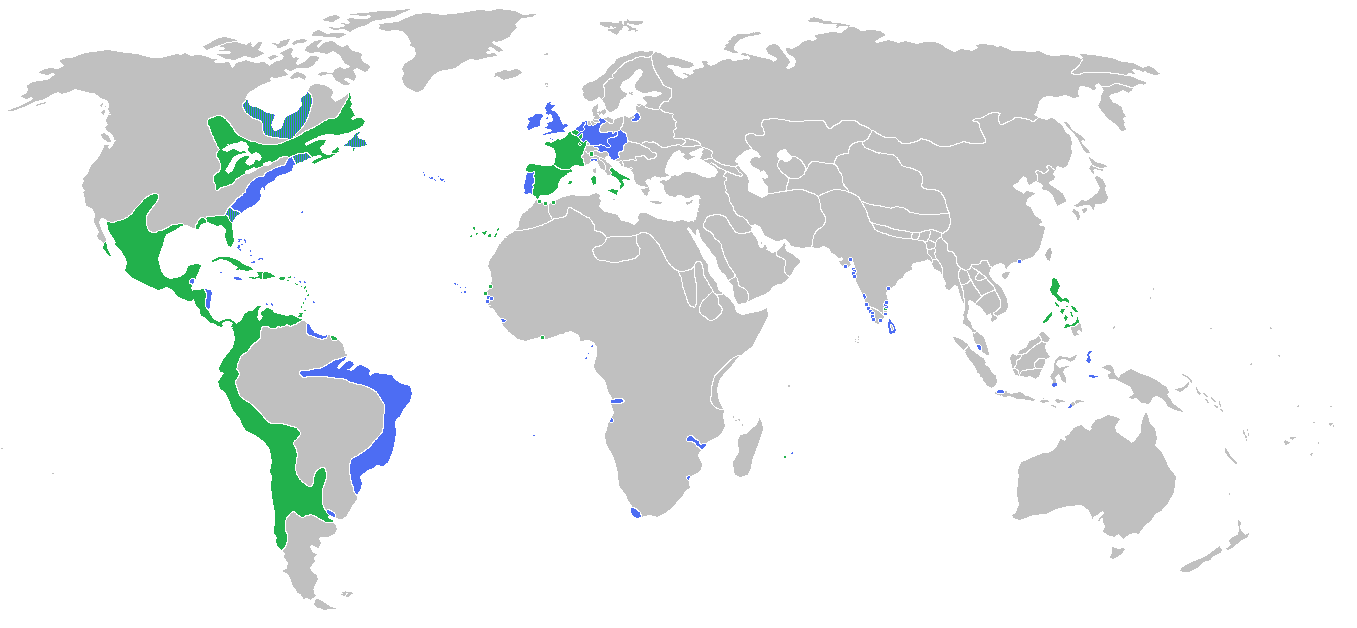
The War of the Spanish Succession was not, when it ended, simply finished. It was the opening chapter of an entire century of great-power conflict. The same territorial anxieties, the same dynastic competitions, the same commercial rivalries would generate the War of the Austrian Succession in the 1740s, and the Seven Years’ War from 1756 to 1763 — a conflict that genuinely did encircle the entire globe, from the plains of North America to the coasts of India. The statesmen at Utrecht had bought time and built a framework. They had not bought lasting peace.
For Britain, the war’s legacy was transformative in ways that still shape the world. Marlborough’s victories and Utrecht’s treaties together completed England’s transition from a secondary European power into the dominant naval and commercial empire of the eighteenth century. The possession of Gibraltar was both symbol and instrument of that transformation: a permanent military presence at the entrance to the Mediterranean, underwriting British naval power in ways that compounded across generations.
There is a particular irony at the heart of the entire conflict. After thirteen years of war, after hundreds of thousands of deaths, after ruined harvests and broken treasuries across a continent, a Bourbon did sit on Spain’s throne. Philip V’s dynasty — the very outcome Louis XIV had secured by accepting Charles II’s will — endures in Spain to this day, in the person of King Felipe VI. France never achieved the continental dominance Louis had gambled for. The old Habsburg order was gone. But the fundamental dynastic outcome that had caused the war was, in the end, preserved by the war’s settlement.
Gibraltar Today: Why a 300-Year-Old Treaty Still Matters

Take the short walk across the border from La Línea de la Concepción into Gibraltar today, and you step into one of history’s most peculiar living exhibits. Red telephone boxes stand beside tapas bars. The currency is the Gibraltar pound, pegged to sterling. The legal system is derived from English common law. The residents — around 34,000 people on roughly 2.6 square miles of limestone — voted in a 2002 referendum to remain under British sovereignty by a margin of more than 98 percent, and have had those convictions repeatedly tested and repeatedly confirmed.
The Rock was ceded to Britain “in perpetuity” by the Treaty of Utrecht. Those two words in a diplomatic document signed in 1713 are the direct legal ancestor of every sovereignty dispute, every diplomatic complaint, and every bilateral negotiation between Britain and Spain over Gibraltar in the three centuries since. When Brexit arrived, it reopened the question with fresh urgency: Gibraltar, which had voted overwhelmingly to remain in the European Union, found itself suddenly outside it, with its only land border — the crossing into Spain — becoming an EU external frontier overnight. The arguments about access, identity, and sovereignty that consumed the diplomats at Utrecht were being rehearsed again in Brussels and Madrid, in language updated for the twenty-first century but rooted in the same unresolved tensions.
Charles II signed his will in November 1700 hoping, desperately, to keep the Spanish empire intact. He feared that partition would destroy what his ancestors had built. Instead, his death triggered a war that shattered the empire he was trying to protect, scattered its pieces among rivals, ended the primacy of Habsburg Spain in European affairs, and left a small British garrison on a limestone rock at the tip of his kingdom as perhaps the strangest and most durable legacy of the whole catastrophe.
The will has never, quite, stopped being read. The war it caused is still, in its own oblique way, being contested — not with cannon and cavalry, but with treaty text, referendum results, and the daily, ordinary stubbornness of people who know exactly which flag they live under and precisely why it matters.


