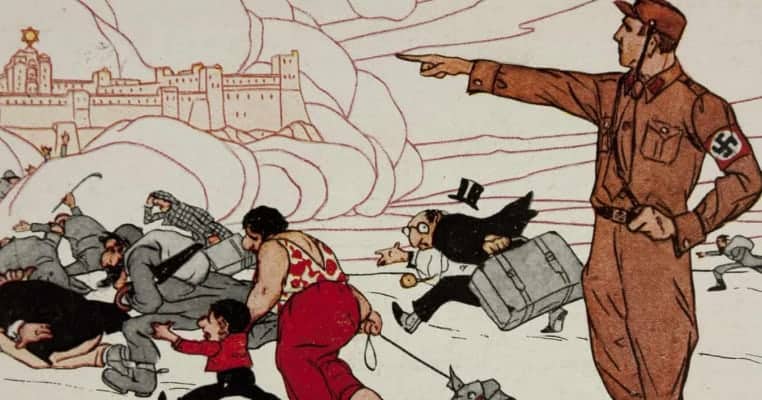
7. Shakespeare’s theatre was a hotbed of anti-Jewish feeling

Although Jews remained exiled from England during the Elizabethan Period, the country was still rampantly antisemitic: the English author John Foxe complained of the ‘heinous abominations, insatiable butcheries, treasons, frenzies, and madness’ of Jewish people in 1577. The Elizabethan theatre capitalised on the public’s antisemitism by producing some truly odious plays. The dramatist Christopher Marlowe, capable of producing touching pastoral poems and odes, wrote a tragedy called The Jew of Malta (1589) about a treacherous and mass-murdering Jewish usurer named Barabas who meddles in a Christian-Islamic conflict and is boiled alive at the poem’s triumphant climax.
Shakespeare’s contribution to antisemitic drama, The Merchant of Venice, is more problematic. The titular merchant, Shylock, is a Jewish usurer, and debate still rages amongst Shakespeare scholars about the Bard’s view of Jews, for Shylock has some sympathetic moments. Shylock says that he hates Christians because they hate him: could this be Shakespeare offering a rather modern view of the treatment of Jews? Either way, the inclusion of a Jewish bad-guy was a guarantee of big audiences, especially after the execution of a converted Jew for plotting against the popular Queen Elizabeth’s life shortly before Shakespeare wrote the play.


