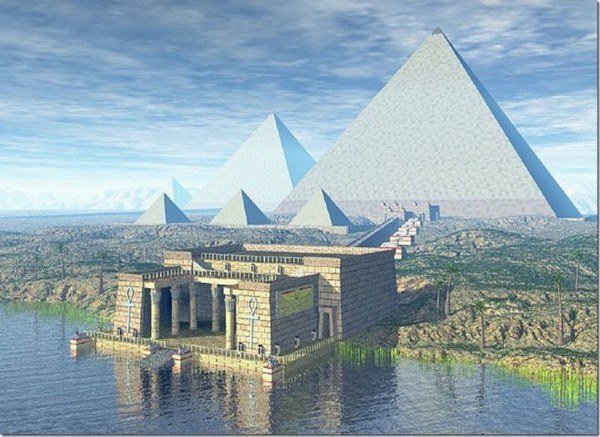
The Great Pyramids Were Not Built by Slaves

The Great Pyramids’ construction required moving and piling up six and a half million tons of stone, in blocks as heavy as nine tons. Were they built with slave labor? The Old Testament’s portrayal of the Hebrews’ forced labor for Pharaoh popularized the notion that slave labor was widespread in Ancient Egypt.
Ancient Greek writers such as Herodotus and subsequent historians, fiction, as well as film, further cemented the perception that ancient Egyptians used slave labor for their great construction projects. Despite graffiti inside the Great Pyramids suggesting paid laborers, made by the workers who built them, the notion that slaves built the pyramids became entrenched in popular imagination. The idea that the pyramids were built by slaves remained widespread for a long time, but we now know that is untrue.

In 1977, Egyptologists discovered the city of the Great Pyramids’ builders, and excavations demonstrated that the builders were not slaves. In 2010, archaeologists unearthed the tombs of the Great Pyramids’ builders, and their contents debunked the notion that the edifices had been built by slave labor. The tombs held the perfectly preserved skeletons of about a dozen pyramid workers. They showed that their occupants were paid laborers, not slaves.
The builders hailed from all over Egypt, and were not only paid for their work, but were so respected for that work that those who died during construction were honored by burial near the tombs of the sacred Pharaohs. The proximity to the sacred sites, and the care taken to prepare their bodies for their journeys to the afterlife, disprove the notion that the builders were slaves. Slaves would never have been extended such honors.


