Emancipation and the Enlistment of Black Soldiers in the Civil War

Hunter’s proclamation freeing all slaves in South Carolina, Georgia and Florida was quickly nullified by President Lincoln, while Phelps attempts to arm fugitive slaves was also overruled by his superior, General Butler, who believed that their role should be confined to military labour until the Lincoln administration decided otherwise. That decision ultimately came when Congress, responding to the changing circumstances of the war, and the wholly inadequate existing exclusionist policy, passed the Second Confiscation Act and the Militia Act of July 17th, 1862. The Second Confiscation Act gave the President authority to confiscate all property of states in rebellion, which included slaves and the First Militia Act allowed black men to join the Federal Army and be employed in any military capacity which commanders saw fit.
On September 22, 1862, five days after the Battle of Antietam, President Lincoln issued the preliminary Emancipation Proclamation, where he warned the states in rebellion that if they did not lay down their arms and return to Union in the next 100 days, he would free all slaves of these states. On January 1, 1863, after the 100 days had passed and Confederate forces had refused to surrender, Lincoln issued the Emancipation Proclamation freeing all slaves of rebel states and permitted the recruitment of men of African descent into all armed services of the United States.
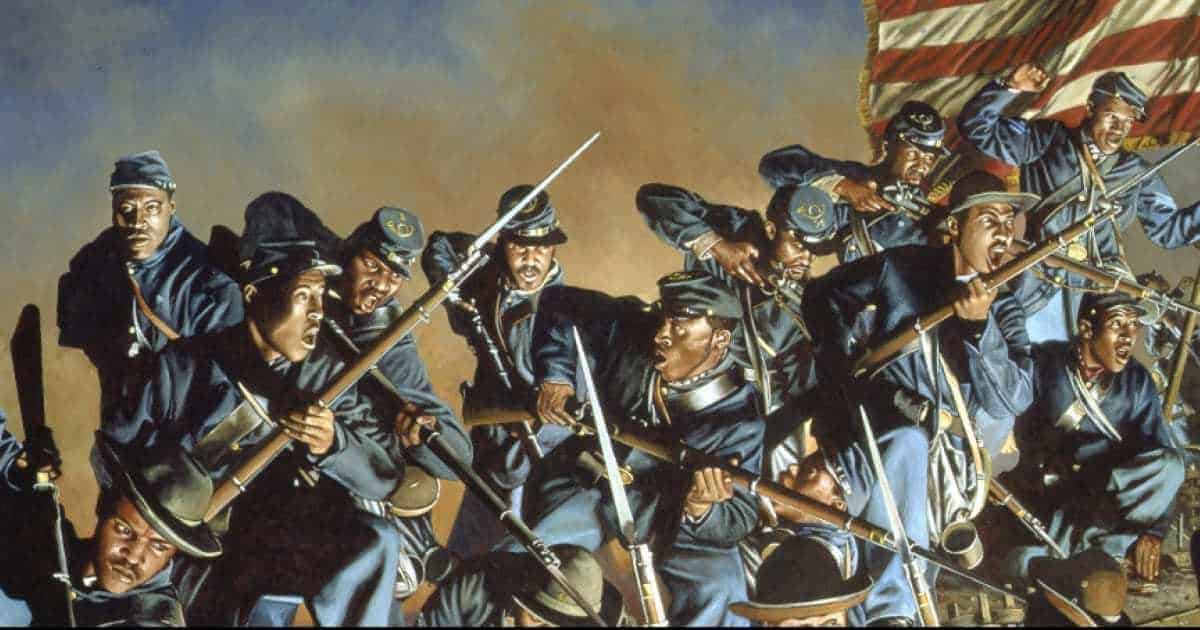
On May 22, 1863, the War Department established the “Bureau of Colored Troops” to regulate and supervise the enlistment of black soldiers and the selection of officers to command all-black regiments. Initially, recruitment was slow, until prominent black leaders like Frederick Douglass encouraged other courageous black men to join to increase their chances of citizenship.


