The ceramic jars had been sitting there for the better part of five millennia — resting on the seafloor off a small Turkish island, thirty meters down, undisturbed, as if a sailor had simply set them down and forgotten to come back. When Australian archaeologist Karin Sowada finally looked at them through the blue water, she was staring at what may be the oldest shipwreck ever found anywhere on Earth.
Thirty Meters Down, Something Nobody Expected
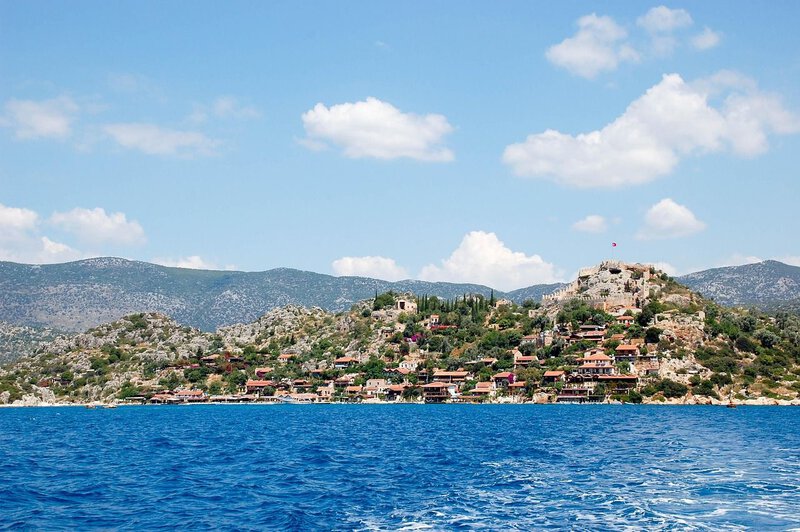
Kekova Island sits along Turkey’s turquoise Mediterranean coast, where limestone cliffs drop into water so clear you can watch submerged Byzantine ruins drift past from the window of a glass-bottom boat. It is already a place where the past has a habit of ambushing you at the waterline. But nothing in the island’s well-documented archaeological record had prepared Sowada’s team for what they encountered during underwater excavations of the seafloor nearby.
There, at 30 meters depth, lay ceramic amphorae — the workhorse shipping containers of the ancient world, the corrugated cardboard boxes of every Bronze Age merchant fleet — sitting exactly where someone had stowed them. Intact. Eerily still. The archaeologists say the wreck is up to 4,700 years old, dating to the Early Bronze Age — a span so vast it places the vessel’s final voyage before the Great Pyramid of Giza was completed, before the first cuneiform legal codes were written, and before virtually any other ship in the archaeological record had yet been built.
That single image — amphorae on a seafloor, undisturbed across four and a half millennia — reframes everything researchers thought they knew about how early, and how boldly, human beings had taken to open water.
What Makes a Wreck the ‘Oldest Ever’?
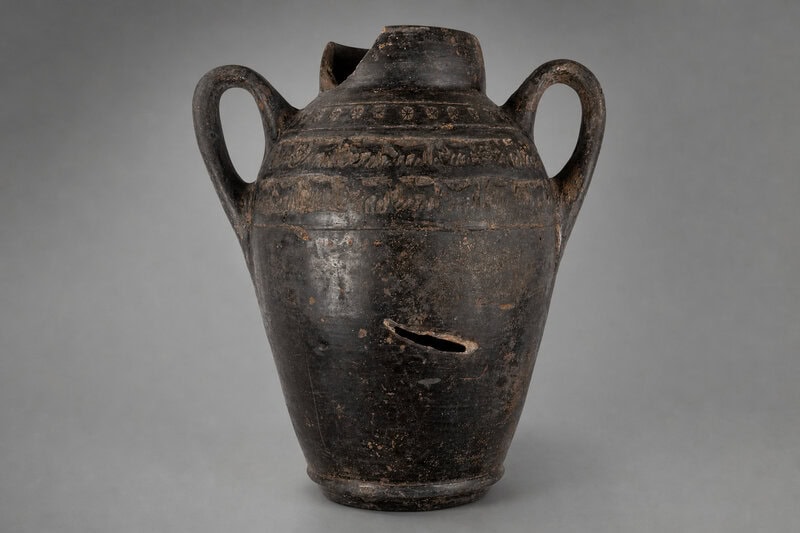
The question of age in underwater archaeology is never simple, and the honest answer almost always begins with what the cargo can tell you. Wood rots, rope dissolves, iron corrodes to ghosts of itself — but ceramic is almost indestructible. The shape of a jar’s neck, the temper of its clay, the style of its handles: these are diagnostic fingerprints that trained eyes can read like a calendar. When underwater archaeologists recovered the amphorae off Turkey’s Mediterranean coast, the vessels’ profiles pointed unmistakably to the Early Bronze Age, somewhere in the range of 4,400 to 4,700 years ago.
The estimated age range — 4,400 to 4,700 years — is deliberately cautious, and that restraint is itself worth noting. Sowada and her colleagues have not overclaimed. They have offered a range, flagged the uncertainty, and invited further scrutiny. In a field where headline-chasing can tempt researchers to harden a probability into a certainty, that kind of disciplined hedging is a signal that the evidence is being taken seriously.
The previous leading contender for the title of world’s oldest shipwreck was the Uluburun vessel, also found off Turkey’s coast, dated to around 1320 BCE. Uluburun was extraordinary: it carried copper, tin, glass, and ivory — a floating inventory of Late Bronze Age international commerce. For decades, no other wreck came close to its age. The Kekova discovery, if confirmed, predates Uluburun by more than a thousand years, pushing the clock back not to a slightly earlier chapter of the same story, but to an entirely different era of human civilization.
Karin Sowada and the Excavation Off Kekova Island
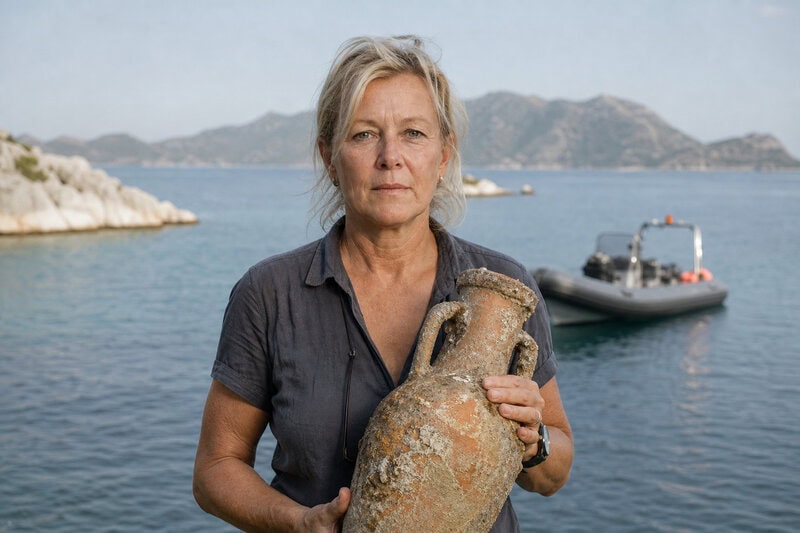
Sowada’s career has traced ancient trade and material culture across the eastern Mediterranean and the Near East — a scholarly geography that makes her precisely the right person to recognize the significance of what her team was looking at. The Australian archaeologist led the excavation off Kekova Island in southern Turkey, coordinating a project that required not just archaeological expertise but the technical diving discipline demanded by 30-meter-depth work.
At that depth, bottom time is rationed by physics. Every minute Sowada’s team spent near the wreck site had to count — every photograph, every measurement, every careful note about the precise position of a jar on the sediment. The fact that the amphorae were found largely intact is remarkable in its own right: it implies the wreck site has remained largely sealed under sediment, protected from currents and the occasional trawler net, waiting out millennia with a patience that borders on the surreal.
Kekova’s waters were already famous for yielding submerged Lycian ruins visible from tourist boats above. The region is geologically and archaeologically layered in ways that make almost any dive historically pregnant. And yet even here, a 4,700-year-old shipwreck was not on anyone’s checklist.
Who Sailed This Ship — and Why?
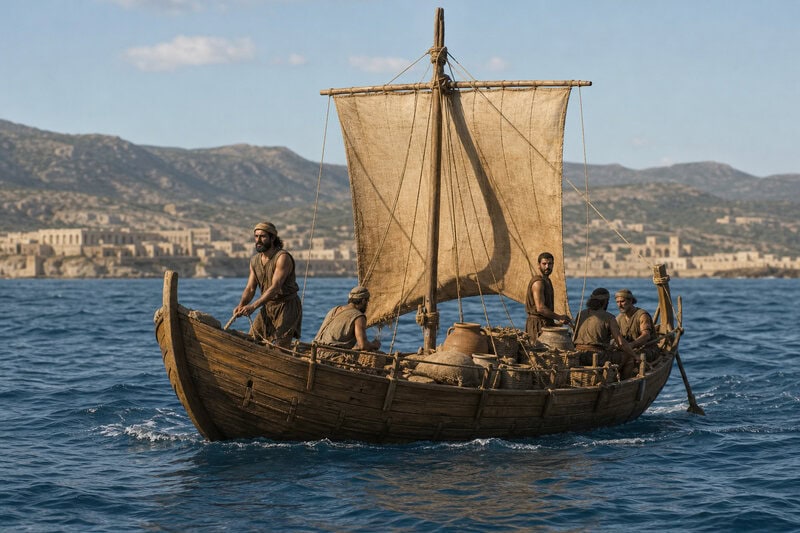
The Early Bronze Age Aegean and eastern Mediterranean was not a quiet backwater. It was a world of small city-states, emerging palace economies, and sailors moving copper, pottery, oil, and grain across stretches of open water that would have looked, from the deck of a small wooden vessel, very large indeed. These were not explorers in the romantic sense. They were traders, making commercial runs on routes their fathers and grandfathers had sailed before them.
Amphorae of this period were carriers of ordinary cargo — olive oil, wine, grain, salted fish, the dietary staples of Mediterranean life. This ship was almost certainly a merchant vessel, not a warship: a working boat making a routine commercial run that ended, for reasons we cannot know, in catastrophe thirty meters below the surface. No storm leaves a record. No reef files an incident report.
The discovery of the remains of this ancient ship reveals new evidence about Early Bronze Age trade routes — and the implications are immediate. A wreck this old, this far along Turkey’s Mediterranean coast, suggests that seafaring networks were more extensive, and more commercially sophisticated, than current models have allowed. Scholars have long suspected that Bronze Age sailors were bolder than the surviving evidence proved; the Kekova wreck may be the proof that was missing.
No written records survive from this precise moment and place. The sailors aboard had no alphabet we can read, no administrative archive that preserved their names or their cargo manifests. The amphorae on that seafloor are the only testimony they left behind — plain, functional, and, as it turns out, historically explosive.
The Uluburun Shadow: How One Famous Wreck Set the Bar
When divers found the Uluburun wreck, also off Turkey’s coast, it rewrote Bronze Age history almost overnight. The cargo was staggering: copper, tin, glass, and ivory, along with a collection of artifacts spanning half a dozen Mediterranean cultures. Uluburun was not just a ship — it was a floating snapshot of international trade at its Late Bronze Age peak, a single vessel that demonstrated how connected the ancient world had already become by the fourteenth century BCE.
For a generation, Uluburun became the benchmark: the oldest, the richest, the most studied ancient shipwreck in the world. Its age — circa 1320 BCE — was the number against which all other ancient wrecks were measured and, invariably, found younger.
The new Kekova wreck carries none of Uluburun’s glamour cargo, at least not yet. Its amphorae are plain and functional, the kind of containers that stocked a hundred ordinary voyages for every legendary one. But plain and functional, in this case, may prove more historically significant than any ivory tusk — because they are so much older. Sowada’s discovery forces a quiet but consequential reconsideration: if ships were making open-sea Mediterranean runs 4,700 years ago, then Uluburun is not the beginning of the story. It may be closer to the middle.
Why the Mediterranean Seafloor Is an Archive
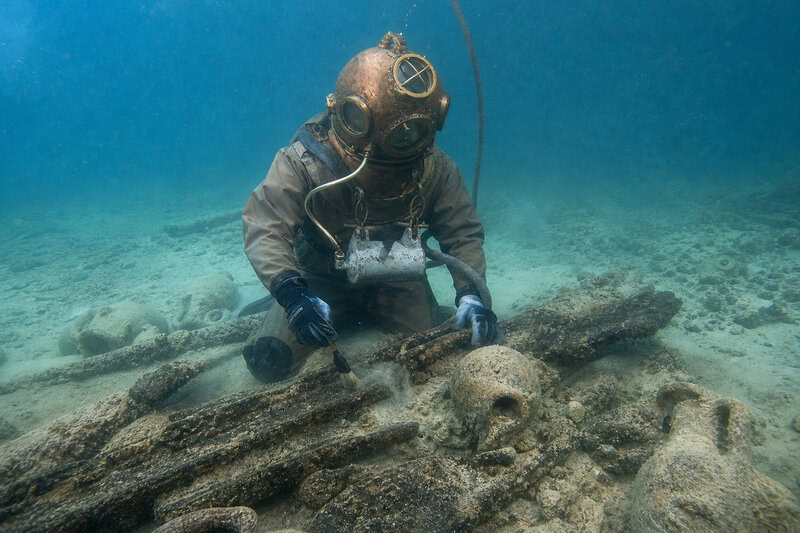
The Mediterranean is not, by oceanographic standards, a cold sea. But at depth, in low-oxygen conditions beneath a layer of insulating sediment, organic material can survive for extraordinary spans of time. Wooden hull planks, rope fibers, and even food residues have been recovered from ancient wrecks across the region in conditions that would have destroyed equivalent material on land within centuries. The seafloor, counterintuitively, is sometimes a better archive than the ground.
Underwater archaeology along Turkey’s coast has accelerated in recent years, with Turkish authorities and international teams conducting systematic surveys of coastal zones that were barely charted a generation ago. The results have been accumulating steadily: from the Black Sea to the Aegean to the southern Mediterranean shore, each new season of diving is adding wreck sites, submerged harbors, and drowned settlements to a map that keeps expanding.
The Kekova wreck joins this growing body of evidence that ancient seafaring was earlier, bolder, and more commercially organized than the textbook version of prehistory has traditionally admitted. It is, in a sense, the latest dispatch from a very old argument — and it arrives with the weight of 4,700 years of saltwater preservation behind it.
What Happens Next — and What It Would Mean
Sowada’s team will need further excavation seasons, additional ceramic analysis, and ideally radiocarbon dating of any surviving organic material — wood, rope, or food residue preserved beneath the sediment — to firm up the age claim and move it from “may be” to “is.” The amphorae found during excavations date back to the Bronze Age, approximately 4,400 to 4,700 years ago, with the potential to shed new light on ancient maritime history, but potential is not yet proof of the upper bound. Science, at its most honest, works slowly.
If the dating is confirmed at the upper end of the range, a 4,700-year-old ship would be older than any wreck currently in the archaeological record — rewriting not just a footnote but the opening chapter of maritime history. For Turkey, the site adds another extraordinary layer to a coastline already thick with world-class underwater heritage. From Uluburun to Kekova, the country’s waters are becoming the single most important archive of ancient seafaring on the planet. That is not an accident of geography so much as a consequence of where the ancient world’s commercial energy flowed.
For Sowada, the amphorae resting on that quiet seafloor are not a conclusion. They are, as she surfaces from thirty meters of blue Mediterranean water and begins the long process of analysis, argument, and further diving, only the beginning of the questions — which is, for a certain kind of archaeologist, exactly the best place to be.