Long before submersibles and sonar made headlines, a quiet revolution was happening in the shallows — one led not by governments or universities, but by volunteer divers with slates, pencils, and a fierce curiosity about what lay beneath the surface. This is the story of the Nautical Archaeology Society, an organisation that has spent decades proving that underwater heritage belongs to anyone willing to learn how to record it carefully.
A Journal Born Before the Society: The International Journal of Nautical Archaeology
Before there was a membership card or a training programme, there was a journal. The International Journal of Nautical Archaeology was published in close association with what would become the Nautical Archaeology Society, and its scope was deliberately ambitious — not just wrecks, but cargoes, harbours, the sailors who worked them, and the seas that swallowed them all. In an era when underwater archaeology was still dismissed in some quarters as little more than glamorous treasure hunting, a peer-reviewed publication sent an unmistakable message: this was a discipline with intellectual rigour and scholarly ambition.
That founding act of seriousness mattered enormously for what came next. By establishing that volunteer divers and credentialed academics could contribute to the same body of knowledge, the journal laid the philosophical groundwork for a genuinely open movement. The democratisation of maritime archaeology had its first foothold in print.
Portsmouth as Home Base: Why the NAS Planted Its Flag on the South Coast
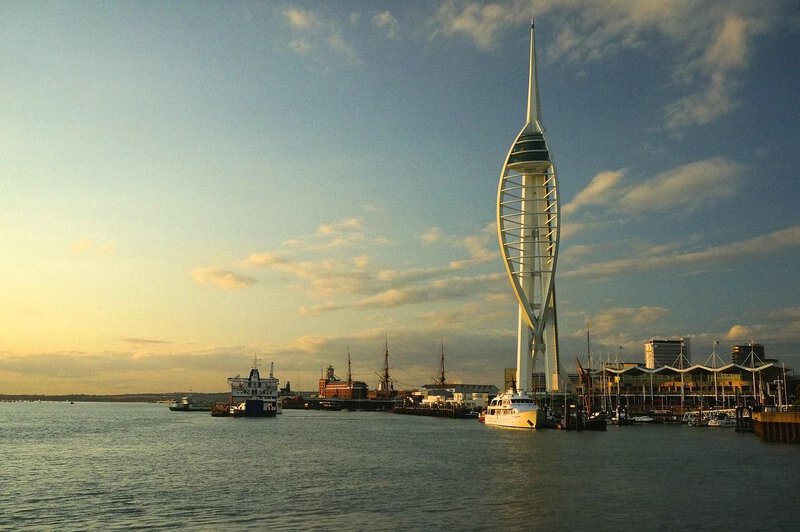
When the Nautical Archaeology Society took shape as a formal organisation, it chose Portsmouth as its headquarters — and the choice was anything but arbitrary. Few British cities carry more maritime weight. The harbour that once launched Nelson’s fleet now sat above some of the richest submerged archaeology in northern Europe, and the Solent’s powerful tides had been preserving shipwrecks in its silts for centuries. For a society dedicated to underwater cultural heritage, it was the ideal address.
The NAS established itself as a registered charity and non-governmental organisation, independent of any single government department. That independence has proved to be one of its most durable assets — enabling it to advocate for submerged landscapes on their own terms and to build cross-border partnerships without political constraint.
Opening the Gate: The NAS Training Programme and the Volunteer Diver Network
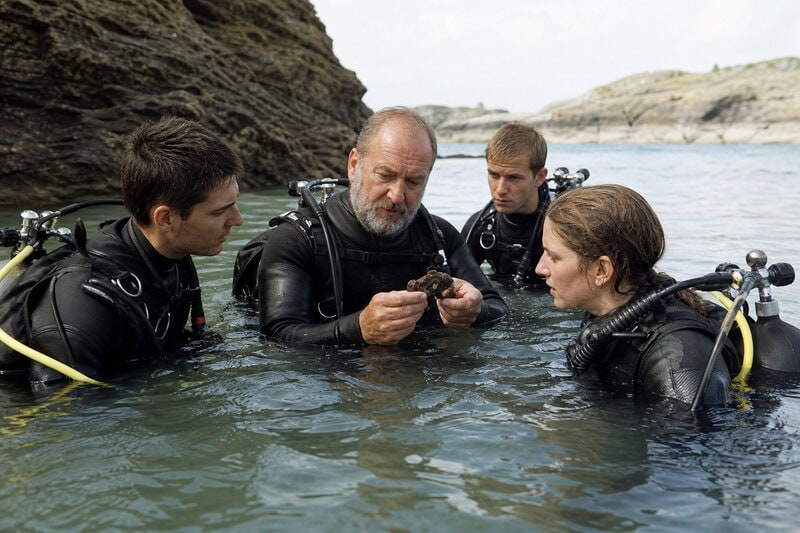
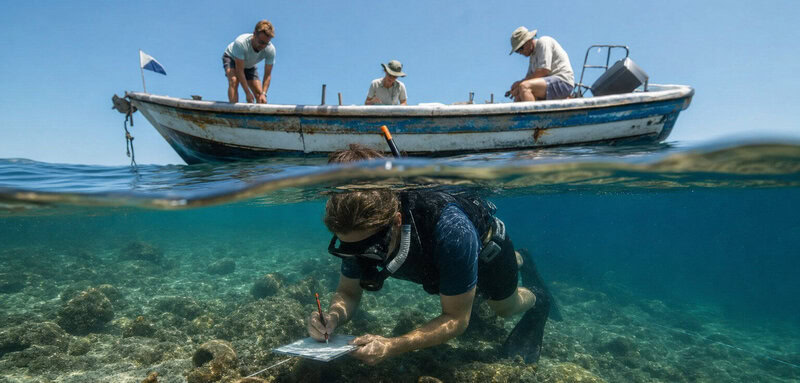
The instinct of many academic disciplines is to guard entry points — to insist that fieldwork belongs only to those who have spent years in lecture theatres first. The Nautical Archaeology Society took the opposite position. From an early stage, the NAS committed to advancing education in nautical archaeology at every level, from curious first-time divers to seasoned professionals. Its structured training programmes taught sport divers not to loot or disturb what they found, but to record it: measuring timbers, sketching plans, logging positions, filing reports that could enter the permanent archaeological record.
The effect on how shipwrecks are discovered and documented across British waters was substantial. Thousands of recreational divers who would otherwise have had no framework for heritage recording became, in effect, a distributed network of field archaeologists. Maritime archaeology training was no longer a postgraduate privilege — it was available to anyone willing to learn the methods and apply them responsibly.
The Langstone Harbour Investigation: Volunteer Archaeology at Full Stretch
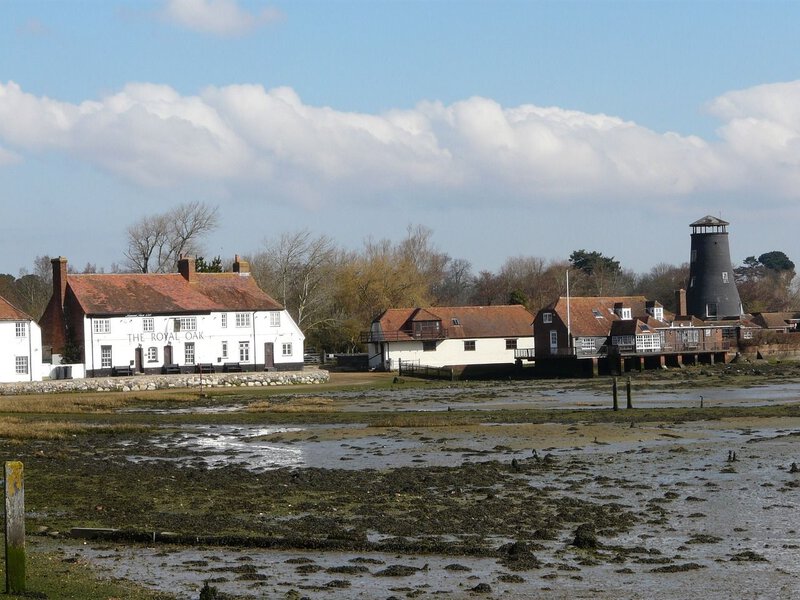
Just across the water from Portsmouth, in the tidal shallows of Langstone Harbour, a wreck had been sitting largely unexamined for what investigators believed to be around a hundred years. The NAS Sub-Aqua Club took it on. Working methodically — measuring timbers, cross-referencing historical vessel records, building a picture of the vessel piece by piece — the team set out to give it back its name and its story. It was painstaking, unglamorous work, the kind that rarely makes for dramatic television but forms the backbone of genuine archaeological knowledge.
The Langstone Harbour shipwreck investigation was a near-perfect illustration of the NAS model in action: trained volunteer divers, working in their own backyard, conducting fieldwork that met professional archaeological standards. The wider dive community followed the harbour wreck investigation closely, a sign of how effectively the Society had built an engaged audience for careful, community-rooted fieldwork.
Sandwich Bay: A National Lottery Grant and a Model for Coastal Heritage
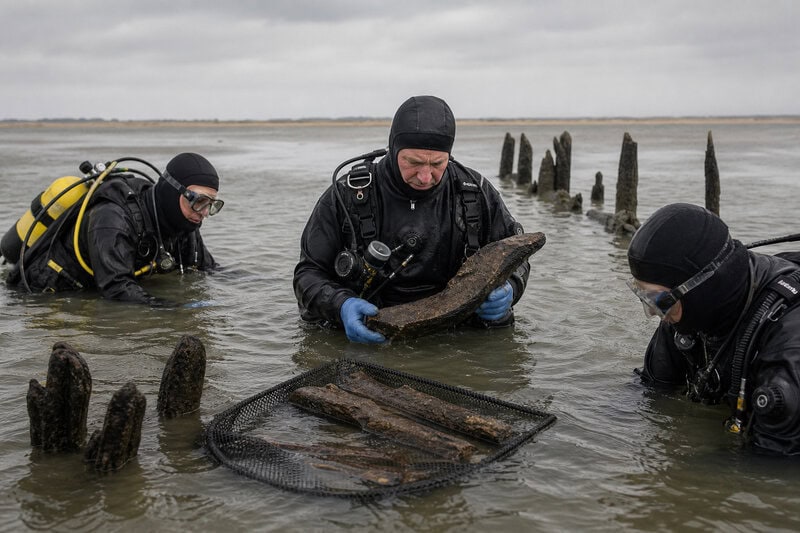
The National Lottery Heritage Fund awarded the Nautical Archaeology Society £199,060 for its project titled ‘Coastal Pasts – Connecting Community with Coastal Heritage at Sandwich Bay, Kent’. The grant — the largest single award the Society had received at that point — targeted a stretch of the Kent coastline under relentless pressure from erosion and development, where foreshore and submerged archaeology were quietly disappearing season by season.
The project was designed to bring local communities into direct contact with the heritage on their own shoreline, combining rigorous fieldwork with meaningful public engagement. The Sandwich Bay coastal heritage grant signalled that major funders were prepared to back the NAS community model at scale. Reporting from All At Sea noted that the project represented a significant step in connecting people with the archaeological record on their own doorstep — and that the Society’s years of building community trust had created the foundation to make it possible.
Professor Lucy Blue: A New President and a Broader Public Conversation
Maritime archaeologist Professor Lucy Blue had already reached audiences most academics could only dream of, having presented the BBC series Oceans to large television audiences curious about the underwater world. When she was appointed President of the Nautical Archaeology Society, the appointment carried significance well beyond the ceremonial. Here was someone who could speak the language of peer-reviewed research and prime-time television alike — a rare combination in any discipline.
Coverage from Sail-World and Yachts and Yachting highlighted Blue’s appointment as a signal of the Society’s commitment to public engagement alongside scholarly rigour. Her profile reinforced something the NAS had always maintained: that underwater archaeology should feel relevant and accessible to general audiences, not sealed inside university departments. The presidency brought fresh visibility to the Society’s work at a moment when heritage organisations everywhere were competing for public attention.
Meeting Divers Where They Are: The GO Diving Show and the NAS in 2026
By 2026, NAS Chief Executive Officer Mark Beattie-Edwards was scheduled to take the UK Stage at the GO Diving Show — one of the largest public-facing events in the recreational diving calendar. The appearance reflected deliberate strategy as much as public engagement. Rather than waiting for sport divers to find their way to archaeological training through conventional channels, the NAS was going to meet them where they already gathered: among the gear stands, travel talks, and underwater photography competitions of the dive show world.
It was a fitting symbol of how far the Society’s thinking had evolved. Shipwreck recording, community science, and heritage methodology were being placed in the same conversation as dive computers and liveaboard travel — a normalisation that speaks to how thoroughly the NAS has woven itself into the fabric of British diving culture.
A Registered Charity With International Reach: The NAS as a Global Template
What began as a Portsmouth-based charity with a journal and a training programme has grown into something with genuine international reach. The Nautical Archaeology Society now advises, trains, and partners with organisations well beyond British waters, carrying its core philosophy — rigorous standards, open-access education, community partnership — into policy discussions and dive programmes around the world. Its non-governmental status has allowed it to speak across borders, advocating for submerged landscapes without being bound to any single nation’s political agenda.
The NAS approach to maritime archaeology has quietly influenced how other nations and dive organisations think about protecting their own submerged heritage. Resources such as the International Journal of Nautical Archaeology Women’s Day initiative illustrate how the Society’s commitment to inclusion and open participation has extended beyond fieldwork into the culture of the discipline itself.
From a journal that declared its ambitions before the Society even had a formal name, to a presence on international dive show stages, the Nautical Archaeology Society has spent decades demonstrating that the question of how shipwrecks are discovered and preserved is ultimately a question for everyone — not only those holding a PhD or a government contract. The sunken history they have helped bring to light is richer for that insistence.