16. Moving to the suburbs was the beginning of the end

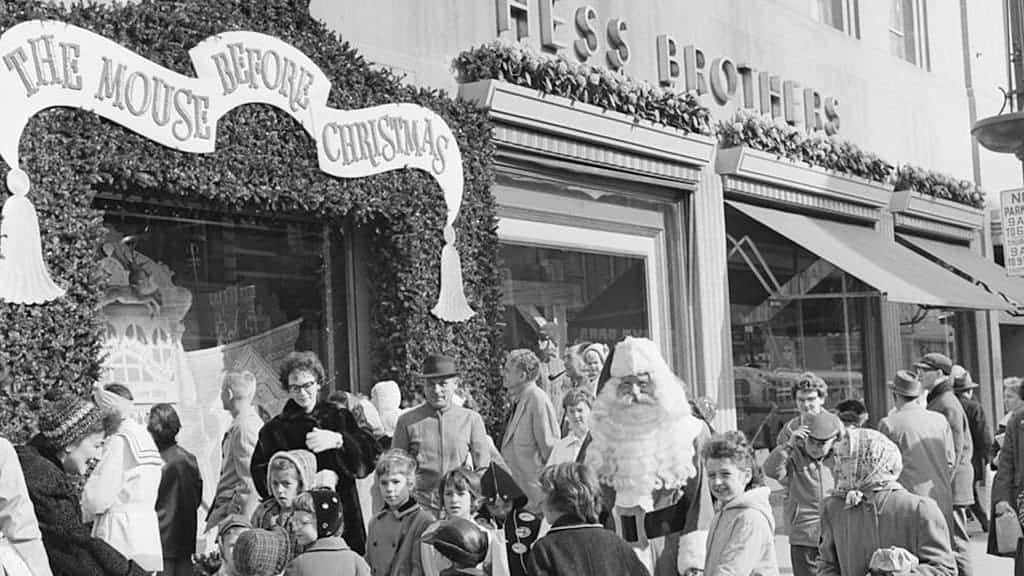
Following the Second World War, Americans began the mass migration from the urban centers to newly built surrounding communities, which were fed by highways built with taxpayer dollars. For a time the great urban department stores continued to do well as the new American, the suburbanite, journeyed into the city, especially at Christmas, to enjoy the amenities remembered from childhood, sharing them with their own children. It wasn’t enough. Stores struggled to attract customers through their doors as issues such as parking expenses, weather, and the perception that inner cities were no longer safe kept customers in the suburbs. The expansion of suburban shopping centers and especially the enclosed mall added to the problems of the downtown flagship stores. Nearly all malls were “anchored” by a locally reputable department store, as well as a nationally known version such as Sears, Penney’s, Montgomery Ward’s, or others.
The branch stores in the suburban outlets soon found that it wasn’t cost-effective to offer restaurant and tea room facilities, since the adjoining mall was filled with them. Stores continued to decorate themselves for the season, particularly Christmas, though the lavish window displays continued to be presented in the downtown stores, each year seen by fewer and fewer people. Santa’s Village moved to the mall’s center court, supported by all of the stores, and there was little to differentiate Macy’s from Gimbel’s, in terms of Christmas displays. Staffing within the stores included temporary help, hired for the season, which often knew less about the products they were hired to sell than the customer they were supposed to help. Self-service, rather than being served, became the norm on the sales floor, with the primary job of staff to ring up purchases.


