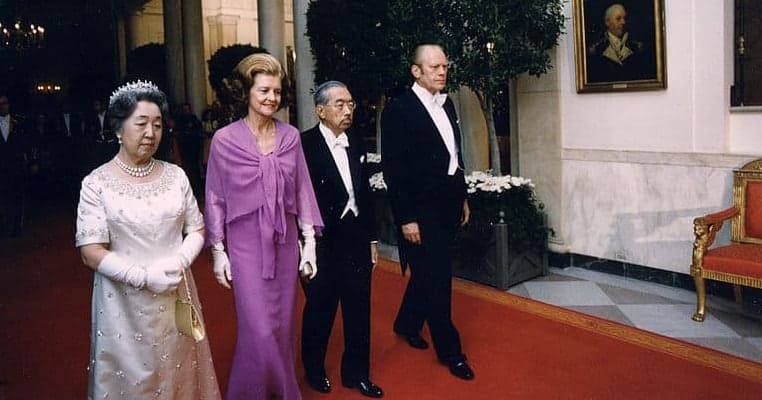
8. After signing into the White House, the visiting head of state is taken to the Red Room for the traditional exchanging of diplomatic gifts between the two leaders as a sign of respect and friendship
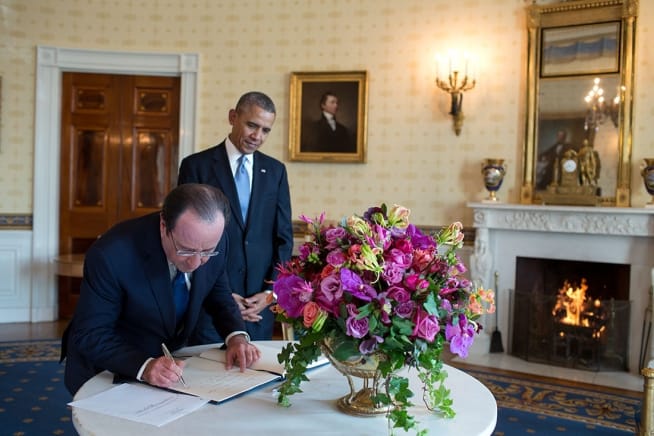
In the Blue Room, the traveling head of state is asked to register their visit in the White House guest book. Traditionally this is used to keep a record of the comings and goings of the incumbent administration and allow the visiting dignitary to leave a polite note to the First Family and staff. The president and his guest subsequently retire to the Red Room, wherein diplomatic gifts are exchanged. The process of exchanging gifts is a formality, with the objects determined in advance and already in place; rather than truly exchanging these tokens of affection, they are merely viewed by the heads of state and politely accepted.
These gifts often retain a symbolic meaning between the two leaders or nations, with the most iconic being the Resolute Desk. Residing to this day in the Oval Office, the fixture was craved from timbers from the British ship H.M.S. Resolute which had become trapped in ice during an Arctic exploration and was gifted to the United States by Queen Victoria in 1880. However, not all presents possess such meaning or history, but instead can include more bizarre items, including in 1990 a Komodo dragon named “Naga” from President Suharto of Indonesia to George H.W. Bush whilst Theodore Roosevelt was gifted a zebra and a lion by Ethiopia.


