
15. Ngo Dinh Diem’s Contempt for His Country’s Dominant Religion Backfires
South Vietnam’s president Ngo Dinh Diem (1901 – 1963) came to power in 1955 after a heavily rigged referendum with which he deposed Vietnam’s emperor Bao Dai, and established the Republic of Vietnam with himself as president. A staunch Catholic, he pursued discriminatory policies that favored Catholics for public service and military positions, land distribution, tax concessions, and business arrangements.
Some Catholic priests even ran private armed militias, which they put to use demolishing Buddhist pagodas and forcing people to convert – activities to which the government turned a blind eye. Since Catholics were a distinct minority, and about 90% of South Vietnamese were Buddhists, Diem’s pro-Catholic tilt did not sit well with most of his countrymen.
By 1963, South Vietnam was seething with discontent and a steadily intensifying insurgency, fueled by widespread governmental corruption, nepotism, and the president’s pro Catholic policies. Protests erupted in May, when Diem’s government banned the flying of Buddhist flags – only days after it had encouraged Catholics to fly Vatican flags at a celebration of Diem’s elder brother, a Catholic archbishop. Government troops opened fire on Buddhist protesters, killing and wounding dozens, triggering yet more protests.
On June 10th, 1963, correspondents were tipped that “something important” would happen the following day near the Cambodian embassy in Saigon. On the 11th, photographer Malcolm Browne of the Associated Press captured two Buddhist monks dousing an elderly comrade with gasoline, as he sat, lotus style. The monk, Thich Quang Duc, then struck a match and dropped it on himself, and maintained his serenity while flames engulfed him. Browne’s iconic photo of the event captivated the world.
Vietnam entered America’s national conversation after the Burning Buddhist’s photo appeared on the front page of newspapers across the US. As president Kennedy put it: “No news picture in history has generated so much emotion around the world as that one“. People questioned America’s support for Diem’s government, and Kennedy did not oppose a coup that overthrew it a few months later.
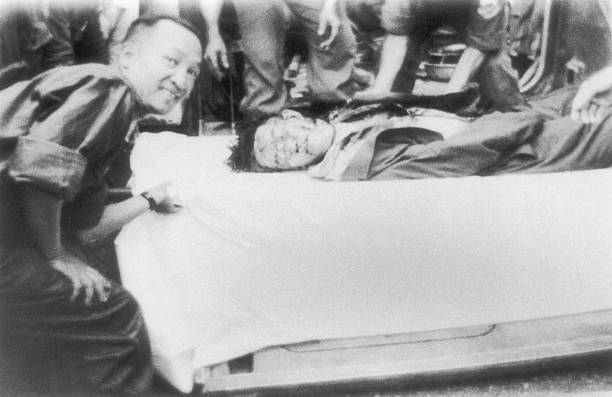
On the night of November 1-2, units of the South Vietnamese army attacked the presidential palace, and captured it after a bloody siege. President Diem and his advisor and younger brother, Ngo Dinh Nhu, surrendered after they were promised a safe exile, and were placed in the back of an armored personnel carrier that was to take them to a military airbase. Instead, they were assassinated by South Vietnamese officers en route.


