
Merchants on the Silk Road Traded Marijuana
Some of the primary items traded along the Silk Road were silk and spices, but a discovery in the northwestern Chinese city of Turpan proves that another commodity was making its way through the trade highway. Turpan was a very popular stop along the Silk Road for travelers and traders before they made their journey west. Over 200 graves have been excavated there to learn about this city’s inhabitants and the city’s significance to the Silk Road. In 2016, evidence from the Jiayi gravesite indicated that marijuana was a precious commodity along the trade routes of the Silk Road.
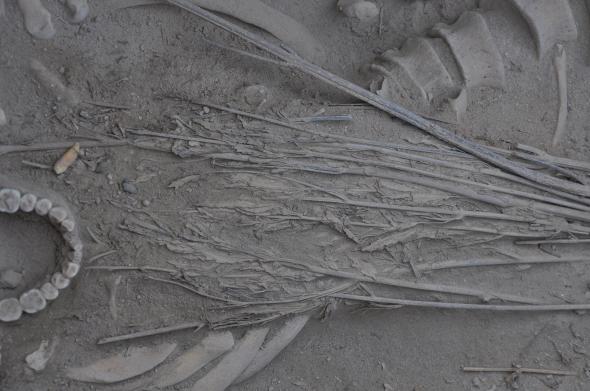
In the tomb dated to about 2,500 years ago, a young man’s body was covered with thirteen well-preserved cannabis plants, covering his body from his pelvis to his face, with his head resting on reeds in the shape of a pillow. He may have been part of the Subexi people who lived in the area in the first millennium BCE. Archaeologists have never found whole leaves in a tomb, nor have they found them in the shape of a burial shroud. The plants were about three feet in length, and they covered his body diagonally from below his waist on the right to his face on the left.
The marijuana was in whole leaf form with buds still attached, which means it was probably locally harvested at the end of the summer specifically for this particular burial. Cannabis plants were highly valuable in the ancient world; their fibers were woven into cloth items, and their seeds were highly nutritious and served many medical purposes. As researchers haven’t recovered any clothing or potions using marijuana products from the graves, they believe that the people of Turpan used cannabis plants for medicinal purposes or its mind-altering qualities. Other marijuana products, such as cannabis seeds and powder, have also been recovered from other grave sites along the Silk Road, so marijuana was possibly a high-demand trade item.


