
The Silk Road Reached the Highest Mountains of Tibet
The contemporary image of the Silk Road dictates that it was a straight path over the flatlands and steppes of Asia, moving into Europe through sea travel. Mountain ranges and cliffs seem to be natural barriers against conducting trade safely and efficiently, but a second-century tomb in Ngari, Tibet dating back to the second century proved that items from the Silk Road reached mountainous regions about 15,000 feet above sea level.
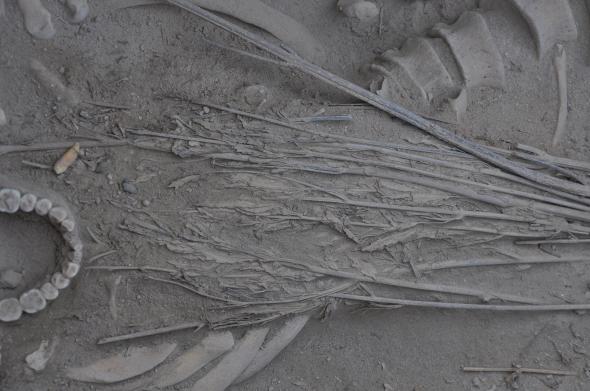
Initially uncovered by Tibetan monks in 2005, an excavation of the tomb in 2012 revealed many goods from China: silk labeled with Chinese characters, a gold mask, and vessels made of bronze and ceramics. The discovery of tea leaves also baffled the researchers; the earliest evidence of tea in Tibet is from the seventh century, but the tea leaves found in the tomb are from the second century. After testing the tea leaves, the archaeologists connected its chemical composition to another example of tea found in the tomb of an emperor from the Han dynasty in China.
After further study, the scientists believe that the tea, grown in southern China, was traded throughout the country, eventually making its way to Tibet via a lost route of the Silk Road. Before this discovery, there was no evidence linking the Silk Road to the isolated parts of Tibet. The Ngari tomb proves that traders of the 2nd century moved into high-altitude areas. Other finds along mountain ranges in China dating back to 3,000 BCE also support the theory that mountains were not obstacles to ancient world trade.


