Beneath the windswept dunes of northern Sudan, one of the most remarkable Christian monuments ever built spent centuries in silence — its walls intact, its floors sealed, its story waiting. The excavation of Old Dongola’s Great Church of Jesus is not a single discovery but a slow, layered revelation that spans medieval kingdoms, decades of Polish-led expeditions, and a floor finally reached again in 2026.
The Medieval Christian Kingdom That Ruled the Nile South of Egypt
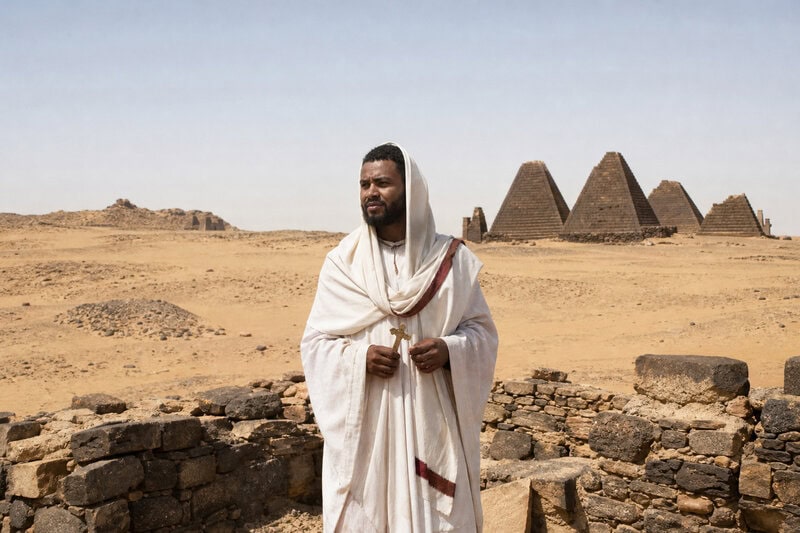
Between roughly the 6th and 14th centuries CE, the Nubian kingdoms of Nobadia, Makuria, and Alodia were thriving Christian states — places where bishops held court, scribes wrote in Greek and Coptic, and merchants traded goods with Byzantium. Old Dongola, perched at a sweeping bend of the Nile in what is now northern Sudan, served as the capital of Makuria, the mightiest of these kingdoms and a genuine power in the medieval African world.
Yet for centuries, this entire civilization remained almost invisible to the wider world. Its churches sank beneath drifting sand, its manuscripts scattered, and the history of the Nubian kingdoms that might have filled textbooks was buried as thoroughly as its monuments. What survives today has had to be dug back into existence, season by painstaking season.
Christianity Takes Root in Nubia — Around the 6th Century CE
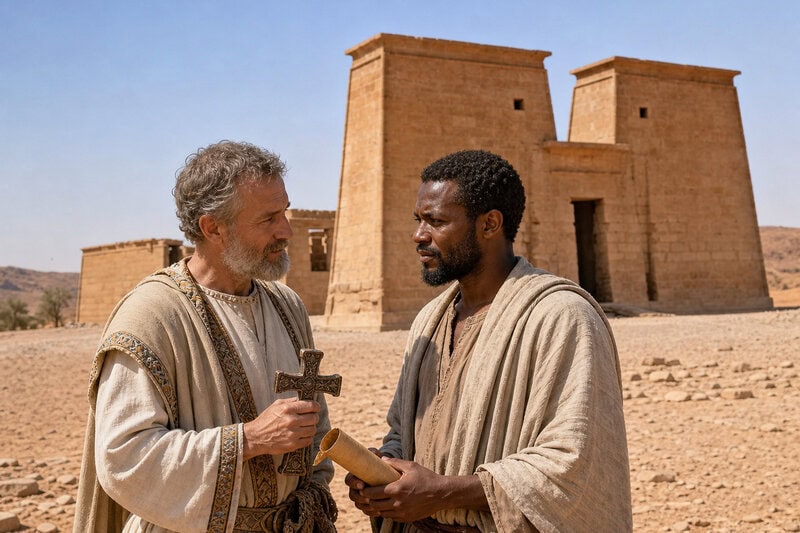
The story of Nubian Christianity begins in earnest around 543 CE, when Byzantine missionaries — most famously Julian and Longinus — arrived at the Nubian courts and set in motion one of late antiquity’s most consequential conversions. Church construction followed almost immediately, and chapels and cathedrals began to appear along the Nile Valley from Aswan deep into the African interior.
What emerged was no pale copy of Byzantine worship. Nubian Christianity developed its own vivid identity, weaving local artistic traditions and the Nubian language into the iconography it inherited from Constantinople. The result was a Christian culture as distinctive as any in the medieval world — and one that would eventually raise a cathedral to match its ambitions.
The Great Church of Jesus Is Built at Old Dongola
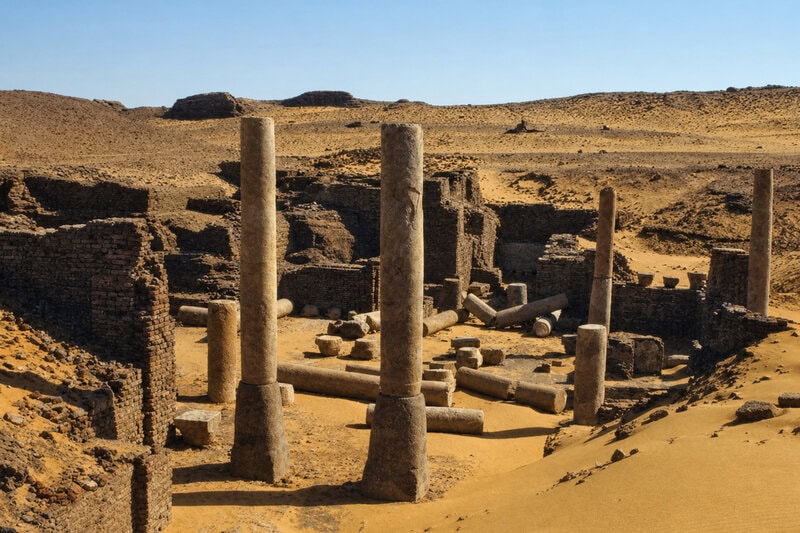
At the height of Makuria’s power, an enormous cathedral rose at the heart of Old Dongola. Later known as the Great Church of Jesus, it was built on a scale that would have announced the kingdom’s wealth and devotion to anyone approaching along the Nile. The walls that still stand today reach roughly 11 meters — about 36 feet — into the desert sky, and those are the walls that survived centuries of abandonment.
The cathedral almost certainly served as the seat of the Bishop of Dongola, one of the most senior Christian figures in medieval sub-Saharan Africa. For the faithful who gathered inside, it would have been an overwhelming space — a declaration that Christian Nubia belonged among the great civilizations of its age.
Makuria’s Decline and the Cathedral’s Long Burial — 14th and 15th Centuries
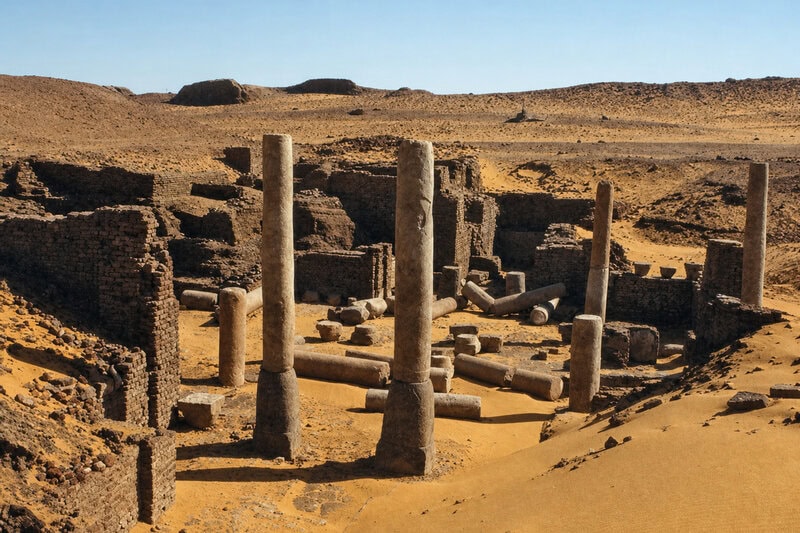
Empires do not fall in a single moment, and Makuria’s end came gradually — worn down by repeated invasions and the steady spread of Islam through the 14th and 15th centuries. As the kingdom weakened, Old Dongola emptied. Without the hands and resources needed to maintain it, the Great Church of Jesus was left to whatever the desert chose to do with it.
The desert was thorough. Sand drifted against the walls, crept over the floors, and filled the interior chambers over the following centuries until the cathedral had effectively ceased to exist in living memory. Its presence was preserved only in fragmentary medieval Arabic texts and threads of oral tradition — a ghost of a building that had once dominated a capital city.
Polish Archaeologists Unearth the Cathedral for the First Time — 1960
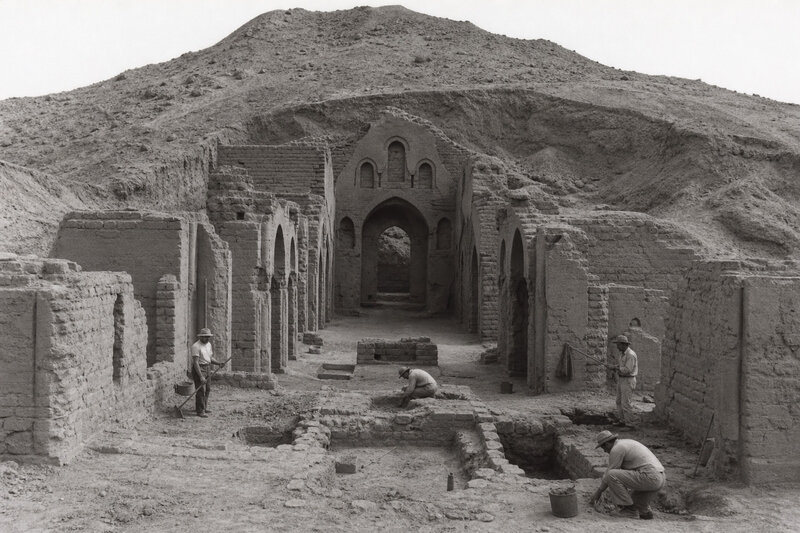
In 1960, a Polish archaeological team working at Old Dongola broke through the accumulated sand and reached the buried cathedral for the first time in hundreds of years. The moment was a threshold: proof that beneath the dunes lay not rubble but a largely intact monumental structure, waiting to give up its secrets. The discovery immediately signaled that Old Dongola was no ordinary dig site.
Yet even that dramatic breakthrough was only a beginning. The full depth of the structure — its original floor, its innermost spaces — remained sealed beneath layers of compacted debris and fill. Reaching the cathedral at all was one achievement; reaching the surface that medieval worshippers had actually walked on would take decades more.
July 2021 — Excavators Identify the Largest Nubian Church Ever Found
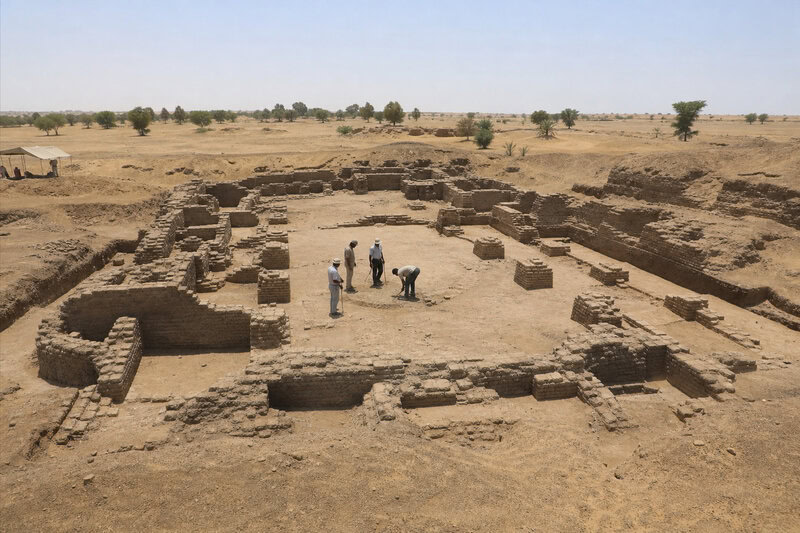
In July 2021, the excavation at Old Dongola produced a headline that reframed everything: archaeologists confirmed they had uncovered the remains of the largest Nubian church ever recorded. The sheer footprint of the structure, combined with the surviving wall heights, set it apart from every other known church in the ancient Nubian world. The announcement drew international attention to a site that had long deserved it.
The finding did more than add a superlative to the record books. It repositioned Old Dongola as the architectural crown of Christian Nubia — a city that had not merely hosted a cathedral but had raised a building capable of standing comparison with major ecclesiastical projects anywhere in the medieval Christian world.
Reaching the Original Floor — and Finding a Hidden Church Inside
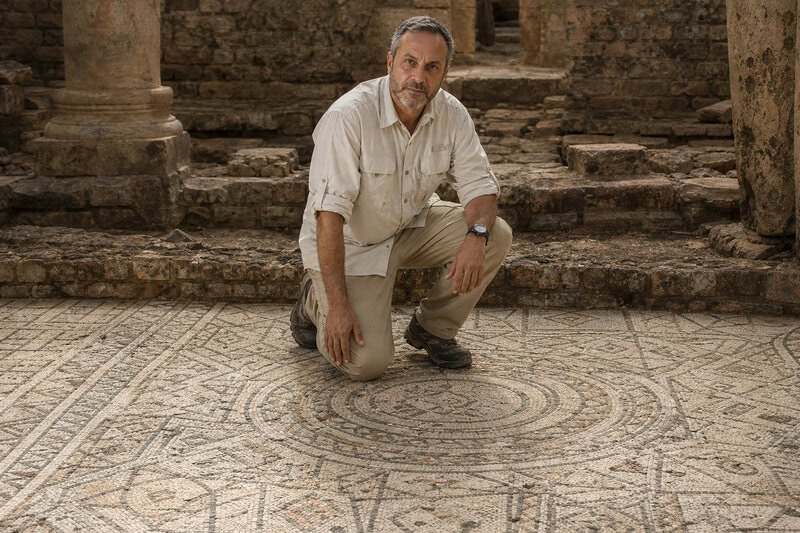
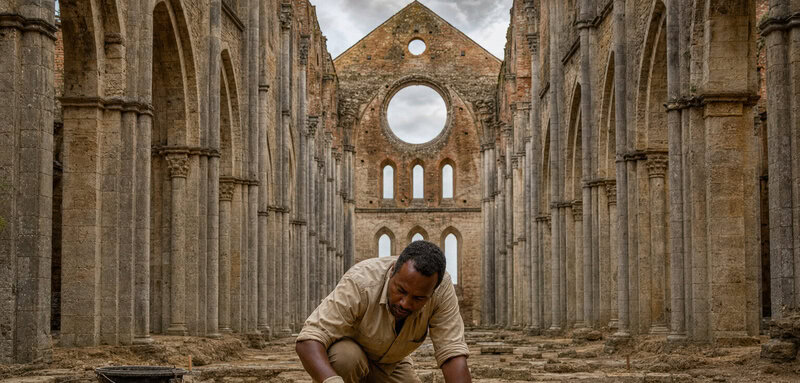
The milestone that years of excavation had been building toward arrived in the season reported in November 2026, when archaeologists at last reached the cathedral’s original floor level — the surface that medieval worshippers had walked centuries before. It was the kind of moment that makes years of painstaking fieldwork feel suddenly, completely justified. And the floor brought a significant surprise with it.
Tucked within the larger structure, excavators found a hidden inner church, its walls still bearing fragments of Greek prayer texts. The presence of Greek inscriptions deep inside a Nubian cathedral is a vivid reminder of how thoroughly Byzantine religious culture had fused with the local Christian tradition of the Nile Valley — two worlds meeting in the language of prayer, preserved in the dark beneath the sand.
Walls Still Standing 11 Meters Tall — a Measure of What Survived
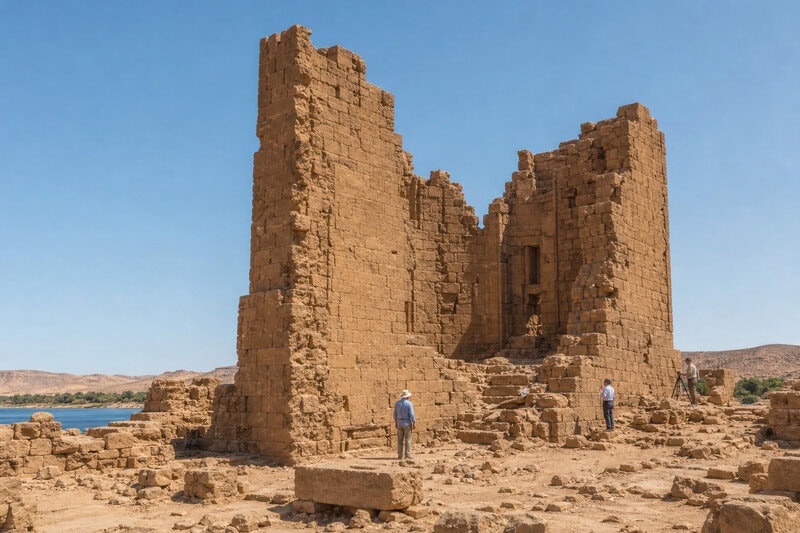
Near the cathedral’s staircase, sections of wall remain intact to a height of about 11 meters — an almost disorienting feat of preservation for a structure abandoned more than 600 years ago. Those standing walls have given archaeologists something invaluable: a framework for reconstructing the building’s original volume, estimating where roof lines ran, where galleries might have opened, and how the nave would have felt to someone standing inside it.
The scale those walls imply is staggering. The largest cathedral in Nubia would have rivaled contemporary ecclesiastical projects anywhere in the Christian world outside Europe’s major urban centers — a fact that quietly dismantles the assumption that monumental medieval Christianity was an exclusively European achievement.
November 2026 — The Discovery Enters the Public Record
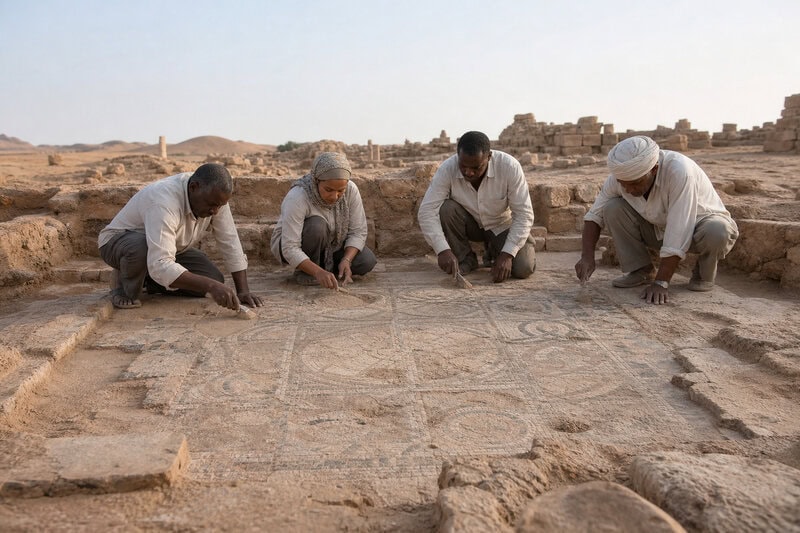
Archaeologymag.com reported the floor-level milestone in November 2026, carrying the story of the Great Church of Jesus to a broad international audience in the greatest depth of detail yet. The report also made a quieter but equally important point: Sudan’s archaeology remains critically underexplored, hampered for decades by political instability and conflict that have slowed fieldwork and kept global attention elsewhere.
Every layer removed at Old Dongola chips away at a persistent and damaging misconception — that sub-Saharan Africa produced no monumental medieval Christian heritage worth knowing. The ongoing excavation of Nubia’s greatest cathedral proves otherwise, one carefully brushed floor at a time.
The Great Church of Jesus spent roughly six centuries buried under the Sudanese desert. It has now spent more than sixty years slowly coming back to light — a timeline that reflects both how much has already been recovered and how much almost certainly remains beneath the sand at Old Dongola.