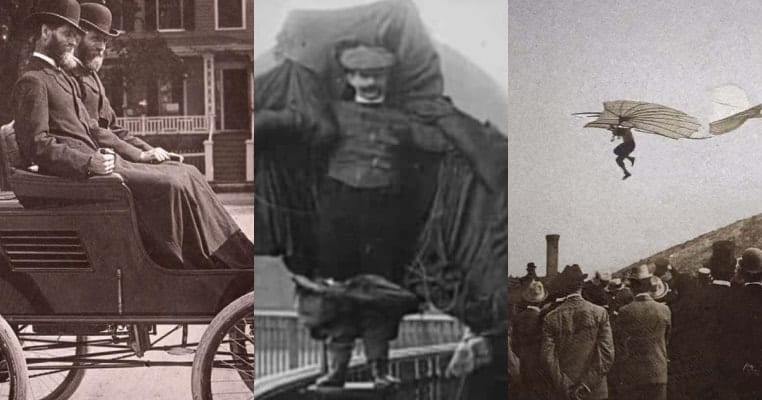
Driverless Cars: 15 Surprising Facts About Their Unique History

Driverless Cars: 15 Surprising Facts About Their Unique History

Darren - March 23, 2026

Driverless cars often evoke images of a futuristic world, yet their origins trace back much further than many realize. From early 20th-century experiments to today’s cutting-edge technologies, the journey of autonomous vehicles is rich with unexpected milestones and intriguing stories. This exploration delves into the lesser-known chapters of self-driving car history, uncovering the innovations and eccentricities that have shaped their evolution.

1. The Concept Dates Back Over a Century

Driverless Cars: 15 Surprising Facts About Their Unique History
Exploring the early 20th-century innovations that sparked the autonomous vehicle revolution.

Early visions of vehicles that could drive themselves appeared in the early 20th century. As early as the 1920s, inventors were experimenting with radio-controlled cars, foreseeing a world where automation would rule the roads. Discover more on Smithsonian Magazine about the roots of autonomous vehicle ambitions.

2. The First Robot Car Came in the 1980s

Driverless Cars: 15 Surprising Facts About Their Unique History
Pioneering robot car VaMoRs, developed in the 1980s, laid foundations for autonomous vehicles.

Long before Teslas or Waymo, the first true robot car, named VaMoRs, was developed in Germany by Ernst Dickmanns and his team in the 1980s. This innovation laid key groundwork for today’s systems. Carnegie Mellon’s Navlab project soon followed. Learn more from spectrum.ieee.

3. DARPA Helped Ignite Modern Self-Driving Development

Driverless Cars: 15 Surprising Facts About Their Unique History
Innovators race through the desert in the DARPA Grand Challenge, igniting a tech revolution.

The United States Department of Defense challenged inventors with the DARPA Grand Challenge in the early 2000s, sparking a new wave of innovation with university and company teams racing across the desert. The event catapulted the sector. Learn more at wired.com.

4. Google’s Secret Project Changed Everything

Driverless Cars: 15 Surprising Facts About Their Unique History
Waymo’s pioneering self-driving car project has transformed automotive technology since 2009.

Starting in 2009, Google (now Waymo) secretly developed groundbreaking self-driving cars, logging hundreds of thousands of miles and bringing the idea closer to public roads. Their technology became a model for much of the industry. Read about the project’s origins on theverge.com.

5. The 1939 Futurama Imagined Robotic Highways

Driverless Cars: 15 Surprising Facts About Their Unique History
General Motors’ Futurama at the 1939 World’s Fair envisioned a future of autonomous highways.

At the 1939 World’s Fair, General Motors presented Futurama, envisioning highways filled with seamlessly moving autonomous vehicles. This fantasy display influenced popular imagination for decades. American History offers more information about this fascinating topic.

6. Japan Pioneered Automated Highway Systems

Driverless Cars: 15 Surprising Facts About Their Unique History
Image Source: Pexels.

In the 1990s, Japan built dedicated highways for partly automated cars, including sensor-laden roadways to control vehicle movement. The DEMO ’94 showcased early self-driving capabilities. The Japan Times presents more history about this crucial period in the development of driverless vehicles.

7. Early Self-Driving Taxis Tested in the 1990s

Driverless Cars: 15 Surprising Facts About Their Unique History
Pioneering the future, France’s 1990s CyberCars project introduced autonomous taxi services for exhibitions.

In the 1990s, France’s CyberCars project deployed experimental autonomous taxis, known as Cybercars, offering short rides at exhibition sites and airports. These vehicles were designed to operate without a driver, providing on-demand, door-to-door service. This initiative foreshadowed today’s robotaxi services. Discover more about the CyberCars legacy at Wired.

8. The First Fatality Happened in 2018

Driverless Cars: 15 Surprising Facts About Their Unique History
A pivotal incident in 2018 raised critical questions about autonomous vehicle safety and regulation.

In 2018, a pedestrian was tragically killed during a test involving an Uber autonomous vehicle in Arizona. This event became a landmark case for regulatory scrutiny and public trust issues in the sector. BBC News covers the incident and its aftermath.

9. Self-Driving Cars Are Being Used in Agriculture

Driverless Cars: 15 Surprising Facts About Their Unique History
Revolutionizing agriculture, John Deere’s autonomous tractor leads the way in farming innovation.

Autonomous technology’s first major commercial applications appeared in farming, with self-driving tractors and harvesters plowing fields long before robotaxis hit city streets. John Deere’s autonomous tractor exemplifies this trend. Read more in The Verge because they provide more details.

10. Nevada Issued the First Autonomous Vehicle License

Driverless Cars: 15 Surprising Facts About Their Unique History
Nevada pioneers autonomous vehicle regulation, enabling Google’s self-driving cars on public roads.

In 2012, Nevada granted the nation’s first license for autonomous vehicles, allowing Google’s test cars to operate on public roads. This bold move encouraged other states to explore regulatory frameworks. Details at reuters.com.

11. Robot Convoys Were Tested by the Military

Driverless Cars: 15 Surprising Facts About Their Unique History
Autonomous trucks revolutionize military supply chains, enhancing safety and efficiency for troops.

The U.S. military experimented with ‘robot convoys,’ using fleets of autonomous trucks to supply troops remotely and reduce risks to drivers. These projects advanced off-road and highway automation alike. Read more on Military.com.

12. Self-Parking Cars Hit the Market Early

Driverless Cars: 15 Surprising Facts About Their Unique History
Automated parking in the 2003 Toyota Prius marked a significant advancement in self-driving technology.

One of the first widely available ‘self-driving’ features was automated parking, which debuted as early as 2003 in Japan’s Toyota Prius. This technology paved the way for more advanced hands-free innovations (japantimes.co.jp). The Intelligent Parking Assist System (IPAS) in the 2003 Prius utilized sensors and cameras to detect suitable parking spaces. Once a space was identified, the system could automatically steer the vehicle into the spot, requiring minimal input from the driver. This early adoption of self-parking technology marked a significant step toward integrating autonomous features into consumer vehicles, setting the stage for the more sophisticated systems available today. For a visual demonstration of the Toyota Prius self-parking feature, you can watch the following video: Toyota Prius Self-Parking Feature

13. Tech Giants and Traditional Automakers Collaborated

Driverless Cars: 15 Surprising Facts About Their Unique History
Silicon Valley and Detroit unite, driving innovation in self-driving vehicle technology.

The development of self-driving vehicles united Silicon Valley with Detroit, sparking partnerships between technology firms like Google, Apple, and legacy automakers including Ford and GM. This multidisciplinary cooperation continues today. Bloomberg provides more details.

14. Self-Driving Cars Face Unique Ethical Challenges

Driverless Cars: 15 Surprising Facts About Their Unique History
Exploring the ethical dilemmas of autonomous vehicles and decision-making in crisis scenarios.

Beyond engineering, autonomous vehicles stir debate over moral decision-making in crisis scenarios, often referred to as the ‘trolley problem.’ Developers must encode ethical frameworks into vehicle software. MIT Technology Review discusses these dilemmas.

15. They’re Already On the Road—Legally

Driverless Cars: 15 Surprising Facts About Their Unique History
Autonomous ride-hailing services revolutionize urban transport, now operational in Phoenix and San Francisco.

Fully autonomous ride-hailing services are now operational in cities like Phoenix and San Francisco, with companies such as Waymo and Cruise offering trips without a human safety driver. These live deployments represent the industry’s cutting edge. In August 2023, California regulators approved 24/7 commercial robotaxi services for both companies in San Francisco (wired.com). Waymo, a subsidiary of Alphabet Inc., has been operating in Phoenix since 2020 and expanded to San Francisco in 2022. In 2023, Waymo also began testing in Los Angeles and Austin, with plans to launch in Miami, Dallas, Houston, San Antonio, and Orlando by 2026. Cruise, owned by General Motors, initiated its robotaxi service in San Francisco in 2022 and expanded to Phoenix in 2023. The company has also announced plans to launch services in Atlanta, Miami, and Nashville (techcrunch.com). These advancements signify a significant milestone in the adoption of autonomous vehicles, offering a glimpse into the future of urban transportation.

Advertisement